A New Era of Trade Fraud Enforcement
The new DHS/DOJ Trade Fraud Resource Guide should resonate across the trade ecosystem, especially for importers, Customs brokers, and in-house counsel.

The new DHS/DOJ Trade Fraud Resource Guide should resonate across the trade ecosystem, especially for importers, Customs brokers, and in-house counsel.

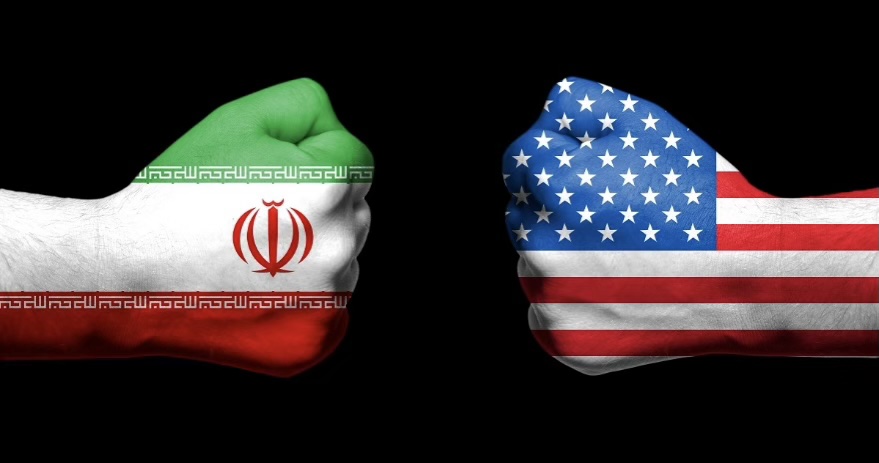
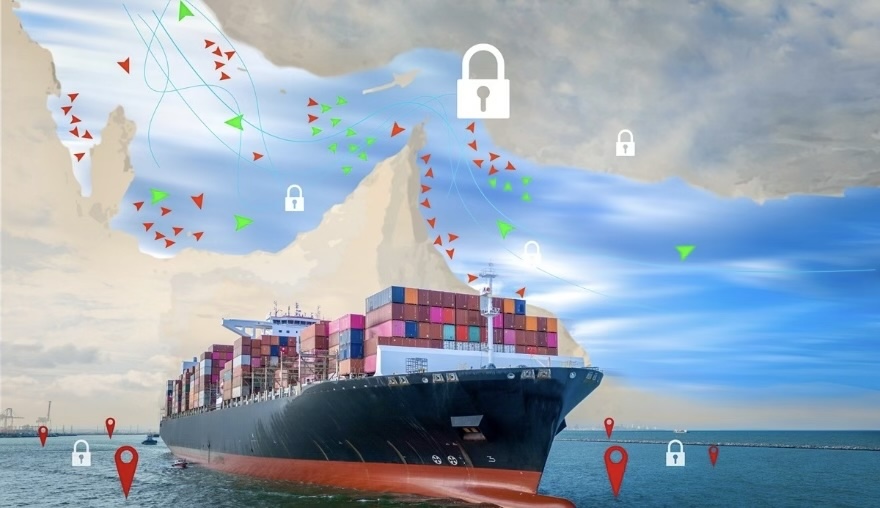
The war with Iran is being fought with missiles, aircraft and naval forces, but some of its most consequential effects are disruptions impacting energy markets, international shipping, insurance, supply chains, and prices, while adding another layer of sanctions and tariff risk to international trade. The result is particularly significant because the Strait of Hormuz, at the center of the conflict, is one of the most important arteries in world commerce.

A municipal government’s use of emergency powers might seem inconsequential, but it contributes to many communities’ accumulation of debt, housing and commercial space that is affordable to hypothetical residents but not actual ones, surveillance cameras, empty offices and strip malls, and contractual commitments to data centers and private prisons – all without any meaningful public involvement.

There are about 200 straits worldwide, but only 18–20 of them actually matter for global trade, and 9 are considered truly critical choke points. So, these are the straits/canals where closure would cause (and is currently causing) massive global economic shock: Strait of Malacca, Strait of Hormuz, Suez Canal, Panama Canal, Bab elMandeb, Strait of Gibraltar, Bosphorus Strait, Danish Straits, and of course, the ever-impending blockage of the Taiwan Strait.

A sweeping new White House Executive Order is set to once again shake up global supply chains by requiring a historic overhaul of the U.S. Importer of Record (IOR) framework. It lays out raising penalty floors, and tightening disclosure rules for everyone bringing goods into the United States, among other things.

“Origin Engineering” refers to modifying the sourcing of essential product inputs or relocating key manufacturing processes from countries subject to higher tariff rates to jurisdictions with more favorable trade treatment. It is one of the most effective tools available to importers navigating elevated tariff exposure.

Mexico’s customs and foreign trade legal framework has evolved toward a stricter and more controlled compliance model.

On June 3, 2026, President Trump issued Executive Order 14411, “Strengthening Customs Enforcement,” directing the Department of Homeland Security and U.S. Customs and Border Protection to tighten importer eligibility, increase disclosure obligations, and expand enforcement measures across the U.S. import system.

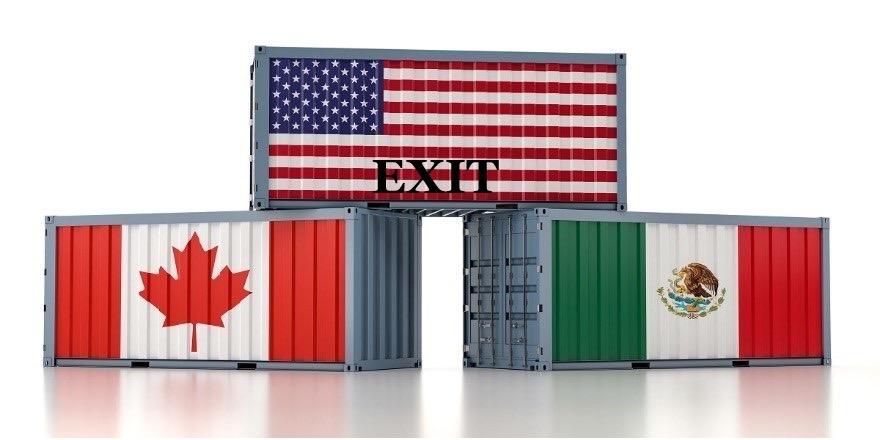
Yes, regarding this particular topic I am immediately surrounded by all of those external voices, even internal, telling me of how ridiculous it would be for the US to follow through and pull out of the USMCA. My response of course is noting that I probably wouldn’t have given the topic a second thought had the President of the United States not mentioned that this was a consideration regarding the upcoming July 2026 USMCA review.

On June 15, 2026, the U.S. Supreme Court denied a petition for a writ of certiorari in the case of HMTX Industries LLC v. United States. The petition came in response to the Federal Circuit’s decision to uphold use of tariffs against China under Lists 3 and 4A of Section 301 during the first Trump Administration.

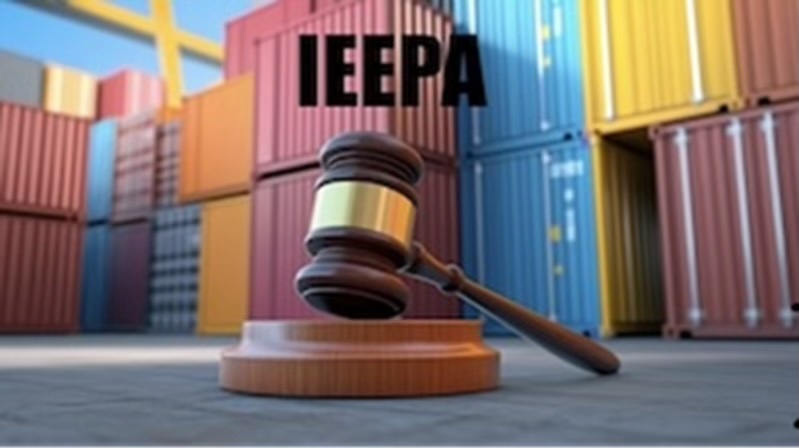
After the U.S. Supreme Court struck down President Trump’s IEEPA tariffs as unconstitutional in February 2026, the Court tasked the U.S. Court of International Trade (CIT) with developing refund procedures for importers who paid IEEPA tariffs.

On June 2, 2026, the Office of the U.S. Trade Representative (USTR) released its report on Section 301 investigations into the practices of sixty trade partners’ economies with regard to forced labor prohibitions.

President Trump signed the new Executive Order “Strengthening Customs Enforcement.” This new order from the administration tackles different administrative priorities related to customs: Customs Reform and Combatting Customs Fraud. The order-related fact sheet goes into detail about how the Executive Order addresses these objectives and how this will affect importers moving forward.

The outcome of this customs fraud criminal investigation case highlights significant compliance risks for importers, particularly in the areas of classification, documentation, and internal controls.

Global reliance on critical minerals for emerging technologies has created a competition between nations to secure reliable supply chains for continued innovation pertinent to national security. This is necessary from a national security perspective for both partners in this agreement.

The GENIUS Act has authorized several regulatory agencies to issue regulations to develop the first comprehensive federal regulatory framework governing payment stablecoins in the United States. The statute directs multiple federal financial regulators to implement a coordinated supervisory structure governing issuance, reserve management, redemption rights, anti-money laundering compliance, custody, and market structure.

United States President Donald Trump met with President Xi Jinping of the People’s Republic of China at a summit in Beijing in mid-May. The two leaders spoke for about two hours behind closed doors, discussing the trade relationship between the world’s two largest economies, the emergence of artificial intelligence, and energy cooperation. But it was a pointed comment from Xi about Taiwan that hinted at an unresolved issue that may make or break global relations.

When the U.S. Supreme Court invalidated certain tariffs imposed under the International Emergency Economic Powers Act (IEEPA) in Learning Resources, Inc. v. Trump, it did more than reshape trade policy. The decision triggered a complex series of questions regarding tariff refunds, consumer rights, and corporate liability – questions whose effects continue to be felt far beyond the trade community, reaching businesses and households across the US.

Walmart has been in China for about 30 years, entering the market in 1996 when it opened its first Walmart hypermarket and Sam’s Club in Shenzhen. There are now 342 retail stores, 279 Walmart Supercenters, and 63 Sam’s Clubs in China.

Mexico’s tax authority (Servicio de Administración Tributaria – SAT) has postponed the mandatory implementation of the Electronic Value Manifest (Manifestación de Valor Electrónica – EVM). The requirement is now expected to become mandatory on June 1, 2026.