
A New Era of Trade Fraud Enforcement
The new DHS/DOJ Trade Fraud Resource Guide should resonate across the trade ecosystem, especially for importers, Customs brokers, and in-house counsel.

The new DHS/DOJ Trade Fraud Resource Guide should resonate across the trade ecosystem, especially for importers, Customs brokers, and in-house counsel.

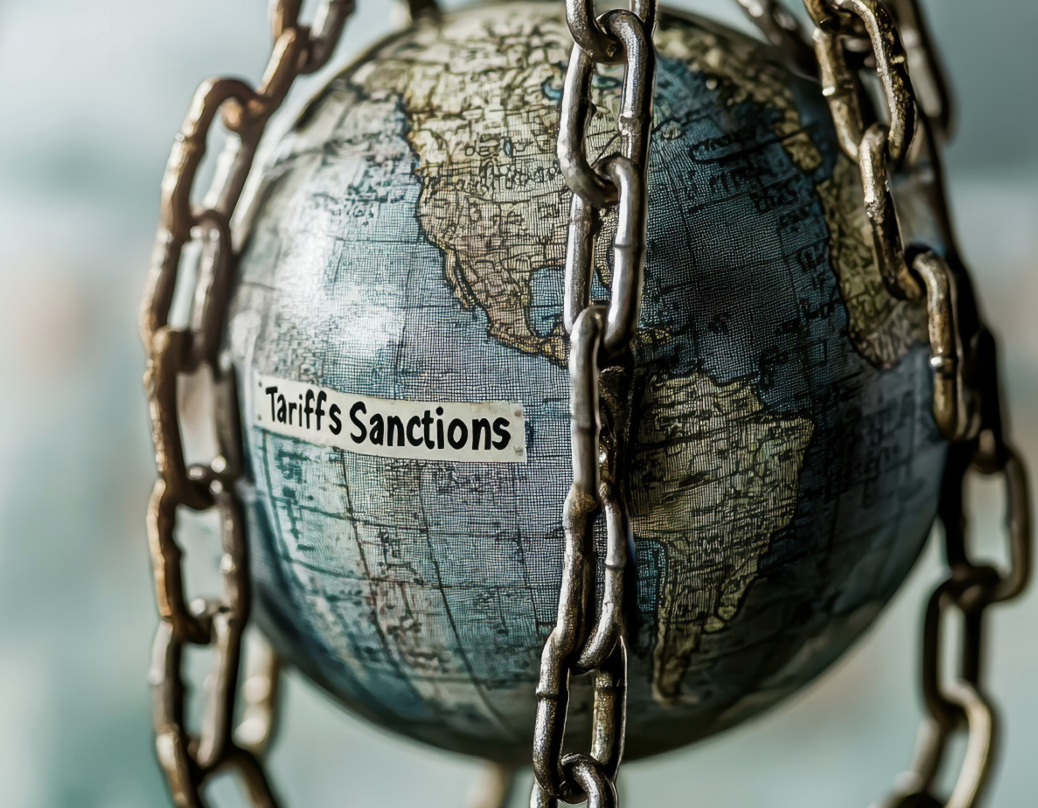
The war with Iran is being fought with missiles, aircraft and naval forces, but some of its most consequential effects are disruptions impacting energy markets, international shipping, insurance, supply chains, and prices, while adding another layer of sanctions and tariff risk to international trade. The result is particularly significant because the Strait of Hormuz, at the center of the conflict, is one of the most important arteries in world commerce.

A municipal government’s use of emergency powers might seem inconsequential, but it contributes to many communities’ accumulation of debt, housing and commercial space that is affordable to hypothetical residents but not actual ones, surveillance cameras, empty offices and strip malls, and contractual commitments to data centers and private prisons – all without any meaningful public involvement.

There are about 200 straits worldwide, but only 18–20 of them actually matter for global trade, and 9 are considered truly critical choke points. So, these are the straits/canals where closure would cause (and is currently causing) massive global economic shock: Strait of Malacca, Strait of Hormuz, Suez Canal, Panama Canal, Bab elMandeb, Strait of Gibraltar, Bosphorus Strait, Danish Straits, and of course, the ever-impending blockage of the Taiwan Strait.

A sweeping new White House Executive Order is set to once again shake up global supply chains by requiring a historic overhaul of the U.S. Importer of Record (IOR) framework. It lays out raising penalty floors, and tightening disclosure rules for everyone bringing goods into the United States, among other things.

“Origin Engineering” refers to modifying the sourcing of essential product inputs or relocating key manufacturing processes from countries subject to higher tariff rates to jurisdictions with more favorable trade treatment. It is one of the most effective tools available to importers navigating elevated tariff exposure.

Mexico’s customs and foreign trade legal framework has evolved toward a stricter and more controlled compliance model.

On June 3, 2026, President Trump issued Executive Order 14411, “Strengthening Customs Enforcement,” directing the Department of Homeland Security and U.S. Customs and Border Protection to tighten importer eligibility, increase disclosure obligations, and expand enforcement measures across the U.S. import system.

Yes, regarding this particular topic I am immediately surrounded by all of those external voices, even internal, telling me of how ridiculous it would be for the US to follow through and pull out of the USMCA. My response of course is noting that I probably wouldn’t have given the topic a second thought had the President of the United States not mentioned that this was a consideration regarding the upcoming July 2026 USMCA review.

On June 15, 2026, the U.S. Supreme Court denied a petition for a writ of certiorari in the case of HMTX Industries LLC v. United States. The petition came in response to the Federal Circuit’s decision to uphold use of tariffs against China under Lists 3 and 4A of Section 301 during the first Trump Administration.

Since Bitcoin’s creation in 2008, cryptocurrencies and traditional assets have largely existed in parallel. In our previous exploration of Real World Assets (RWAs) (Assessing the Benefits and Challenges of Tokenizing Real World Assets, February 7, 2024), we identified how the lack of reliable bridges between on-chain and off-chain ecosystems has constrained the transformative potential of blockchain technology.

Several lawsuits challenging the legal validity of the tariff actions taken by President Trump since he took office on January 20, 2025, are in process of moving through the federal courts. They raise a variety of important jurisdictional and constitutional questions and seem poised to lead to challenges in federal circuit courts and the Supreme Court.

On May 8, 2025, the United States and United Kingdom (UK) unveiled the new trade terms of an “economic prosperity” deal. This deal comes after President Trump imposed a 10% reciprocal tariff on all products from the UK and additional tariffs on steel and aluminum, and automobiles and automobile parts. While the 10% reciprocal tariff will remain in effect, the two countries were able to agree on alternative arrangements for steel and aluminum, automobiles, and other strategic sectors.

On May 28, 2025, the United States’ Court of International Trade (CIT) struck down the President’s use of the International Economic Emergency Powers Act (IEEPA) to impose tariffs. This includes tariffs imposed on Canada, China, and Mexico in response to the fentanyl crisis at U.S.’ borders and reciprocal tariffs imposed on almost all foreign imports on April 2, 2025. The Government immediately appealed the decision to the U.S. Court of Appeals for the Federal Circuit (CAFC).

A quiet but significant power shift has been unfolding across Latin America. While the United States has long been the dominant economic and political influence in the region, its recent inward turn under the “America First” doctrine has created openings that China is eager to fill.

A few weeks ago, at the Trade and Cargo Security Summit, held in New Orleans, we learned that CBP (Customs and Border Protection) WAS NOT going to discuss the current administration’s policy during the conference. (Cue the dramatic music). Will you feel better if I tell you the groan across the audience was conspicuously audible? No? Well, I tried.

Many of our basic freedoms are guaranteed by the Constitution. Speech, press, assembly, religion: these are all accepted as sacrosanct rights by reasonable people across the political spectrum. But should we not have the same freedom when it comes to the economy?

The first quarter of 2025 has reshaped the U.S. trade landscape with a flurry of executive actions by the Trump administration, introducing a new wave of tariffs on imports from almost all U.S. trading partners. The Trump Administration has also levied broad duties on imports from Canada, Mexico, and China, on the basis of emergency powers of the Executive Branch, citing national security, border control, and illicit drug interdiction.

As a broad stroke of tariffs are now levied against various countries to close the trade deficit gap, without truly examining the reason(s) for the imbalance, there will most likely be automatic retaliatory tariffs in a lose-lose situation. The White House stated that currently 50 countries are on the phone with the President, but that is hard to confirm. US consumers will ultimately pay the price, as well as SME’s.

On April 3, 2025, during the presidential daily morning briefing, Mexico’s President Claudia Sheinbaum responded to the import tariffs announced the day before by President Trump, which targeted several countries. She emphasized that, of all the nations affected by these new duties, Mexico was the least impacted. She attributed this to the strong bilateral relationship between Mexico and the United States. She also reiterated that, since Mexico does not impose tariffs on U.S. goods, it is unfair for the U.S. to impose tariffs on Mexican products.