
News Articles

CBP Supply Chain Compliance

CBP Asks for Comments On Supply Chain Compliance by 12/1/2026

CBP issued an Advance notice of proposed rulemaking, “Heightened Import Disclosures for Supply Chain Visibility,” 91 Fed Reg 56408 (FRN), on September 2, 2026. Responses are due to CBP by December 1, 2026, using the Federal eRulemaking Portal: http://www.regulations.gov. Follow the instructions for submitting comments via docket number USCBP–2026–1058.

Read More »
Trade Fraud

Lực Lượng Chống Gian Lận Thương Mại: Kỷ nguyên mới của việc siết chặt kiểm soát thương mại

Vào ngày 25 tháng 8 năm 2026, U.S. Department of Justice (DOJ) đã phối hợp với U.S. Department of Homeland Security (DHS) và U.S. Customs and Border Protection (CBP) để ra mắt Lực Lượng Chống Gian Lận Thương Mại (Trade Fraud Task Force). Lực lượng này đóng vai trò quan trọng trong chính sách siết chặt việc kiểm soát hành vi trốn thuế quan, gian lận hải quan và các hình thức buôn lậu theo Tariff Act of 1930, False Claims Act (FCA), cũng như các quy định về gian lận thương mại và âm mưu phạm tội thuộc Title 18.

Read More »
Trade Fraud

Trade Fraud Task Force: A New Era of Trade Enforcement

On August 25, 2025, the U.S. Department of Justice (DOJ) launched the Trade Fraud Task Force (Task Force) in collaboration with the U.S. Department of Homeland Security (DHS) and the U.S. Customs and Border Protection (CBP). The cross-agency Task Force is a crucial part of the Administration’s enforcement agenda against tariff evasion, Customs fraud, and smuggling schemes under the Tariff Act of 1930, the False Claims Act (FCA), and Title 18’s trade fraud and conspiracy provisions.

Read More »
Duty Drawback

Duty Drawback and Commingled Returns: CBP Approves an Accounting Method Solution

Unused merchandise drawbacks allow a claimant to recover up to 99% of the duties paid on imported goods that are exported, unused, within five years of importation. For importers of apparel, footwear, eyewear, and accessories, customer returns complicate that recovery. Once a product has been sold at retail and is returned, United States Customs and Border Protection (CBP) treats it as merchandise that may have been used for its intended purpose, and its new appearance does not prove otherwise.

Read More »
Customs broker license exam

The U.S. Customs Broker License Exam: Tips and Perspectives

A customs broker license is issued to a person who has successfully passed a grueling licensing exam (after paying the exam fee), submitted a license application (along with another fee), and passed the subsequent FBI background investigation. The open-book exam, which lasts 4½ hours and comprises 80 multiple-choice questions, is ostensibly intended to measure one’s knowledge about various customs-related regulations and practices yet experience or employment in a customs-related job is not a prerequisite.

Read More »
Harmonized Tax Schedule

Punctuation in the Harmonized Tariff Schedule of the United States

Punctuation matters. I’ve always remembered a poster on the wall of a co-worker’s office—this was back in the 80s—that showed baby seals dancing at a disco under a four-word caption: STOP CLUBBING, BABY SEALS. The poster (which has become an internet meme forty years later) cleverly showed how something as seemingly minor as a comma can change the meaning of a phrase or sentence. If a comma can flip the meaning of a four-word sentence, is it hard to imagine the effect that punctuation, or lack of punctuation, might have on our interpretation of a law or regulation?

Read More »
tariffs

Beyond the Tariff: Proactive Strategies to Mitigate Trade Remedy Impacts

In today’s complex global marketplace, businesses are increasingly confronted with the challenges of supply chain disruptions, rising costs, and fierce competition—all exacerbated by trade remedy tariffs. While many of these tariffs are already in play, President-elect Trump has promised to impose new tariffs and increase old ones.

Read More »
Mercosur

Mercosur-EU – A New Potential Powerhouse in Trade Blocs if Ratified

After 25 years of negotiations, the European Union and the Southern Common Market, commonly known as Mercosur, comprised of Brazil, Argentina, Uruguay, and Paraguay, signed a free trade agreement. I think this, among many more regional deals to come was suddenly expedited due to the anticipated land mines with the upcoming Trump 2.0 administration and trade policy regarding tariffs for all.

Read More »
tariffs

Tariffs, and the Temptation to Use Them as Geopolitical Leverage

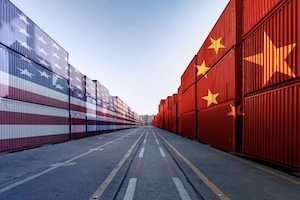
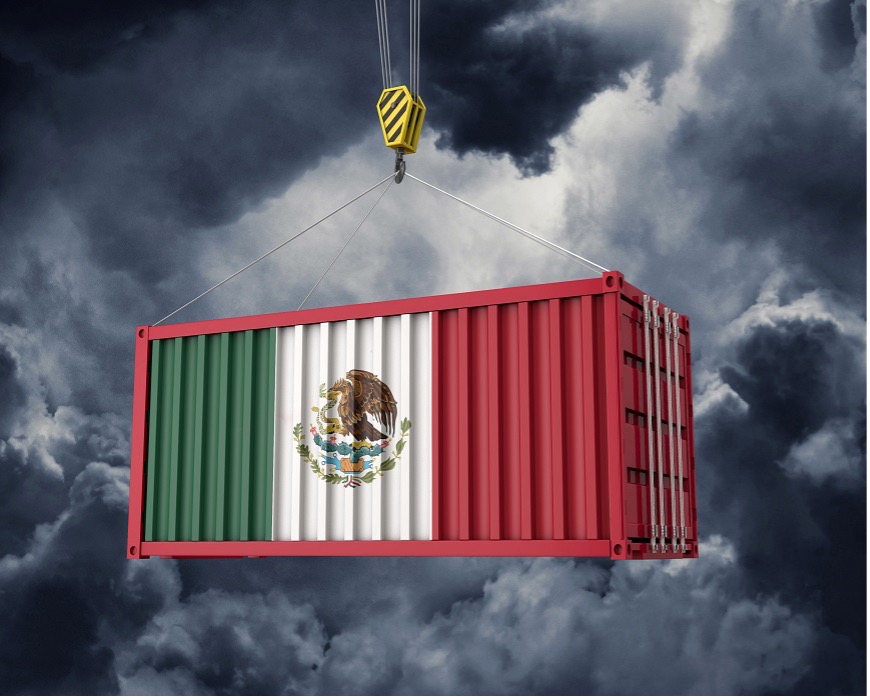
The United States has a long history of using tariffs. The first significant tariff legislation was the Tariff Act of 1789, signed by President George Washington. Tariffs have been used for various purposes over the years, including protecting domestic industries, generating government revenue, and negotiating trade agreements. The use of tariffs however has evolved, with significant changes during different historical periods, such as the high tariffs of the 19th century and the shift towards free trade in the mid-20th century, as well as the current U.S. trade war with China, and possibly soon to be with Mexico and Canada.

Read More »
space

Out of This World!  Proposed New Regulations on Space and Spacecraft

On October 23, 2024, the Directorate of Defense Trade Controls published proposed changes to the International Traffic in Arms Regulations (ITAR) affecting exports of spacecraft and launch vehicles and related activities. Subsequently the department extended the comment period from Nov. 22 to Dec. 23, 2024. The Bureau of Industry & Security (BIS) of the Department of Commerce published corresponding proposed changes to the Export Administration Regulations on Oct. 23, 2024.

Read More »
tariffs

Presidential Authority to Unilaterally Raise Tariffs

This article examines the constitutional authorities and various statutes that reserve tariff authorities for Congress and some legal authorities in which Congress has delegated tariff authorities to the President. The U.S. is a party to numerous multilateral and regional trade agreements that have binding tariff commitments that will be impacted as well.

Read More »
tariffs

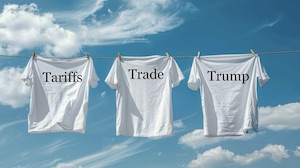
Tariffs, Trade & Trump

Historically, trade agreements have focused on reducing barriers to trade—such as tariffs and quotas—while encouraging economic integration and growth. Environmental protection was often considered a separate issue, addressed primarily through national regulations or multilateral environmental agreements like the Paris Agreement. However, recent developments suggest that trade and environmental concerns are converging, with many new trade agreements incorporating specific environmental provisions.

Read More »