
A New Era of Trade Fraud Enforcement
The new DHS/DOJ Trade Fraud Resource Guide should resonate across the trade ecosystem, especially for importers, Customs brokers, and in-house counsel.

The new DHS/DOJ Trade Fraud Resource Guide should resonate across the trade ecosystem, especially for importers, Customs brokers, and in-house counsel.

The war with Iran is being fought with missiles, aircraft and naval forces, but some of its most consequential effects are disruptions impacting energy markets, international shipping, insurance, supply chains, and prices, while adding another layer of sanctions and tariff risk to international trade. The result is particularly significant because the Strait of Hormuz, at the center of the conflict, is one of the most important arteries in world commerce.

A municipal government’s use of emergency powers might seem inconsequential, but it contributes to many communities’ accumulation of debt, housing and commercial space that is affordable to hypothetical residents but not actual ones, surveillance cameras, empty offices and strip malls, and contractual commitments to data centers and private prisons – all without any meaningful public involvement.

There are about 200 straits worldwide, but only 18–20 of them actually matter for global trade, and 9 are considered truly critical choke points. So, these are the straits/canals where closure would cause (and is currently causing) massive global economic shock: Strait of Malacca, Strait of Hormuz, Suez Canal, Panama Canal, Bab elMandeb, Strait of Gibraltar, Bosphorus Strait, Danish Straits, and of course, the ever-impending blockage of the Taiwan Strait.

A sweeping new White House Executive Order is set to once again shake up global supply chains by requiring a historic overhaul of the U.S. Importer of Record (IOR) framework. It lays out raising penalty floors, and tightening disclosure rules for everyone bringing goods into the United States, among other things.

“Origin Engineering” refers to modifying the sourcing of essential product inputs or relocating key manufacturing processes from countries subject to higher tariff rates to jurisdictions with more favorable trade treatment. It is one of the most effective tools available to importers navigating elevated tariff exposure.

Mexico’s customs and foreign trade legal framework has evolved toward a stricter and more controlled compliance model.

On June 3, 2026, President Trump issued Executive Order 14411, “Strengthening Customs Enforcement,” directing the Department of Homeland Security and U.S. Customs and Border Protection to tighten importer eligibility, increase disclosure obligations, and expand enforcement measures across the U.S. import system.

Yes, regarding this particular topic I am immediately surrounded by all of those external voices, even internal, telling me of how ridiculous it would be for the US to follow through and pull out of the USMCA. My response of course is noting that I probably wouldn’t have given the topic a second thought had the President of the United States not mentioned that this was a consideration regarding the upcoming July 2026 USMCA review.

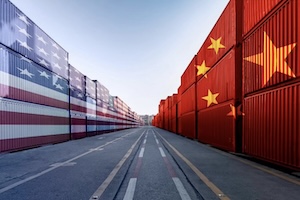
On June 15, 2026, the U.S. Supreme Court denied a petition for a writ of certiorari in the case of HMTX Industries LLC v. United States. The petition came in response to the Federal Circuit’s decision to uphold use of tariffs against China under Lists 3 and 4A of Section 301 during the first Trump Administration.

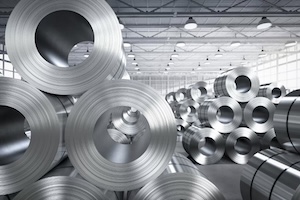
The steel trade with Mexico is particularly strategic at this moment. Companies are shifting supply chains to North America, and Mexico which has been an attractive manufacturing hub for various industries, such as automotive, aerospace, construction, electronics, household appliances, and more. This trend is driving strong demand for imported steel while simultaneously creating new export opportunities for Mexican producers. Much of this advantage stems from the USMCA, because steel originating within the USCMA region can qualify for preferential tariff treatment when traded within the United States and Canada, provided that the applicable rules of origin are fully met.

China owns outright or has majority control in 17 overseas ports globally, according to recent estimates. However, its broader footprint is much larger with 129 port projects worldwide that involve Chinese investment, construction, or operational control. 115 of these are active, spanning every continent except Antarctica, which is next.

It’s been more than a little concerning to the Trump Administration as these deposits have everything to do with international security as they are needed in the production of the very high-end microchips. So, now that it has been discovered that Greenland apparently has one of the largest deposits on the planet, Trump has stated that we will have Greenland, one way or another. While he hasn’t explicitly committed to military action, he’s made it clear that he won’t rule it out.

On August 29, 2025, Wyoming made history becoming the first state in the United States to issue its own stablecoin, the Frontier (FRNT) token, marking a groundbreaking moment in state-level cryptocurrency adoption. Wyoming’s pioneering move represents more than just technological innovation. It signals a fundamental shift in how states can leverage blockchain technology with robust legal frameworks to modernize their financial infrastructure and maintain competitive advantages in the evolving digital economy.

Importers who have paid tariffs imposed under the International Emergency Economic Powers Act (IEEPA) should take immediate steps to preserve their eligibility for potential refunds. Multiple lawsuits are currently challenging the legality of these tariffs, and the Supreme Court is set to decide the issue in November. If the Court ultimately invalidates the tariffs, importers may be entitled to recover duties paid. However, securing refunds depends on preserving jurisdictional options—especially given the uncertainty about whether these tariffs constitute a protestable decision under customs law. There are three potential refund mechanisms at play.

On May 28, 2025, a three-judge panel at the Court of International Trade (CIT) ruled in two cases (VOS Selections, Inc. v. Trump and the State of Oregon v. Trump) that the Presidential actions taken under the International Emergency Economic Powers Act (IEEPA) (50 U.S.C. §§ 1701–1707) to impose tariffs on Canada, Mexico and China for illegal immigration and fentanyl smuggling are unconstitutional. The CIT said that the tariff actions did not directly address the declared emergency and were not delegated by Congress to the Executive Branch and therefore exceed the President’s tariff setting authority under the Constitution.

Prior to August 29 of this year, 19 USC 321 – popularly known as a Section or de minimis clearance – allowed imported shipments valued at less than $800 to enter the US free of duty and entry requirements. The idea behind this was (1) the cost of processing an entry and duty payment would be more than the duty collected, and (2) setting the threshold at this level would promote eCommerce. It would also allow US Customs & Border Protection (CBP) to use its resources more effectively.

Just look at the current landscape of how China has been innovating through various trade related sanctions, bans, and tariffs. Necessity has always been the mother of invention, and in the case of China and the never-ending western pressure it has also been the catalyst in many cases for that which ultimately drives them to create and overcome.

After challenging negotiations and rising tariff tensions, the U.S. and Japan have reached a trade deal. This agreement precedes the August 1st tariff deadline, preventing a scheduled 25% tariff increase on Japanese products. The deal includes substantial Japanese investments in the U.S.

Here we are. August 1st, 2025, and the media is now publishing what facts they have on the various trade deals as well as those that have yet to come to fruition, in addition to the new announcement of imposed global tariffs which range anywhere from 10% to 41%, Yes, the trade world is on fire from a U.S. perspective. CNN, my “go-to” is reporting that the Trump Administration is imposing tariffs on over 60 countries around the globe.