A New Era of Trade Fraud Enforcement
The new DHS/DOJ Trade Fraud Resource Guide should resonate across the trade ecosystem, especially for importers, Customs brokers, and in-house counsel.

The new DHS/DOJ Trade Fraud Resource Guide should resonate across the trade ecosystem, especially for importers, Customs brokers, and in-house counsel.

The war with Iran is being fought with missiles, aircraft and naval forces, but some of its most consequential effects are disruptions impacting energy markets, international shipping, insurance, supply chains, and prices, while adding another layer of sanctions and tariff risk to international trade. The result is particularly significant because the Strait of Hormuz, at the center of the conflict, is one of the most important arteries in world commerce.

A municipal government’s use of emergency powers might seem inconsequential, but it contributes to many communities’ accumulation of debt, housing and commercial space that is affordable to hypothetical residents but not actual ones, surveillance cameras, empty offices and strip malls, and contractual commitments to data centers and private prisons – all without any meaningful public involvement.

There are about 200 straits worldwide, but only 18–20 of them actually matter for global trade, and 9 are considered truly critical choke points. So, these are the straits/canals where closure would cause (and is currently causing) massive global economic shock: Strait of Malacca, Strait of Hormuz, Suez Canal, Panama Canal, Bab elMandeb, Strait of Gibraltar, Bosphorus Strait, Danish Straits, and of course, the ever-impending blockage of the Taiwan Strait.

A sweeping new White House Executive Order is set to once again shake up global supply chains by requiring a historic overhaul of the U.S. Importer of Record (IOR) framework. It lays out raising penalty floors, and tightening disclosure rules for everyone bringing goods into the United States, among other things.

“Origin Engineering” refers to modifying the sourcing of essential product inputs or relocating key manufacturing processes from countries subject to higher tariff rates to jurisdictions with more favorable trade treatment. It is one of the most effective tools available to importers navigating elevated tariff exposure.

Mexico’s customs and foreign trade legal framework has evolved toward a stricter and more controlled compliance model.

On June 3, 2026, President Trump issued Executive Order 14411, “Strengthening Customs Enforcement,” directing the Department of Homeland Security and U.S. Customs and Border Protection to tighten importer eligibility, increase disclosure obligations, and expand enforcement measures across the U.S. import system.

Yes, regarding this particular topic I am immediately surrounded by all of those external voices, even internal, telling me of how ridiculous it would be for the US to follow through and pull out of the USMCA. My response of course is noting that I probably wouldn’t have given the topic a second thought had the President of the United States not mentioned that this was a consideration regarding the upcoming July 2026 USMCA review.

On June 15, 2026, the U.S. Supreme Court denied a petition for a writ of certiorari in the case of HMTX Industries LLC v. United States. The petition came in response to the Federal Circuit’s decision to uphold use of tariffs against China under Lists 3 and 4A of Section 301 during the first Trump Administration.

In 2024, China’s Belt and Road Initiative (BRI) saw significant financial engagement. Preliminary data indicates that China invested approximately $92.4 billion in various projects across the 149 countries involved in the BRI. China’s Belt and Road Initiative (BRI) encompasses numerous large-scale infrastructure projects across the globe.

As of now, the start of 2025, there are several Chinese industrial parks in Mexico, with notable examples including the Hofusan Industrial Park near Monterrey, which hosts manufacturing plants for ten Chinese companies. When one is considering how to navigate the U.S. import tariffs, for many Chinese manufacturers, pulling the trigger on nearshoring is the right move.

Recent announcements by former U.S. President Donald Trump regarding the potential imposition of import duties on goods from Mexico have created uncertainty for companies operating under the IMMEX program. Many businesses are concerned that the benefits provided by this program may no longer apply.

As one of his first official acts as President, Trump released his memorandum on America First Trade Policy. The policy offers insight into the new administration’s trade priorities and calls for a review of current trade-related policies. President Trump says his goal is to establish “a robust and reinvigorated trade policy that promotes investment and productivity, enhances our Nation’s industrial and technological advantages, defends our economic and national security, and — above all — benefits American workers, manufacturers, farmers, ranchers, entrepreneurs, and businesses.”

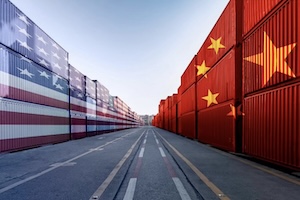
The Trump Administration has demonstrated a willingness to apply new tariffs to goods entering the U.S. as a viable tactic under its America First strategy to achieve greater fairness in its dealings with other countries. The application of tariffs is authorized under a number of standard legal procedures, such as trade remedy investigations to mitigate dumping of goods at less than fair value into the U.S. market or eliminating the unfair price advantages of government subsidies, and use of section 301 duties to respond to unfair trade practices by other countries. However, the broad-brush use of tariffs to coerce our trading partners to make concessions in non-trade areas to resolve a domestic crisis is relatively new.

I can’t help but reflect on a negotiation seminar I took in law school, where we studied the Madman Theory, popularized by Richard Nixon. The theory suggests that acting unpredictably or being willing to take extreme actions can create leverage. If your opponent believes you might “blow it all up,” they may feel forced to make concessions. This strategy clearly echoes Trump’s approach to trade policy.

President Donald Trump made headlines when he announced an External Revenue Service (ERS) agency to collect tariff incomes. The announcement sparked a heated debate among trade experts, economists, and business leaders. But, what exactly would be the purpose of the agency? Well, we can take the words spoken from his inauguration address as an answer.

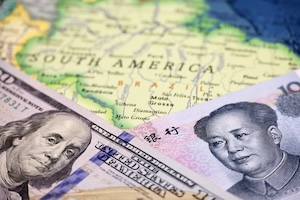
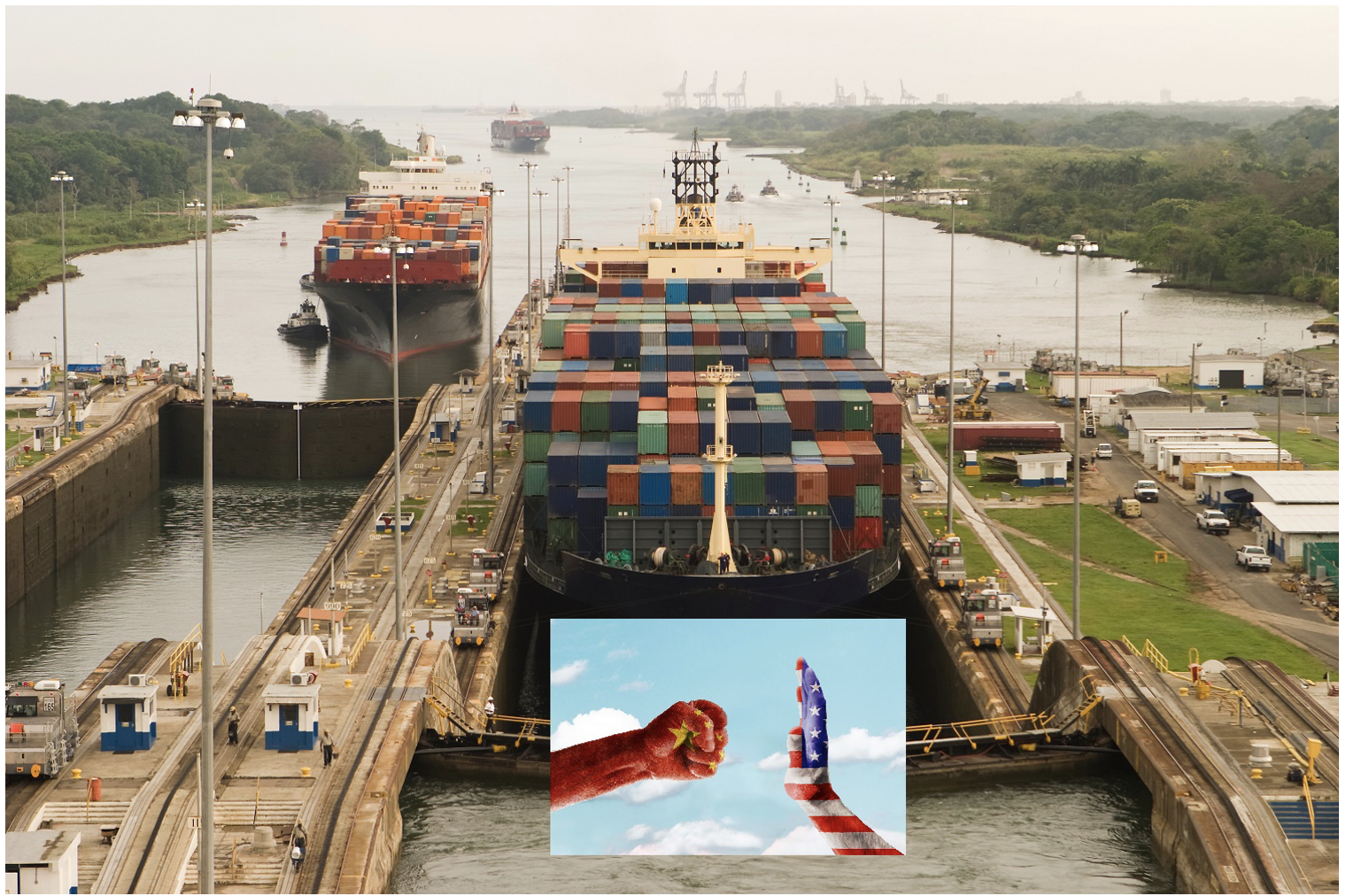
China has significantly expanded its economic and geopolitical footprint in Latin America, particularly through the acquisition and development of critical infrastructure such as ports, airfields, and railways. This strategic move has raised questions about the long-term implications for regional sovereignty, global trade routes, and the future of the Panama Canal, a linchpin of international maritime commerce.

If you have a company that imports chemicals – whether they are used as raw materials or components for onward manufacturing, or finished goods containing chemical components – you have been facing significant challenges over the last half-dozen years. Some of these challenges include the trade wars with China (I’m looking at you, Section 301) and the disruptive impact of COVID-19 to global supply chains. In response to these challenges, you have maybe modified your supply chain to reduce your dependence on Chinese chemical imports. Or perhaps your supply chain was not largely affected by Section 301 tariffs (if so, consider yourself lucky – and may your luck hold!).

A customs broker license is issued to a person who has successfully passed a grueling licensing exam (after paying the exam fee), submitted a license application (along with another fee), and passed the subsequent FBI background investigation. The open-book exam, which lasts 4½ hours and comprises 80 multiple-choice questions, is ostensibly intended to measure one’s knowledge about various customs-related regulations and practices yet experience or employment in a customs-related job is not a prerequisite.