
A New Era of Trade Fraud Enforcement
The new DHS/DOJ Trade Fraud Resource Guide should resonate across the trade ecosystem, especially for importers, Customs brokers, and in-house counsel.

The new DHS/DOJ Trade Fraud Resource Guide should resonate across the trade ecosystem, especially for importers, Customs brokers, and in-house counsel.

The war with Iran is being fought with missiles, aircraft and naval forces, but some of its most consequential effects are disruptions impacting energy markets, international shipping, insurance, supply chains, and prices, while adding another layer of sanctions and tariff risk to international trade. The result is particularly significant because the Strait of Hormuz, at the center of the conflict, is one of the most important arteries in world commerce.

A municipal government’s use of emergency powers might seem inconsequential, but it contributes to many communities’ accumulation of debt, housing and commercial space that is affordable to hypothetical residents but not actual ones, surveillance cameras, empty offices and strip malls, and contractual commitments to data centers and private prisons – all without any meaningful public involvement.

There are about 200 straits worldwide, but only 18–20 of them actually matter for global trade, and 9 are considered truly critical choke points. So, these are the straits/canals where closure would cause (and is currently causing) massive global economic shock: Strait of Malacca, Strait of Hormuz, Suez Canal, Panama Canal, Bab elMandeb, Strait of Gibraltar, Bosphorus Strait, Danish Straits, and of course, the ever-impending blockage of the Taiwan Strait.

A sweeping new White House Executive Order is set to once again shake up global supply chains by requiring a historic overhaul of the U.S. Importer of Record (IOR) framework. It lays out raising penalty floors, and tightening disclosure rules for everyone bringing goods into the United States, among other things.

“Origin Engineering” refers to modifying the sourcing of essential product inputs or relocating key manufacturing processes from countries subject to higher tariff rates to jurisdictions with more favorable trade treatment. It is one of the most effective tools available to importers navigating elevated tariff exposure.

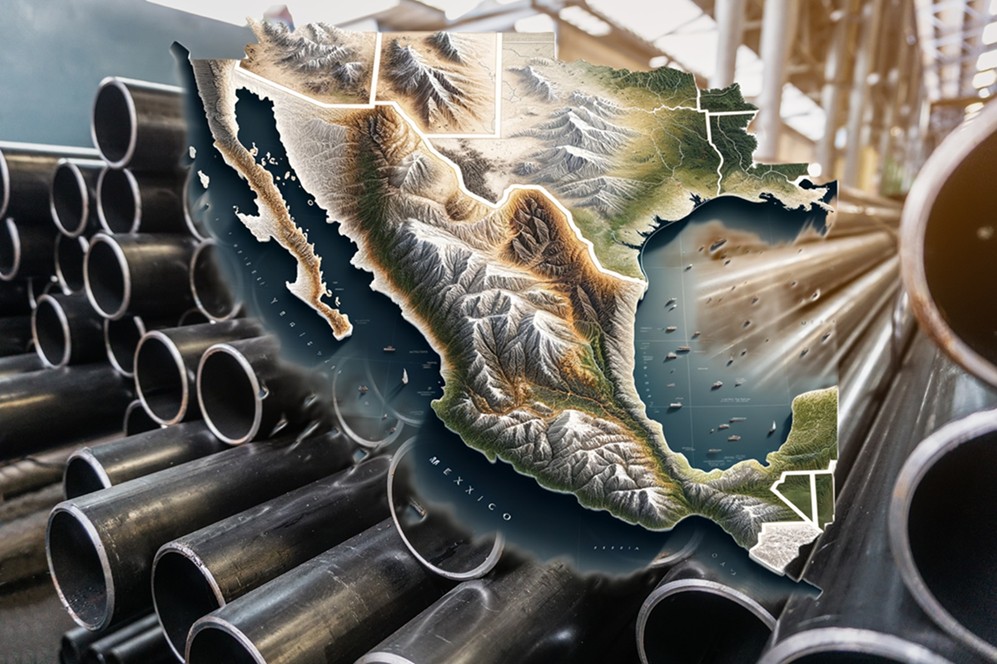
Mexico’s customs and foreign trade legal framework has evolved toward a stricter and more controlled compliance model.

On June 3, 2026, President Trump issued Executive Order 14411, “Strengthening Customs Enforcement,” directing the Department of Homeland Security and U.S. Customs and Border Protection to tighten importer eligibility, increase disclosure obligations, and expand enforcement measures across the U.S. import system.

Yes, regarding this particular topic I am immediately surrounded by all of those external voices, even internal, telling me of how ridiculous it would be for the US to follow through and pull out of the USMCA. My response of course is noting that I probably wouldn’t have given the topic a second thought had the President of the United States not mentioned that this was a consideration regarding the upcoming July 2026 USMCA review.

On June 15, 2026, the U.S. Supreme Court denied a petition for a writ of certiorari in the case of HMTX Industries LLC v. United States. The petition came in response to the Federal Circuit’s decision to uphold use of tariffs against China under Lists 3 and 4A of Section 301 during the first Trump Administration.

The President signed into law the Guiding and Establishing National Innovation for U.S. Stablecoins of 2025’or ‘‘GENIUS Act of 2025’” (the Act) on July 18, 2025. The new law establishes a basis for regulators to permit a variety of bank and non-bank entities to issue payment stablecoins that will be used for payments and reserves for a variety of purposes. This analysis covers the major provisions of the new law.

Since taking office on January 20, 2025, the Trump Administration has undertaken an aggressive trade policy that has impacted, and will continue to impact, all countries trading with the US. Many of the actions seek to reverse the established principles of trade policy that have been supported by both political parties, enshrined in the rules of international agreements and organizations, and regulated by executive branch agencies since the end of World War II.

From a Mexican resident’s perspective, who is also involved in international trade, it appears that since the Trump administration took office, the global economic scenario has been altered by an escalating trade war, characterized by the imposition of tariffs by the U.S. government, on a range of countries. These measures, intended to safeguard the U.S. interests, have affected the relationships with certain international markets, as the U.S. is showing signs of progressive isolationist practices.

My internship in Mexico was with the Servicio de Administración Tributaria (SAT), the office responsible for applying tax and customs legislation, which facilitates trade through customs administration. With its influence extending across both the public and private sectors, SAT stands at the forefront of Mexico’s efforts to promote transparency, efficiency, and fiscal responsibility. My internship experience within this institution offered invaluable insights into its operations and the impact it has on the nation’s economic landscape.

It comes as no surprise China has been a major focus point of the second Trump administration. One of the key reasons for this focus is the increasing national security concerns over technology. In particular, the smuggling of AI chips, which China intends to use in developing advanced AI systems for military purposes and surveillance.

Question 1: How are you advising businesses in your jurisdiction when protecting themselves from the impact of trade wars and sanctions, and what strategies can professional services firms offer to mitigate these risks?

If I heard it once, I’ve heard it a thousand times, China is the sourcing capital of the world. I’ve also repeated this statement at least 400+ times in many conversations over the years regarding global trade. China, it’s also where the global market goes for rare earth minerals, among thousands of other necessary elements for a veritable plethora of life’s essential things.

On April 2, 2025, President Trump announced reciprocal tariffs, setting a baseline rate of 10% on imports from all countries, with higher rates on dozens of countries which the United States (U.S.) runs trade deficits. Specifically, Trump imposed a 34% tariff on all Chinese imports in response to China’s 67% tariff and non-tariff barriers on U.S. exports, aiming to address what he sees as an unfair trade imbalance.

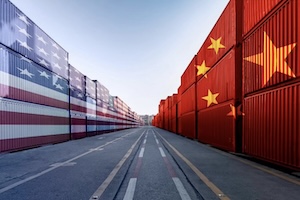
Since Trump’s first term, tensions between the United States and China, the world’s two largest economies, have been on the rise. President Trump ran for his second presidential term on a promise to reduce reliance on China – and promise kept. In one of his first Presidential actions, President Trump issued an “America First Trade Policy” memorandum dedicating an entire section to trade relations with China. Since then, several tariffs have been imposed on Chinese goods and the duty-free de minimis treatment for goods valued at $800 or less ended.

In a recent Federal Register notice the Bureau of Industry & Security (BIS) of the Department of Commerce announced that “On May 1, 2025, the Secretary of Commerce initiated an investigation to determine the effects on the national security of imports of commercial aircraft and jet engines, and parts for commercial aircraft and jet engines. This investigation has been initiated under section 232 of the Trade Expansion Act of 1962, as amended (Section 232).” The investigation may take up to 270 days but it can be concluded sooner.