By Victoria Holmes, Braumiller Law Group
United States President Donald Trump met with President Xi Jinping of the People’s Republic of China at a summit in Beijing in mid-May. The two leaders spoke for about two hours behind closed doors, discussing the trade relationship between the world’s two largest economies, the emergence of artificial intelligence, and energy cooperation. But it was a pointed comment from Xi about Taiwan that hinted at an unresolved issue that may make or break global relations.
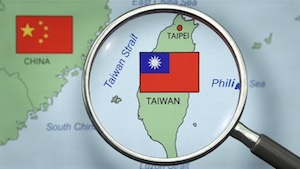
The political and international status of Taiwan leads many nations to tiptoe around the People’s Republic of China when it comes to diplomatic relations. While Taiwan only maintains official relations with 11 out of the 193 United Nations countries, many others maintain unofficial ties with the self-governing island. The United States, for its part, operates under a policy of “strategic ambiguity” which neither formally recognizing Taiwan’s independence nor endorses China’s claim over it.
Technically, the English name for Taiwan is the Republic of China (ROC), not to be confused with mainland People’s Republic of China (PRC), a communist state run by the Chinese Communist Party (CCP). Not very creative with the names, but you get the point. Both sides claim to be the rightful country of China.
During the Beijing summit, Xi told Trump that mishandling the Taiwan situation would put the relationship between the two countries at great jeopardy. China has signaled ambitions to take Taiwan by 2027, a date tied to the centennial of the People’s Liberation Army, not the founding of the PRC, but U.S. intelligence assessments indicate Beijing will not be ready to pursue a full-scale invasion by then. Still, the pressure has not eased. Xi has said the mission of reunification is a “historical mission that we must fulfil,” and China’s new Five-Year Plan explicitly links reunification with Taiwan to the country’s broader modernization goals.
Beyond the warning over Taiwan, Xi said he wanted to help reopen the Strait of Hormuz, pledged not to sell weapons to Iran, and expressed interest in purchasing American oil. The two teams also discussed expanding market access for American businesses in China. Treasury Secretary Scott Bessent noted in a television interview that China has a strong interest in reopening Hormuz since it gets about a third of its energy needs from the Gulf.
The Taiwan Strait is open but will remain a vital topic of conversation between the United States and China. It’s obvious from the shutdown of the Strait of Hormuz that major economic issues resulting from disrupting global trade do not benefit any region. A repeat of this conflict, if China were to try to take Taiwan, would be inevitable. The most critical export from Taiwan is its semiconductors, which are in everything from your cell phone to cars. Bloomberg Economics puts the worst-case scenario at a staggering $10.6 trillion in lost global output in the first year alone.
If a full-scale shutdown of the Taiwan Strait were to occur, then China’s economy would also be devastated due to the usage of it for its own exports. With the current shutdown of the Strait of Hormuz, it’s unlikely that China will attempt to retake the so-called breakaway province while its own state is so weakened. According to one report, a shutdown of the strait would prompt a GDP downfall of 5 percent, similar to COVID or the financial crisis of 2008.
Investors have already broken away from expanding into China because of the economic risk associated with taking Taiwan. In the most recent summit, President Trump brought along Apple CEO Tim Cook, Tesla’s Elon Musk, and Nvidia CEO Jensen Huang, just a few of the business leaders who partook in meetings. China’s foreign direct investment (FDI) have dropped, and Xi signaled that he wanted American companies to expand into the Chinese market.
It’s worth it to mention the state of Nvidia, given the geopolitical tensions around chipmaking. Journalists could not report whether or not Taiwan was brought up in closed door meetings. Huang also noted in a conference before the Beijing summit that its rival Huawei was progressing in its chip manufacturing capabilities. Washington approved Nvidia to sell a version of one of its chips to the Chinese market.
Despite this friendly meeting, business leaders might still be hedging given the volatile nature of the Taiwan question. Both America and Europe have signed their versions of the Chips Act to help boost semiconductor manufacturing, but even the most optimistic projections acknowledge it will take years before those investments can meaningfully reduce the world’s dependence on Taiwan.
The views in this article are solely of the author and do not express the author’s involvement with The Dispatch.