
A New Era of Trade Fraud Enforcement
The new DHS/DOJ Trade Fraud Resource Guide should resonate across the trade ecosystem, especially for importers, Customs brokers, and in-house counsel.

The new DHS/DOJ Trade Fraud Resource Guide should resonate across the trade ecosystem, especially for importers, Customs brokers, and in-house counsel.

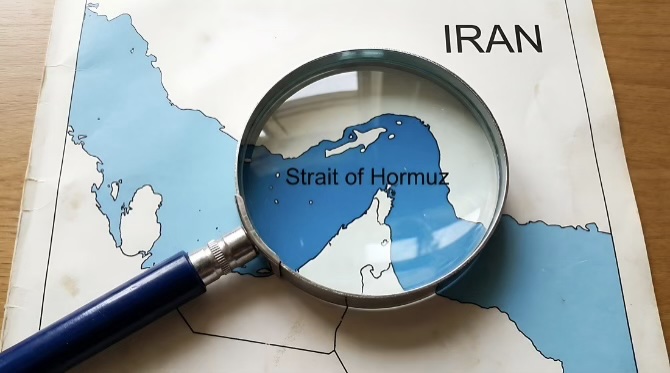
The war with Iran is being fought with missiles, aircraft and naval forces, but some of its most consequential effects are disruptions impacting energy markets, international shipping, insurance, supply chains, and prices, while adding another layer of sanctions and tariff risk to international trade. The result is particularly significant because the Strait of Hormuz, at the center of the conflict, is one of the most important arteries in world commerce.

A municipal government’s use of emergency powers might seem inconsequential, but it contributes to many communities’ accumulation of debt, housing and commercial space that is affordable to hypothetical residents but not actual ones, surveillance cameras, empty offices and strip malls, and contractual commitments to data centers and private prisons – all without any meaningful public involvement.

There are about 200 straits worldwide, but only 18–20 of them actually matter for global trade, and 9 are considered truly critical choke points. So, these are the straits/canals where closure would cause (and is currently causing) massive global economic shock: Strait of Malacca, Strait of Hormuz, Suez Canal, Panama Canal, Bab elMandeb, Strait of Gibraltar, Bosphorus Strait, Danish Straits, and of course, the ever-impending blockage of the Taiwan Strait.

A sweeping new White House Executive Order is set to once again shake up global supply chains by requiring a historic overhaul of the U.S. Importer of Record (IOR) framework. It lays out raising penalty floors, and tightening disclosure rules for everyone bringing goods into the United States, among other things.

“Origin Engineering” refers to modifying the sourcing of essential product inputs or relocating key manufacturing processes from countries subject to higher tariff rates to jurisdictions with more favorable trade treatment. It is one of the most effective tools available to importers navigating elevated tariff exposure.

Mexico’s customs and foreign trade legal framework has evolved toward a stricter and more controlled compliance model.

On June 3, 2026, President Trump issued Executive Order 14411, “Strengthening Customs Enforcement,” directing the Department of Homeland Security and U.S. Customs and Border Protection to tighten importer eligibility, increase disclosure obligations, and expand enforcement measures across the U.S. import system.

Yes, regarding this particular topic I am immediately surrounded by all of those external voices, even internal, telling me of how ridiculous it would be for the US to follow through and pull out of the USMCA. My response of course is noting that I probably wouldn’t have given the topic a second thought had the President of the United States not mentioned that this was a consideration regarding the upcoming July 2026 USMCA review.

On June 15, 2026, the U.S. Supreme Court denied a petition for a writ of certiorari in the case of HMTX Industries LLC v. United States. The petition came in response to the Federal Circuit’s decision to uphold use of tariffs against China under Lists 3 and 4A of Section 301 during the first Trump Administration.

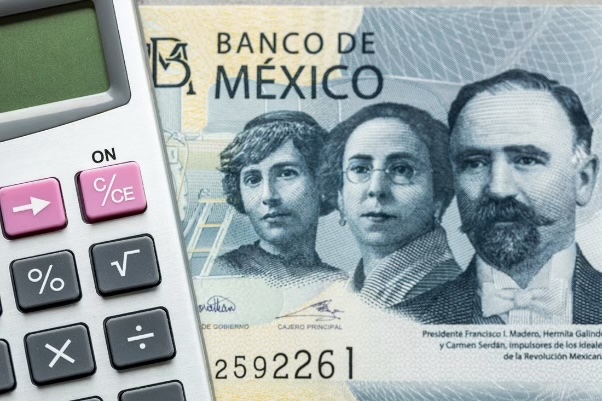
The Mexican legal framework governing customs and foreign trade has evolved toward a stricter and more controlled compliance model. Authorities no longer require importers merely to identify the goods being imported; they now also require proof of the terms and conditions under which the foreign trade transaction is conducted.

The United States-Mexico-Canada Agreement (USMCA) is a trilateral free trade agreement that went into effect on July 1, 2020, as a replacement for its predecessor, the North American Free Trade Agreement (NAFTA). The three involved governments are preparing to initiate the first formal joint review in July 2026 as part of the sixth anniversary of the agreement entering into effect.

Hundreds of importers have rushed to file lawsuits challenging tariffs imposed under the International Emergency Economic Powers Act (IEEPA) as they await a Supreme Court ruling on the statute’s overall legality.

AI is now deeply embedded in the internet and social media, producing everything from humorous content and realistic simulations to advanced automation. These capabilities have expanded beyond entertainment and productivity, reaching into areas of public administration and government oversight. This raises a critical question: if AI is transforming nearly every sector, how will it reshape tax and customs compliance, and how will it be regulated?

Mexico’s customs and foreign trade legal framework has evolved into a substance-based compliance model. Authorities now expect importers to demonstrate not only what was imported, but also why, under what legal relationship, and under what economic terms the transaction took place.

The Directorate of Defense Trade Controls (DDTC) that administers and enforces the ITAR also issues Advisory Opinions (AO). What the heck is an AO? If you come from a Customs compliance background you know about Customs rulings and may have applied for some. An AO is sort of like a Customs ruling in that it is a written interpretation of the regulations.

The MVE, which will be enforceable as of April 1, 2026, is a digital document integrated into Mexico’s Single Window for Foreign Trade (VUCEM – Ventanilla Única de Comercio Exterior) through which importers must declare the customs value of goods entering Mexico.

We have analyzed Decentralized Autonomous Organizations (DAOs) and how the GENIUS Act will permit regulation of payment stablecoins in prior articles. This article examines how decentralized organizations interact with stablecoin ecosystems and the synergies between organizational and payment infrastructure innovation.

In its usual fashion, Congress has allowed the tariff preferences for Haiti under the United States-Caribbean Basin Trade Partnership Act (CBTPA) and the African Growth and Opportunity Act (AGOA) to expire on September 30, 2025. Two bills passed the House with bipartisan majorities on January 12, 2026, to renew the tariff preferences retroactively to the date of expiration and then extend them to September 30, 2028. Both bills are now in the Senate Finance Committee awaiting action. This article examines the current status and likely outcomes of Senate review.

The October 17, 2025 Presidential Proclamation 10984 Adjusting Imports of Medium- and Heavy-Duty Vehicles, Medium- and Heavy-Duty Vehicle Parts, and Buses into the United States included a provision to self-declare certain auto and truck parts and components as being subject to the tariffs with certain requirements.