
A New Era of Trade Fraud Enforcement
The new DHS/DOJ Trade Fraud Resource Guide should resonate across the trade ecosystem, especially for importers, Customs brokers, and in-house counsel.

The new DHS/DOJ Trade Fraud Resource Guide should resonate across the trade ecosystem, especially for importers, Customs brokers, and in-house counsel.

The war with Iran is being fought with missiles, aircraft and naval forces, but some of its most consequential effects are disruptions impacting energy markets, international shipping, insurance, supply chains, and prices, while adding another layer of sanctions and tariff risk to international trade. The result is particularly significant because the Strait of Hormuz, at the center of the conflict, is one of the most important arteries in world commerce.

A municipal government’s use of emergency powers might seem inconsequential, but it contributes to many communities’ accumulation of debt, housing and commercial space that is affordable to hypothetical residents but not actual ones, surveillance cameras, empty offices and strip malls, and contractual commitments to data centers and private prisons – all without any meaningful public involvement.

There are about 200 straits worldwide, but only 18–20 of them actually matter for global trade, and 9 are considered truly critical choke points. So, these are the straits/canals where closure would cause (and is currently causing) massive global economic shock: Strait of Malacca, Strait of Hormuz, Suez Canal, Panama Canal, Bab elMandeb, Strait of Gibraltar, Bosphorus Strait, Danish Straits, and of course, the ever-impending blockage of the Taiwan Strait.

A sweeping new White House Executive Order is set to once again shake up global supply chains by requiring a historic overhaul of the U.S. Importer of Record (IOR) framework. It lays out raising penalty floors, and tightening disclosure rules for everyone bringing goods into the United States, among other things.

“Origin Engineering” refers to modifying the sourcing of essential product inputs or relocating key manufacturing processes from countries subject to higher tariff rates to jurisdictions with more favorable trade treatment. It is one of the most effective tools available to importers navigating elevated tariff exposure.

Mexico’s customs and foreign trade legal framework has evolved toward a stricter and more controlled compliance model.

On June 3, 2026, President Trump issued Executive Order 14411, “Strengthening Customs Enforcement,” directing the Department of Homeland Security and U.S. Customs and Border Protection to tighten importer eligibility, increase disclosure obligations, and expand enforcement measures across the U.S. import system.

Yes, regarding this particular topic I am immediately surrounded by all of those external voices, even internal, telling me of how ridiculous it would be for the US to follow through and pull out of the USMCA. My response of course is noting that I probably wouldn’t have given the topic a second thought had the President of the United States not mentioned that this was a consideration regarding the upcoming July 2026 USMCA review.

On June 15, 2026, the U.S. Supreme Court denied a petition for a writ of certiorari in the case of HMTX Industries LLC v. United States. The petition came in response to the Federal Circuit’s decision to uphold use of tariffs against China under Lists 3 and 4A of Section 301 during the first Trump Administration.

As is well known the US has imposed duties of 25% on imports from Canada and Mexico. This means that those imports will take the regular duty plus 25%. For example, a switchgear assembly classified under 8537.10.91 made in Canada or Mexico will take a duty of 2.7% plus the special tariff of 25% for a total rate of 27.7% of the value.

On March 3, 2025, the Office of the United States Trade Representative (USTR) released the 2025 Trade Policy Agenda and 2024 Annual Report on the Trade Agreements Program. The report outlines the rationale of the Trump Administration for its trade policy goals and actions. It complements and expands on the America First Trade Policy Executive Order and also encompasses the massive imposition of tariffs by the President on April 2 in his so-called “Liberation Day” Executive Order and Fact Sheet.

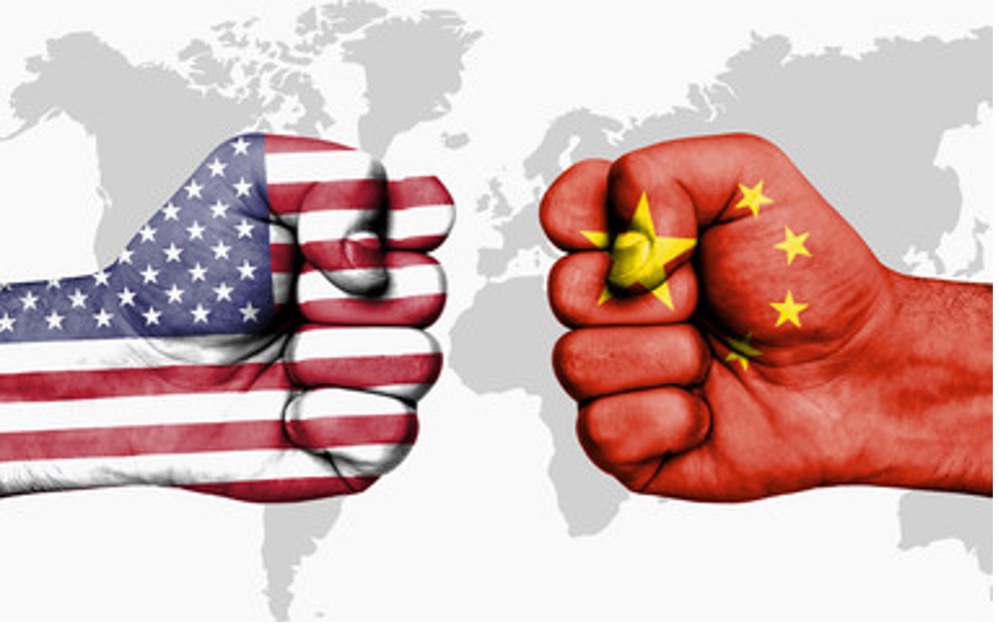
Donald Trump’s first term in office pursued an aggressive foreign policy toward China, imposing tariffs, restricting technology transfers, and accusing Beijing of unfair trade practices. However, one unintended consequence of this hardline approach has been China’s accelerated expansion into Latin America—a region traditionally within the U.S. sphere of influence.

Liberation Day passed with the promised reciprocal tariffs touted by the Trump administration. The president, surrounded by workers in the Rose Garden on April 2, executed a number of tariffs promising to Make America Wealthy Again. How did they calculate these tariffs? Well, there’s speculation.

On March 7, 2025, the White House hosted a Digital Assets Summit to celebrate the creation of a Bitcoin Strategic Reserve and a Digital Assets Stockpile by an Executive Order titled, “Establishment of the Strategic Bitcoin Reserve and United States Digital Asset Stockpile“. The Executive Order recognizes that “The Bitcoin protocol permanently caps the total supply of bitcoin (BTC) at 21 million coins, which is critical to its value proposition as a scarce asset.

The various tariffs that President Trump has imposed since retaking office are based on delegated authority found in several existing statutes. But a century ago, tariffs were primarily the purview of Congress. One of the most controversial manifestations of U.S. tariff legislation (and of American legislation in general) was the Smoot–Hawley Tariff Act of 1930, signed into law by President Hoover shortly after the United States—and the world—fell into the black hole of the Great Depression.

Several fundamental conditions are widely presumed necessary for a country to enjoy the benefits of global trade. One condition is that import activity ought not exceed export activity. Put more simply, we must sell more than we buy. On its face this seem reasonable. It seems logical that a trade deficit (that is, selling less than we buy) is a drain on our economy. Indeed, every month the news media feed us the bad news about the negative “balance of trade” data reported by the Commerce Department.

Prior to the origination of the plans for the Panama Canal vessels of trade had few options of getting goods from Europe and Asia to N. America. One was to sail around the southern tip of South America (Cape Horn) adding months to the journey if they were lucky enough to make it through what is known as one of the most hazardous shipping routes in the world, where it’s estimated that over 800 ships have been lost over the last couple of centuries of trade.

On February 10, 2025, President Trump signed proclamations to reinstate the full 25% tariff on steel imports and increase tariffs on aluminum imports to 25%. Section 232 of the Trade Expansion Act of 1962 affords the President with the authority to adjust imports being brought into the U.S. in quantities or under circumstances that threaten to impair national security. The President says the reinvigorated Section 232 tariffs “will support the program’s original objective of revitalizing the domestic steel and aluminum industries and achieving sustainable capacity utilization of at least 80%.”

The United States-Mexico-Canada Agreement (USMCA) joint review process is scheduled to begin on July 1, 2026, but the time to prepare is now. Embedded trade compliance professionals should already be doing scenario analysis—pulling data, calculating the supply chain impacts of potential changes, and helping their companies to strategize accordingly.