
News Articles

tariffs

Preserving Refund Rights for IEEPA-Based Tariffs

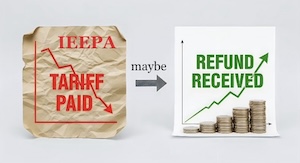
Importers who have paid tariffs imposed under the International Emergency Economic Powers Act (IEEPA) should take immediate steps to preserve their eligibility for potential refunds. Multiple lawsuits are currently challenging the legality of these tariffs, and the Supreme Court is set to decide the issue in November. If the Court ultimately invalidates the tariffs, importers may be entitled to recover duties paid. However, securing refunds depends on preserving jurisdictional options—especially given the uncertainty about whether these tariffs constitute a protestable decision under customs law. There are three potential refund mechanisms at play.

Read More »
ieepa tariffs

Unconstitutionality of IEEPA Tariffs Upheld – Supreme Court to Review

On May 28, 2025, a three-judge panel at the Court of International Trade (CIT) ruled in two cases (VOS Selections, Inc. v. Trump and the State of Oregon v. Trump) that the Presidential actions taken under the International Emergency Economic Powers Act (IEEPA) (50 U.S.C. §§ 1701–1707) to impose tariffs on Canada, Mexico and China for illegal immigration and fentanyl smuggling are unconstitutional. The CIT said that the tariff actions did not directly address the declared emergency and were not delegated by Congress to the Executive Branch and therefore exceed the President’s tariff setting authority under the Constitution.

Read More »
de minimis

The End of De Minimis Section 321 Clearances

Prior to August 29 of this year, 19 USC 321 – popularly known as a Section or de minimis clearance – allowed imported shipments valued at less than $800 to enter the US free of duty and entry requirements. The idea behind this was (1) the cost of processing an entry and duty payment would be more than the duty collected, and (2) setting the threshold at this level would promote eCommerce. It would also allow US Customs & Border Protection (CBP) to use its resources more effectively.

Read More »
Chinese innovation

Sanctions, Bans, and Tariffs How The U.S. is Fueling Chinese Innovation

Just look at the current landscape of how China has been innovating through various trade related sanctions, bans, and tariffs. Necessity has always been the mother of invention, and in the case of China and the never-ending western pressure it has also been the catalyst in many cases for that which ultimately drives them to create and overcome.

Read More »
japan

Japan and U.S. Trade Agreement

After challenging negotiations and rising tariff tensions, the U.S. and Japan have reached a trade deal. This agreement precedes the August 1st tariff deadline, preventing a scheduled 25% tariff increase on Japanese products. The deal includes substantial Japanese investments in the U.S.

Read More »
protectionism

As the U.S. Pushes For More Protectionism, Global Trade Turns to Another Obvious Option- China

Here we are. August 1st, 2025, and the media is now publishing what facts they have on the various trade deals as well as those that have yet to come to fruition, in addition to the new announcement of imposed global tariffs which range anywhere from 10% to 41%, Yes, the trade world is on fire from a U.S. perspective. CNN, my “go-to” is reporting that the Trump Administration is imposing tariffs on over 60 countries around the globe.

Read More »
stablecoin

GENIUS Act Establishes Legal Framework for Payment Stablecoins

The President signed into law the Guiding and Establishing National Innovation for U.S. Stablecoins of 2025’or ‘‘GENIUS Act of 2025’” (the Act) on July 18, 2025. The new law establishes a basis for regulators to permit a variety of bank and non-bank entities to issue payment stablecoins that will be used for payments and reserves for a variety of purposes. This analysis covers the major provisions of the new law.

Read More »
tariffs

Trade Letters and Tariff Deals – What Is Going On?

Since taking office on January 20, 2025, the Trump Administration has undertaken an aggressive trade policy that has impacted, and will continue to impact, all countries trading with the US. Many of the actions seek to reverse the established principles of trade policy that have been supported by both political parties, enshrined in the rules of international agreements and organizations, and regulated by executive branch agencies since the end of World War II.

Read More »
tariffs

Mexico’s Evolving Trade Scenario Amidst Global Tariff Tensions

From a Mexican resident’s perspective, who is also involved in international trade, it appears that since the Trump administration took office, the global economic scenario has been altered by an escalating trade war, characterized by the imposition of tariffs by the U.S. government, on a range of countries. These measures, intended to safeguard the U.S. interests, have affected the relationships with certain international markets, as the U.S. is showing signs of progressive isolationist practices.

Read More »
tax service

Behind the Numbers: My Transformative Internship Journey at SAT (Tax Administration Service)

My internship in Mexico was with the Servicio de Administración Tributaria (SAT), the office responsible for applying tax and customs legislation, which facilitates trade through customs administration. With its influence extending across both the public and private sectors, SAT stands at the forefront of Mexico’s efforts to promote transparency, efficiency, and fiscal responsibility. My internship experience within this institution offered invaluable insights into its operations and the impact it has on the nation’s economic landscape.

Read More »
Canada Carney

Goodbye USA – Canadian Prime Minister Mark Carney’s MiddlePowers Playbook is Officially in Play, Part 2

One of my recently published articles covered the World Economic Forum Davos speech by Canadian Prime Minister Mark Carney, where he summoned the middle powers of the earth to unite against the US forces who are demanding that they take a knee and capitulate, per Governor Newsom who was in attendance handing out knee pads. (Really) Well, to say the least, that’s not happening by even the longest stretch of anyone’s imagination.

Read More »
CTPAT Investigation

Keeping the Chain Secure: A Deep Dive into the Latest CTPAT Investigation

The global supply chain is the backbone of the U.S. economy, moving millions of tons of cargo daily. To keep things running smoothly and safely, U.S. Customs and Border Protection (CBP) place a significant reliance on the Customs Trade Partnership Against Terrorism (CTPAT). This voluntary program trades “gold star” benefits—like fewer inspections, business resumption priority, and faster border crossings—for a company’s commitment to high-level security.


Read More »
Statute of Limitations

CBP Statute of Limitations Waivers – Overview of Issues and Operation

Many trade practitioners that have had experience with a CBP prior disclosure or penalty action have encountered a request by CBP to execute a Statute of Limitations (SOL) waiver. These are usually accompanied by a request for the importer to provide a corporate resolution or the equivalent evidencing the authority of the SOL waiver signatory to sign the waiver on behalf of the importer / company.

Read More »
Mexico

Contratos Celebrados por Importadores Mexicanos (Su Relevancia en la Materialidad de las Operaciones Aduaneras y de Comercio Exterior)

El marco jurídico mexicano en materia aduanera y de comercio exterior ha evolucionado hacia un modelo de cumplimiento más estricto y controlado.  Las autoridades ya no solo exigen que los importadores identifiquen cual es la mercancía objeto de la importación, sino también que acrediten bajo que términos y condiciones se realiza la operación de comercio exterior.

Read More »
USMCA

USMCA: Negotiation Preparations

The United States-Mexico-Canada Agreement (USMCA) is a trilateral free trade agreement that went into effect on July 1, 2020, as a replacement for its predecessor, the North American Free Trade Agreement (NAFTA). The three involved governments are preparing to initiate the first formal joint review in July 2026 as part of the sixth anniversary of the agreement entering into effect.

Read More »
IEEPA

IEEPA Litigation – Should you be Involved?

Hundreds of importers have rushed to file lawsuits challenging tariffs imposed under the International Emergency Economic Powers Act (IEEPA) as they await a Supreme Court ruling on the statute’s overall legality.

Read More »
AI

Uncertainty Surrounding the Use of Artificial Intelligence (AI) in Tax and Customs / Foreign Trade Compliance

AI is now deeply embedded in the internet and social media, producing everything from humorous content and realistic simulations to advanced automation. These capabilities have expanded beyond entertainment and productivity, reaching into areas of public administration and government oversight. This raises a critical question: if AI is transforming nearly every sector, how will it reshape tax and customs compliance, and how will it be regulated?

Read More »