News Articles

USMCA

USMCA: Negotiation Preparations

The United States-Mexico-Canada Agreement (USMCA) is a trilateral free trade agreement that went into effect on July 1, 2020, as a replacement for its predecessor, the North American Free Trade Agreement (NAFTA). The three involved governments are preparing to initiate the first formal joint review in July 2026 as part of the sixth anniversary of the agreement entering into effect.

Read More »
IEEPA

IEEPA Litigation – Should you be Involved?

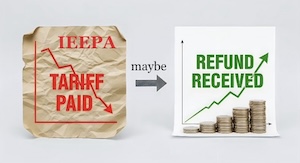
Hundreds of importers have rushed to file lawsuits challenging tariffs imposed under the International Emergency Economic Powers Act (IEEPA) as they await a Supreme Court ruling on the statute’s overall legality.

Read More »
AI

Uncertainty Surrounding the Use of Artificial Intelligence (AI) in Tax and Customs / Foreign Trade Compliance

AI is now deeply embedded in the internet and social media, producing everything from humorous content and realistic simulations to advanced automation. These capabilities have expanded beyond entertainment and productivity, reaching into areas of public administration and government oversight. This raises a critical question: if AI is transforming nearly every sector, how will it reshape tax and customs compliance, and how will it be regulated?

Read More »
DDTC

Advisory Opinions From DDTC – What Are They?

The Directorate of Defense Trade Controls (DDTC) that administers and enforces the ITAR also issues Advisory Opinions (AO). What the heck is an AO? If you come from a Customs compliance background you know about Customs rulings and may have applied for some. An AO is sort of like a Customs ruling in that it is a written interpretation of the regulations.

Read More »
DAO

Integrating DAOs and DUNAs with Stablecoin Ecosystems

We have analyzed Decentralized Autonomous Organizations (DAOs) and how the GENIUS Act will permit regulation of payment stablecoins in prior articles. This article examines how decentralized organizations interact with stablecoin ecosystems and the synergies between organizational and payment infrastructure innovation.

Read More »
Haiti

Renewal of Haiti HOPE/HELP and AGOA Trade Preferences Up to Senate

In its usual fashion, Congress has allowed the tariff preferences for Haiti under the United States-Caribbean Basin Trade Partnership Act (CBTPA) and the African Growth and Opportunity Act (AGOA) to expire on September 30, 2025. Two bills passed the House with bipartisan majorities on January 12, 2026, to renew the tariff preferences retroactively to the date of expiration and then extend them to September 30, 2028. Both bills are now in the Senate Finance Committee awaiting action. This article examines the current status and likely outcomes of Senate review.

Read More »
Section 232 Automotive

Self-Declaring Under the Section 232 Automotive and MHDVP Programs

The October 17, 2025 Presidential Proclamation 10984 Adjusting Imports of Medium- and Heavy-Duty Vehicles, Medium- and Heavy-Duty Vehicle Parts, and Buses into the United States included a provision to self-declare certain auto and truck parts and components as being subject to the tariffs with certain requirements.

Read More »
Section 232 Iron

Section 232 and Iron: What CBP’s New Guidance Means for Your Imports – The Difference Between Steel and Iron Has Never Mattered More

We are operating in one of the most volatile trade environments in recent memory. Tariff policy is shifting faster than most compliance programs can absorb. In that context, CBP’s March 15 guidance on Section 232 content value is not just a technical update. It brings meaningful clarity and importers who move quickly may find real money on the table.

Read More »
301 Tariffs

Section 301 Tariffs: A New Phase in U.S. Trade Policy

The resurgence of Section 301 tariff investigations marks a pivotal shift in U.S. trade policy. Following the Supreme Court’s invalidation of tariffs imposed under the International Emergency Economic Powers Act (IEEPA), the Office of the U.S. Trade Representative (USTR) has turned to Section 301 of the Trade Act of 1974 as a more durable legal pathway to reimpose and potentially expand tariff measures.

Read More »
AI Legislation

AI Legislative Framework Proposed by the White House

On March 20, 2026, the Trump Administration announced that it, “is committed to winning the AI race to usher in a new era of human flourishing, economic competitiveness, and national security for the American people.“ The White House issued a new comprehensive national legislative framework that addresses six key objectives.

Read More »
IEEPA

Supreme Court Clarifies Separation of Powers in IEEPA Tariffs Decision

In the final analysis, this case stands as one of the most important separation of powers decisions in the economic domain in U.S. history. It clarifies that tariffs are a form of taxation reserved to Congress, embeds the major questions doctrine in trade law, and reasserts the structural boundary between legislative and executive authority.

Read More »
Canada Carney

Goodbye USA – Canadian Prime Minister Mark Carney’s MiddlePowers Playbook is Officially in Play, Part 2

One of my recently published articles covered the World Economic Forum Davos speech by Canadian Prime Minister Mark Carney, where he summoned the middle powers of the earth to unite against the US forces who are demanding that they take a knee and capitulate, per Governor Newsom who was in attendance handing out knee pads. (Really) Well, to say the least, that’s not happening by even the longest stretch of anyone’s imagination.

Read More »
CTPAT Investigation

Keeping the Chain Secure: A Deep Dive into the Latest CTPAT Investigation

The global supply chain is the backbone of the U.S. economy, moving millions of tons of cargo daily. To keep things running smoothly and safely, U.S. Customs and Border Protection (CBP) place a significant reliance on the Customs Trade Partnership Against Terrorism (CTPAT). This voluntary program trades “gold star” benefits—like fewer inspections, business resumption priority, and faster border crossings—for a company’s commitment to high-level security.


Read More »
Statute of Limitations

CBP Statute of Limitations Waivers – Overview of Issues and Operation

Many trade practitioners that have had experience with a CBP prior disclosure or penalty action have encountered a request by CBP to execute a Statute of Limitations (SOL) waiver. These are usually accompanied by a request for the importer to provide a corporate resolution or the equivalent evidencing the authority of the SOL waiver signatory to sign the waiver on behalf of the importer / company.

Read More »
Mexico

Contratos Celebrados por Importadores Mexicanos (Su Relevancia en la Materialidad de las Operaciones Aduaneras y de Comercio Exterior)

El marco jurídico mexicano en materia aduanera y de comercio exterior ha evolucionado hacia un modelo de cumplimiento más estricto y controlado.  Las autoridades ya no solo exigen que los importadores identifiquen cual es la mercancía objeto de la importación, sino también que acrediten bajo que términos y condiciones se realiza la operación de comercio exterior.

Read More »