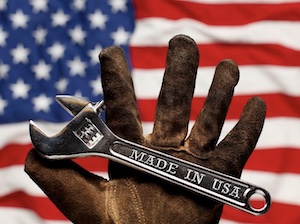
Compliance Issues in Government “Buy America” Solicitations
Whether you are creating a new in-house trade compliance function or evaluating an established one, there is no getting around the perpetual question: Where should Trade Compliance report?

Whether you are creating a new in-house trade compliance function or evaluating an established one, there is no getting around the perpetual question: Where should Trade Compliance report?

By Brenda Cordova, Braumiller Law Group Mexico Legal Counsel Mexico has recently published several legal instruments aimed to prevent and investigate forced and compulsory labor, including

The Trade Act of 1974 grants the President broad powers to manage trade relationships with foreign countries. Section 301 of the act allows the President, acting through the United States Trade Representative (“USTR”), to impose retaliatory tariffs on imports from a country if the USTR determines that country’s economic conduct “is unreasonable or discriminatory and burdens or restricts United States commerce.”

By Adrienne Braumiller, Founding Partner Harold Jackson, Associate Attorney Gavin Andersen, Braumiller Consulting Trade Advisor Section 301 Tariffs on Chinese goods continues to be at the

It’s a little awkward, but in fact, a reality in this day and age that bilateral trade between two countries who view each other as somewhat adversarial, can co-exist economically. As the world turns, so does global trade, take Australia and China for the shining example.

This article provides an overview of federal procurement laws and how the Federal Acquisition Regulations (FAR) implement some of those commitments in government contracts. The FAR, found under 48 C.F.R. Part 25, comprises the list of rules governing procurement of products and materials by federal agencies for public use.

The U.S. continues to spearhead enforcement against imported goods that were made using forced labor, and public enforcement statistics can help your company assess risks of forced labor.

When one company buys another there are typically two ways the purchased company will be treated: (1) It will be incorporated into the parent company and will no longer exist as a separate entity. (2) It will become a separately incorporated subsidiary of the parent company and retain its IRS number.

A large number of companies considering relocating their business abroad have turned their eyes to Mexico, which has become an attractive place for investors to relocate their business, mainly because it is close to the United States and Canada (nearshoring), the labor costs are relatively low, the availability of IMMEX (maquiladora) program, and because there is a preferential treatment to originating goods and foreign investments from the United States and Canada that are protected under the USMCA, among other factors.

2023 is more than a brand-new year – it is an opportunity for your company to prioritize supply chain and customs compliance. For some companies, this means filing a prior disclosure with U.S. Customs and Border Protection (CBP). Companies that are frequent importers are seriously considering disclosing entry violations under the condition that Customs will not issue civil penalties against them.

After the U.S. Supreme Court struck down President Trump’s IEEPA tariffs as unconstitutional in February 2026, the Court tasked the U.S. Court of International Trade (CIT) with developing refund procedures for importers who paid IEEPA tariffs.

On June 2, 2026, the Office of the U.S. Trade Representative (USTR) released its report on Section 301 investigations into the practices of sixty trade partners’ economies with regard to forced labor prohibitions.

President Trump signed the new Executive Order “Strengthening Customs Enforcement.” This new order from the administration tackles different administrative priorities related to customs: Customs Reform and Combatting Customs Fraud. The order-related fact sheet goes into detail about how the Executive Order addresses these objectives and how this will affect importers moving forward.

The outcome of this customs fraud criminal investigation case highlights significant compliance risks for importers, particularly in the areas of classification, documentation, and internal controls.

Global reliance on critical minerals for emerging technologies has created a competition between nations to secure reliable supply chains for continued innovation pertinent to national security. This is necessary from a national security perspective for both partners in this agreement.

The GENIUS Act has authorized several regulatory agencies to issue regulations to develop the first comprehensive federal regulatory framework governing payment stablecoins in the United States. The statute directs multiple federal financial regulators to implement a coordinated supervisory structure governing issuance, reserve management, redemption rights, anti-money laundering compliance, custody, and market structure.

United States President Donald Trump met with President Xi Jinping of the People’s Republic of China at a summit in Beijing in mid-May. The two leaders spoke for about two hours behind closed doors, discussing the trade relationship between the world’s two largest economies, the emergence of artificial intelligence, and energy cooperation. But it was a pointed comment from Xi about Taiwan that hinted at an unresolved issue that may make or break global relations.

When the U.S. Supreme Court invalidated certain tariffs imposed under the International Emergency Economic Powers Act (IEEPA) in Learning Resources, Inc. v. Trump, it did more than reshape trade policy. The decision triggered a complex series of questions regarding tariff refunds, consumer rights, and corporate liability – questions whose effects continue to be felt far beyond the trade community, reaching businesses and households across the US.

Walmart has been in China for about 30 years, entering the market in 1996 when it opened its first Walmart hypermarket and Sam’s Club in Shenzhen. There are now 342 retail stores, 279 Walmart Supercenters, and 63 Sam’s Clubs in China.

Mexico’s tax authority (Servicio de Administración Tributaria – SAT) has postponed the mandatory implementation of the Electronic Value Manifest (Manifestación de Valor Electrónica – EVM). The requirement is now expected to become mandatory on June 1, 2026.