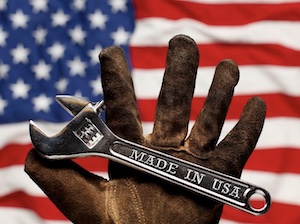
Compliance Issues in Government “Buy America” Solicitations
Whether you are creating a new in-house trade compliance function or evaluating an established one, there is no getting around the perpetual question: Where should Trade Compliance report?

Whether you are creating a new in-house trade compliance function or evaluating an established one, there is no getting around the perpetual question: Where should Trade Compliance report?

By Brenda Cordova, Braumiller Law Group Mexico Legal Counsel Mexico has recently published several legal instruments aimed to prevent and investigate forced and compulsory labor, including

The Trade Act of 1974 grants the President broad powers to manage trade relationships with foreign countries. Section 301 of the act allows the President, acting through the United States Trade Representative (“USTR”), to impose retaliatory tariffs on imports from a country if the USTR determines that country’s economic conduct “is unreasonable or discriminatory and burdens or restricts United States commerce.”

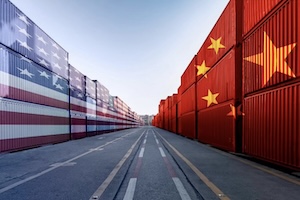
By Adrienne Braumiller, Founding Partner Harold Jackson, Associate Attorney Gavin Andersen, Braumiller Consulting Trade Advisor Section 301 Tariffs on Chinese goods continues to be at the

It’s a little awkward, but in fact, a reality in this day and age that bilateral trade between two countries who view each other as somewhat adversarial, can co-exist economically. As the world turns, so does global trade, take Australia and China for the shining example.

This article provides an overview of federal procurement laws and how the Federal Acquisition Regulations (FAR) implement some of those commitments in government contracts. The FAR, found under 48 C.F.R. Part 25, comprises the list of rules governing procurement of products and materials by federal agencies for public use.

The U.S. continues to spearhead enforcement against imported goods that were made using forced labor, and public enforcement statistics can help your company assess risks of forced labor.

When one company buys another there are typically two ways the purchased company will be treated: (1) It will be incorporated into the parent company and will no longer exist as a separate entity. (2) It will become a separately incorporated subsidiary of the parent company and retain its IRS number.

A large number of companies considering relocating their business abroad have turned their eyes to Mexico, which has become an attractive place for investors to relocate their business, mainly because it is close to the United States and Canada (nearshoring), the labor costs are relatively low, the availability of IMMEX (maquiladora) program, and because there is a preferential treatment to originating goods and foreign investments from the United States and Canada that are protected under the USMCA, among other factors.

2023 is more than a brand-new year – it is an opportunity for your company to prioritize supply chain and customs compliance. For some companies, this means filing a prior disclosure with U.S. Customs and Border Protection (CBP). Companies that are frequent importers are seriously considering disclosing entry violations under the condition that Customs will not issue civil penalties against them.

The new DHS/DOJ Trade Fraud Resource Guide should resonate across the trade ecosystem, especially for importers, Customs brokers, and in-house counsel.

The war with Iran is being fought with missiles, aircraft and naval forces, but some of its most consequential effects are disruptions impacting energy markets, international shipping, insurance, supply chains, and prices, while adding another layer of sanctions and tariff risk to international trade. The result is particularly significant because the Strait of Hormuz, at the center of the conflict, is one of the most important arteries in world commerce.

A municipal government’s use of emergency powers might seem inconsequential, but it contributes to many communities’ accumulation of debt, housing and commercial space that is affordable to hypothetical residents but not actual ones, surveillance cameras, empty offices and strip malls, and contractual commitments to data centers and private prisons – all without any meaningful public involvement.

There are about 200 straits worldwide, but only 18–20 of them actually matter for global trade, and 9 are considered truly critical choke points. So, these are the straits/canals where closure would cause (and is currently causing) massive global economic shock: Strait of Malacca, Strait of Hormuz, Suez Canal, Panama Canal, Bab elMandeb, Strait of Gibraltar, Bosphorus Strait, Danish Straits, and of course, the ever-impending blockage of the Taiwan Strait.

A sweeping new White House Executive Order is set to once again shake up global supply chains by requiring a historic overhaul of the U.S. Importer of Record (IOR) framework. It lays out raising penalty floors, and tightening disclosure rules for everyone bringing goods into the United States, among other things.

“Origin Engineering” refers to modifying the sourcing of essential product inputs or relocating key manufacturing processes from countries subject to higher tariff rates to jurisdictions with more favorable trade treatment. It is one of the most effective tools available to importers navigating elevated tariff exposure.

Mexico’s customs and foreign trade legal framework has evolved toward a stricter and more controlled compliance model.

On June 3, 2026, President Trump issued Executive Order 14411, “Strengthening Customs Enforcement,” directing the Department of Homeland Security and U.S. Customs and Border Protection to tighten importer eligibility, increase disclosure obligations, and expand enforcement measures across the U.S. import system.

Yes, regarding this particular topic I am immediately surrounded by all of those external voices, even internal, telling me of how ridiculous it would be for the US to follow through and pull out of the USMCA. My response of course is noting that I probably wouldn’t have given the topic a second thought had the President of the United States not mentioned that this was a consideration regarding the upcoming July 2026 USMCA review.

On June 15, 2026, the U.S. Supreme Court denied a petition for a writ of certiorari in the case of HMTX Industries LLC v. United States. The petition came in response to the Federal Circuit’s decision to uphold use of tariffs against China under Lists 3 and 4A of Section 301 during the first Trump Administration.