
News Articles

prior notice regulations

Any Comments on FDA’s New Proposed Rule on Prior Notice Regulations?

On November 1, 2023, FDA issued a proposed rule that would make changes to its prior notice regulations, if the rule is finalized. These changes include requiring the name of the mail service and a mail tracking number to be provided in prior notice for food articles arriving by international mail. In addition, the FDA proposes that food facility registration information and prior notice be submitted within a specific timeframe after receiving certain notices of refusal or hold (“post-refusal” and “post-hold” submissions).

Read More »
antidumping

New Antidumping and Countervailing Duty Investigation Initiated Covering Aluminum Extrusions from 15 Countries

On October 4, 2023, A coalition of 14 U.S. aluminum extrusion producers and labor unions filed petitions before the Department of Commerce, International Trade Administration (Commerce) and the International Trade Commission (ITC) seeking to impose antidumping (AD) and countervailing duties (CVD) on aluminum extrusions produced in 15 countries and exported to the U.S.

Read More »
Legal Framework

Legal Framework Governing IMMEX Operations

As we have previously explained in other articles, an IMMEX is a duty deferral program from the Mexican federal government created in 2006, which stands for Industria Manufacturera, Maquiladora y de Servicios de Exportación (Manufacturing, Maquiladora and Export Services Industry).

Read More »
BIS

Overview of BIS’s Interim Final Rules, Export Controls for Advanced Computing, Supercomputing, and Artificial Intelligence

On October 25, 2023, the Bureau of Industry and Security (“BIS”) published interim final rules amending the Export Administration Regulations (“EAR”) to add/clarify new controls on semiconductor manufacturing equipment (“SME”), advanced computing integrated circuits (“IC”), and computer commodities containing them.

Read More »
Xinjiang Exclusions

Challenges Ahead! – Requesting to be Excluded From the Xinjiang Exclusions

In April of this year U.S. Customs & Border Protection (CBP) issued Headquarters Ruling H330077. The ruling was in response to a protest filed by an importer that had a shipment of wearing apparel excluded from entry under a Withhold Release Order (WRO) at the port of Newark, NJ. The wearing apparel was processed from cotton produced in India, made into yarn and fabric in China, and converted to wearing apparel in Cambodia. None of the parties to the transaction were located in the Xinjiang Region of China.

Read More »
buy America

OMB Issues Final Rule for Infrastructure Buy America Preferences

The Office of Management and Budget (“OMB”), Made in America Office issued a Final Rule to clarify the Build America, Buy America Act (“BABA”) provisions of the Infrastructure Investment and Jobs Act4 (“IIJA”) and to clarify existing provisions related to domestic preferences. The Final Rule amends Title 2 of the Code of Federal Regulations (“CFR”), subtitle A, chapter I by adding a new Part 184 to support implementation of BABA. OMB also amended 2 CFR 200.322 to clarify existing provisions within part 200. According to OMB, the Final Rule “is intended to improve consistency in the implementation of BABA requirements across the Federal Government.”5 The Final Rule will take effect October 23, 2023.

Read More »
Taiwan

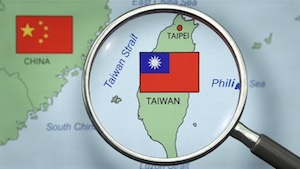
The Domino Effect: What Would an Invasion of Taiwan Mean for Global Trade

Tensions are escalating in the South China Sea, a vital maritime route for international trade. Taiwan remains at the center of this conflict and in an increasingly interconnected world, the prospect of a Taiwan invasion has far-reaching implications for global trade and geopolitics. It’s becoming even more crucial to understand the potential repercussions of such an event on the global economy as a potential invasion from China becomes increasingly more likely.

Read More »
Compliance Consultants

International Trade Compliance Consultants and The Value Proposition

Maximizing value is crucial when companies contemplate bringing on external support for any organizational function. While a company may consider several value categories, this article explores five primary categories – productivity, profitability, image, experience, and convenience. By maintaining a value proposition mindset when requesting consultant resources, selecting consultants, and working with consultants, trade compliance professionals leverage the benefits of external experts.

Read More »
Compliance Training

Employee Education in Compliance Training

Employee education supports organizational growth and development. Its benefits are generally well known, but how do you ensure that training, in any form, generates the outcomes and advances you desire? Measuring and benchmarking success can be especially difficult when creating customized training programs, which are often needed for international trade compliance topics.

Read More »
Canada Carney

Goodbye USA – Canadian Prime Minister Mark Carney’s MiddlePowers Playbook is Officially in Play, Part 2

One of my recently published articles covered the World Economic Forum Davos speech by Canadian Prime Minister Mark Carney, where he summoned the middle powers of the earth to unite against the US forces who are demanding that they take a knee and capitulate, per Governor Newsom who was in attendance handing out knee pads. (Really) Well, to say the least, that’s not happening by even the longest stretch of anyone’s imagination.

Read More »
CTPAT Investigation

Keeping the Chain Secure: A Deep Dive into the Latest CTPAT Investigation

The global supply chain is the backbone of the U.S. economy, moving millions of tons of cargo daily. To keep things running smoothly and safely, U.S. Customs and Border Protection (CBP) place a significant reliance on the Customs Trade Partnership Against Terrorism (CTPAT). This voluntary program trades “gold star” benefits—like fewer inspections, business resumption priority, and faster border crossings—for a company’s commitment to high-level security.


Read More »
Statute of Limitations

CBP Statute of Limitations Waivers – Overview of Issues and Operation

Many trade practitioners that have had experience with a CBP prior disclosure or penalty action have encountered a request by CBP to execute a Statute of Limitations (SOL) waiver. These are usually accompanied by a request for the importer to provide a corporate resolution or the equivalent evidencing the authority of the SOL waiver signatory to sign the waiver on behalf of the importer / company.

Read More »
Mexico

Contratos Celebrados por Importadores Mexicanos (Su Relevancia en la Materialidad de las Operaciones Aduaneras y de Comercio Exterior)

El marco jurídico mexicano en materia aduanera y de comercio exterior ha evolucionado hacia un modelo de cumplimiento más estricto y controlado.  Las autoridades ya no solo exigen que los importadores identifiquen cual es la mercancía objeto de la importación, sino también que acrediten bajo que términos y condiciones se realiza la operación de comercio exterior.

Read More »
USMCA

USMCA: Negotiation Preparations

The United States-Mexico-Canada Agreement (USMCA) is a trilateral free trade agreement that went into effect on July 1, 2020, as a replacement for its predecessor, the North American Free Trade Agreement (NAFTA). The three involved governments are preparing to initiate the first formal joint review in July 2026 as part of the sixth anniversary of the agreement entering into effect.

Read More »
IEEPA

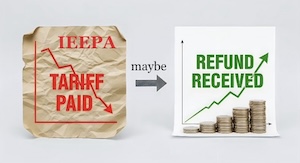
IEEPA Litigation – Should you be Involved?

Hundreds of importers have rushed to file lawsuits challenging tariffs imposed under the International Emergency Economic Powers Act (IEEPA) as they await a Supreme Court ruling on the statute’s overall legality.

Read More »
AI

Uncertainty Surrounding the Use of Artificial Intelligence (AI) in Tax and Customs / Foreign Trade Compliance

AI is now deeply embedded in the internet and social media, producing everything from humorous content and realistic simulations to advanced automation. These capabilities have expanded beyond entertainment and productivity, reaching into areas of public administration and government oversight. This raises a critical question: if AI is transforming nearly every sector, how will it reshape tax and customs compliance, and how will it be regulated?

Read More »