
A Day in the Life of a Trade Compliance Manager: A Corporate Parable
A fly on the wall at an executive retreat for Acme Super Duper Widget Company overhears the following conversation between Pete, the CFO, and Saira, the General Counsel.

A fly on the wall at an executive retreat for Acme Super Duper Widget Company overhears the following conversation between Pete, the CFO, and Saira, the General Counsel.

The CTPAT portal has been a work in progress for a number of years with the latest portal update (3.0) launched at the end of 2023. Let’s take a few minutes to explore a few strategies for best outcomes while avoiding common challenges and the SCSS response request for “more information”.

Those who cannot remember the past are condemned to repeat it.” – George Santayana. As an example of this I present to you the Smoot-Hawley Tariff Act of 1930. If you are not familiar with this, it is worth taking a moment to research.

Recently, President Biden signed a foreign military support bill (H.R. 815) into law, which also encompassed the 21st Century Peace Through Strength Act (the Act), a legislative proposal introduced in the House containing various U.S. sanctions-related measures. These sanctions measures extended the statute of limitations (“SOL”) from five to ten years for civil and criminal violations of sanctions programs administered by the U.S. Treasury Department’s Office of Foreign Assets Control (“OFAC”).

The new world order apparently has some merit as more than 30 nations have reportedly submitted applications to join the BRICS alliance wanting to reduce reliance on the US dollar. This wave of applications is a testament to the trust in the BRICS alliance as a viable option to a traditional economic structure. The BRICS alliance has broad shoulders and is representative of considerable economic growth.

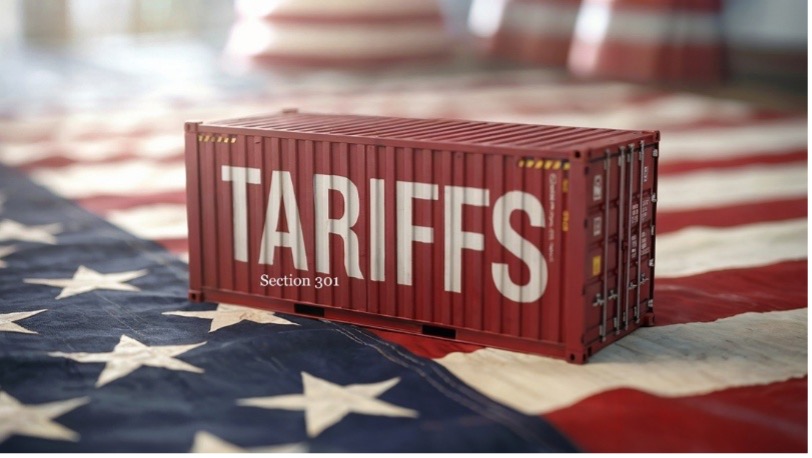
On May 14, 2024, the United States Trade Representative (USTR) released its Final Report relating to the four-year review of actions taken in the Section 301 investigation. Within the Report, the USTR confirmed that it intends to take actions to raise tariffs on specific products as a result of the comprehensive review.

Canada has long enjoyed International Traffic in Arms Regulations (ITAR) license exemptions and minimal controls for items subject to the Export Administration Regulations (EAR). What about some of our other friends, such as Australia and United Kingdom? There are ITAR license exemptions for these countries in Parts 126.16 and 126.17 of the ITAR.

The United States Trade Representative (USTR) recently released a list of Section 301 exclusions that would be extended through May 31, 2025. Within the Notice, the USTR explained that extending these exclusions will support efforts to shift sourcing out of China, or provide additional time where, despite efforts to source products from alternative sources, availability of the product outside of China remains limited.

China’s foreign direct investment (FDI) in Mexico has seen substantial growth in recent years, reflecting a strategic alignment with global economic shifts and regional trade dynamics. This trend positions China as one of the fastest-growing sources of foreign investment in Mexico, with the majority of investments flowing into the manufacturing sector.

Digital assets, including blockchain and cryptocurrency protocols and companies, have been in a defensive posture for much of 2022, 2023 and 2024. The collapse of crypto exchange FTX and numerous enforcement actions taken by the Securities Exchange Commission (SEC) and Commodities Futures Trading Commission (CFTC) have forced the sector to retrench and upgrade their abilities to meet the higher standards of securities laws.

We are operating in one of the most volatile trade environments in recent memory. Tariff policy is shifting faster than most compliance programs can absorb. In that context, CBP’s March 15 guidance on Section 232 content value is not just a technical update. It brings meaningful clarity and importers who move quickly may find real money on the table.

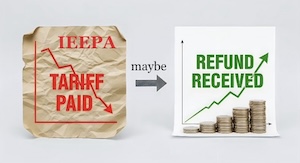
The resurgence of Section 301 tariff investigations marks a pivotal shift in U.S. trade policy. Following the Supreme Court’s invalidation of tariffs imposed under the International Emergency Economic Powers Act (IEEPA), the Office of the U.S. Trade Representative (USTR) has turned to Section 301 of the Trade Act of 1974 as a more durable legal pathway to reimpose and potentially expand tariff measures.

On March 20, 2026, the Trump Administration announced that it, “is committed to winning the AI race to usher in a new era of human flourishing, economic competitiveness, and national security for the American people.“ The White House issued a new comprehensive national legislative framework that addresses six key objectives.

In the final analysis, this case stands as one of the most important separation of powers decisions in the economic domain in U.S. history. It clarifies that tariffs are a form of taxation reserved to Congress, embeds the major questions doctrine in trade law, and reasserts the structural boundary between legislative and executive authority.

One of my recently published articles covered the World Economic Forum Davos speech by Canadian Prime Minister Mark Carney, where he summoned the middle powers of the earth to unite against the US forces who are demanding that they take a knee and capitulate, per Governor Newsom who was in attendance handing out knee pads. (Really) Well, to say the least, that’s not happening by even the longest stretch of anyone’s imagination.

The global supply chain is the backbone of the U.S. economy, moving millions of tons of cargo daily. To keep things running smoothly and safely, U.S. Customs and Border Protection (CBP) place a significant reliance on the Customs Trade Partnership Against Terrorism (CTPAT). This voluntary program trades “gold star” benefits—like fewer inspections, business resumption priority, and faster border crossings—for a company’s commitment to high-level security.

On March 9th, 2026, maritime tracking data showed just one outbound vessel, bearing an Iranian flag, transiting the Strait of Hormuz, with no inbound movements recorded at all. This lone vessel signifies a global conflict in a very important region around global trade.

Many trade practitioners that have had experience with a CBP prior disclosure or penalty action have encountered a request by CBP to execute a Statute of Limitations (SOL) waiver. These are usually accompanied by a request for the importer to provide a corporate resolution or the equivalent evidencing the authority of the SOL waiver signatory to sign the waiver on behalf of the importer / company.

Mexico’s Tax Administration Service (SAT) launched the 2026 Fiscal Regularization Program on January 22, offering businesses a strategic opportunity to resolve outstanding tax obligations with unprecedented penalty relief.

El marco jurídico mexicano en materia aduanera y de comercio exterior ha evolucionado hacia un modelo de cumplimiento más estricto y controlado. Las autoridades ya no solo exigen que los importadores identifiquen cual es la mercancía objeto de la importación, sino también que acrediten bajo que términos y condiciones se realiza la operación de comercio exterior.