News Articles

Stablecoin

Activating HTTP 402: The x402 Protocol and Legal Framework for Internet-Native Stablecoin Payments

The convergence of payment stablecoins, blockchain settlement infrastructure, and the regulatory clarity provided by the GENIUS Act of 2025 has created conditions for HTTP 402’s activation. The x402 protocol, developed by Coinbase in collaboration with Cloudflare and others through the x402 Foundation, operationalizes this long-reserved status code to enable instant, automated payments: particularly for autonomous AI agents conducting machine-to-machine commerce.

Read More »
critical Minerals

Critical Minerals Focus of White House Trade Agreements in 2025

The Trump Administration is pursuing a new style of trade management based on use of tariffs to rectify trade deficits and to set new “reciprocal” tariff rates to level the playing field for all of its trading partners. Critical minerals are a key component of the strategy, because the U.S. is heavily dependent of foreign sources for most of the critical minerals used in modern manufacturing. In response to Trump-imposed tariffs and threats of other trade actions, China has repeatedly used export controls on rare earths and other critical minerals as leverage. This article looks at the current state of critical minerals trade actions, starting with new US agreements with multiple trading partners, then reviewing international norms and proceeding through other trade actions involving critical minerals.

Read More »
BIS

BIS “Affiliates Rule” Suspended One Year, But No Time to Rest

On November 10, 2025, the U.S. Bureau of Industry and Security (“BIS”) delayed the effective date of its new Affiliates Rule for a one-year period, until November 9, 2026, after U.S. and China trade talks. The Affiliates Rule, announced on September 29, 2025, expands export controls under the Export Administration Regulations (“EAR”) to extend to non-listed “affiliates” owned or controlled by listed entities (on the Entity List, the Military End User List “MEU”, or certain sanctioned parties) 50% or more in the aggregate.

Read More »
section 232

Section 232 Steel & Aluminum Derivative Products Inclusion Process Expands Scope of the National Security Purpose of Section 232 Investigations

On February 10, 2025, the President issued Presidential Proclamations Under Section 232 of the U.S. Code adjusting imports of steel and aluminum into the United States. These Proclamations provided an expanded listing of steel and aluminum derivative articles but also instructed the Secretary of Commerce (Secretary) to establish a process for including additional derivative aluminum and steel articles within the scope of the ad valorem duties.

Read More »
auto industry and china

The Automotive Industry, China’s Semi Grip on Supply Chains, and General Motors 2027 Exit Strategy for Suppliers (Is a clean break even possible?)

General Motors (GM) has instructed thousands of its suppliers to phase out sourcing parts and materials from China by 2027. The exit strategy began in early 2024, with the directive gaining momentum in spring of this year, 2025. This directive is part of GM’s broader strategy to enhance supply chain resiliency and reduce exposure to geopolitical risks, particularly amid escalating, or let’s just say, continuously fluctuating, U.S.–China trade tensions.

Read More »
brics

Can BRICS Break the Dollar’s Grip?

For decades, the U.S. dollar has ruled the world. Whether a Brazilian farmer sells soybeans to China or an Indian company buys oil from the Middle East, chances are the transaction runs through greenbacks. Nearly 80 percent of global trade is still denominated in dollars—even when neither the buyer nor the seller is American.

Read More »
Mexican steel

Importing Steel into Mexico A Pillar of Compliance for Suppliers Trading with Mexico

The steel trade with Mexico is particularly strategic at this moment. Companies are shifting supply chains to North America, and Mexico which has been an attractive manufacturing hub for various industries, such as automotive, aerospace, construction, electronics, household appliances, and more. This trend is driving strong demand for imported steel while simultaneously creating new export opportunities for Mexican producers. Much of this advantage stems from the USMCA, because steel originating within the USCMA region can qualify for preferential tariff treatment when traded within the United States and Canada, provided that the applicable rules of origin are fully met.

Read More »
Rare Earth

Rare Earth Minerals-Part 2 – Enter Greenland’s Global Significance

It’s been more than a little concerning to the Trump Administration as these deposits have everything to do with international security as they are needed in the production of the very high-end microchips. So, now that it has been discovered that Greenland apparently has one of the largest deposits on the planet, Trump has stated that we will have Greenland, one way or another. While he hasn’t explicitly committed to military action, he’s made it clear that he won’t rule it out.

Read More »
Stablecoin

Wyoming Laws More Crypto-Friendly with Issuance of State Stablecoin

On August 29, 2025, Wyoming made history becoming the first state in the United States to issue its own stablecoin, the Frontier (FRNT) token, marking a groundbreaking moment in state-level cryptocurrency adoption. Wyoming’s pioneering move represents more than just technological innovation. It signals a fundamental shift in how states can leverage blockchain technology with robust legal frameworks to modernize their financial infrastructure and maintain competitive advantages in the evolving digital economy.

Read More »
Coercion in International Trade

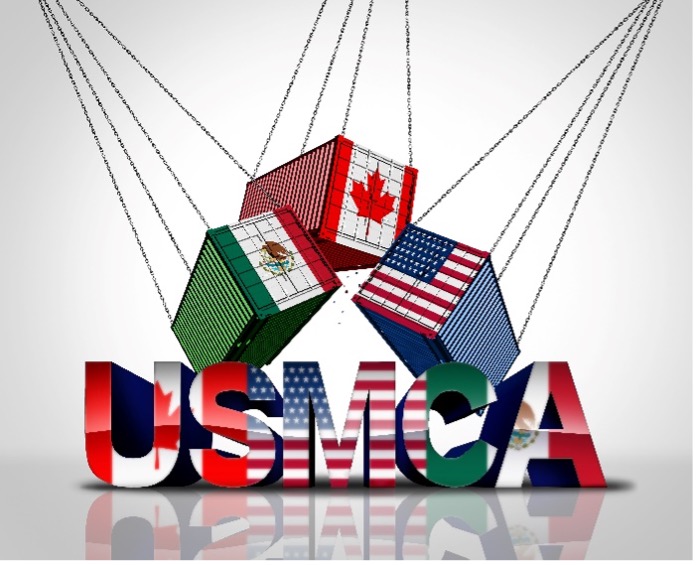
Is Coercion the Best Approach to North American Trade?

The Trump Administration has demonstrated a willingness to apply new tariffs to goods entering the U.S. as a viable tactic under its America First strategy to achieve greater fairness in its dealings with other countries. The application of tariffs is authorized under a number of standard legal procedures, such as trade remedy investigations to mitigate dumping of goods at less than fair value into the U.S. market or eliminating the unfair price advantages of government subsidies, and use of section 301 duties to respond to unfair trade practices by other countries. However, the broad-brush use of tariffs to coerce our trading partners to make concessions in non-trade areas to resolve a domestic crisis is relatively new.

Read More »
madman theory

Trade War and the Madman Theory: A Personal Reflection

I can’t help but reflect on a negotiation seminar I took in law school, where we studied the Madman Theory, popularized by Richard Nixon. The theory suggests that acting unpredictably or being willing to take extreme actions can create leverage. If your opponent believes you might “blow it all up,” they may feel forced to make concessions. This strategy clearly echoes Trump’s approach to trade policy.

Read More »
external revenue service

The External Revenue Service: A Bureaucratic Overreach or Necessary Reform?

President Donald Trump made headlines when he announced an External Revenue Service (ERS) agency to collect tariff incomes. The announcement sparked a heated debate among trade experts, economists, and business leaders. But, what exactly would be the purpose of the agency? Well, we can take the words spoken from his inauguration address as an answer.

Read More »
china's growing influence in latin america

China’s Growing Influence in Latin America: Infrastructure Investments and Implications for the Panama Canal

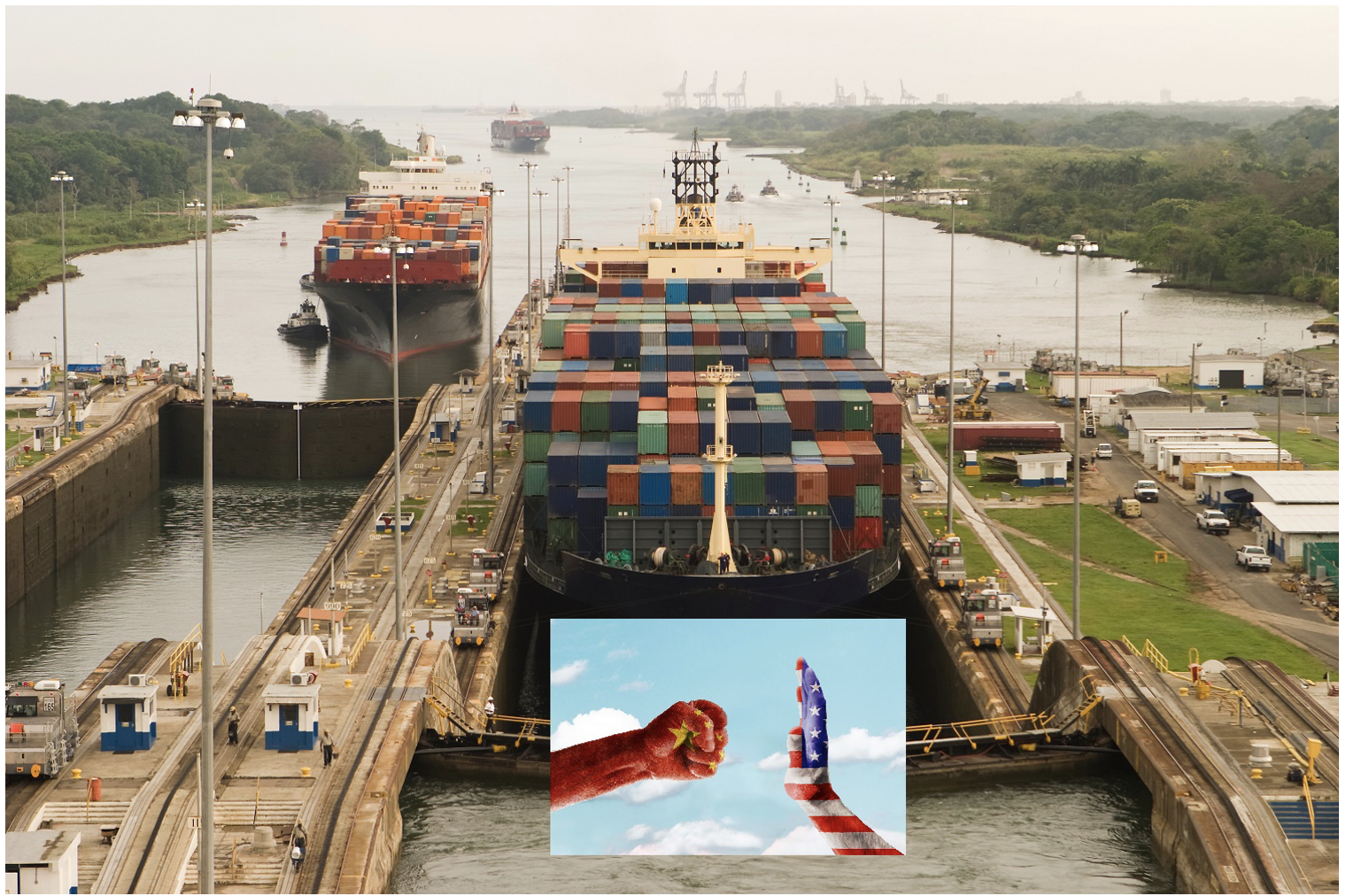
China has significantly expanded its economic and geopolitical footprint in Latin America, particularly through the acquisition and development of critical infrastructure such as ports, airfields, and railways. This strategic move has raised questions about the long-term implications for regional sovereignty, global trade routes, and the future of the Panama Canal, a linchpin of international maritime commerce.

Read More »
Chemical Classification

Chemical Classification, It Matters, Now More Than Ever-To Most

If you have a company that imports chemicals – whether they are used as raw materials or components for onward manufacturing, or finished goods containing chemical components – you have been facing significant challenges over the last half-dozen years. Some of these challenges include the trade wars with China (I’m looking at you, Section 301) and the disruptive impact of COVID-19 to global supply chains. In response to these challenges, you have maybe modified your supply chain to reduce your dependence on Chinese chemical imports.  Or perhaps your supply chain was not largely affected by Section 301 tariffs (if so, consider yourself lucky – and may your luck hold!).

Read More »
Customs broker license exam

The U.S. Customs Broker License Exam: Tips and Perspectives

A customs broker license is issued to a person who has successfully passed a grueling licensing exam (after paying the exam fee), submitted a license application (along with another fee), and passed the subsequent FBI background investigation. The open-book exam, which lasts 4½ hours and comprises 80 multiple-choice questions, is ostensibly intended to measure one’s knowledge about various customs-related regulations and practices yet experience or employment in a customs-related job is not a prerequisite.

Read More »
Harmonized Tax Schedule

Punctuation in the Harmonized Tariff Schedule of the United States

Punctuation matters. I’ve always remembered a poster on the wall of a co-worker’s office—this was back in the 80s—that showed baby seals dancing at a disco under a four-word caption: STOP CLUBBING, BABY SEALS. The poster (which has become an internet meme forty years later) cleverly showed how something as seemingly minor as a comma can change the meaning of a phrase or sentence. If a comma can flip the meaning of a four-word sentence, is it hard to imagine the effect that punctuation, or lack of punctuation, might have on our interpretation of a law or regulation?

Read More »
tariffs

Beyond the Tariff: Proactive Strategies to Mitigate Trade Remedy Impacts

In today’s complex global marketplace, businesses are increasingly confronted with the challenges of supply chain disruptions, rising costs, and fierce competition—all exacerbated by trade remedy tariffs. While many of these tariffs are already in play, President-elect Trump has promised to impose new tariffs and increase old ones.

Read More »
Mercosur

Mercosur-EU – A New Potential Powerhouse in Trade Blocs if Ratified

After 25 years of negotiations, the European Union and the Southern Common Market, commonly known as Mercosur, comprised of Brazil, Argentina, Uruguay, and Paraguay, signed a free trade agreement. I think this, among many more regional deals to come was suddenly expedited due to the anticipated land mines with the upcoming Trump 2.0 administration and trade policy regarding tariffs for all.

Read More »
tariffs

Tariffs, and the Temptation to Use Them as Geopolitical Leverage

The United States has a long history of using tariffs. The first significant tariff legislation was the Tariff Act of 1789, signed by President George Washington. Tariffs have been used for various purposes over the years, including protecting domestic industries, generating government revenue, and negotiating trade agreements. The use of tariffs however has evolved, with significant changes during different historical periods, such as the high tariffs of the 19th century and the shift towards free trade in the mid-20th century, as well as the current U.S. trade war with China, and possibly soon to be with Mexico and Canada.

Read More »