News Articles

USMCA

USMCA: Negotiation Preparations

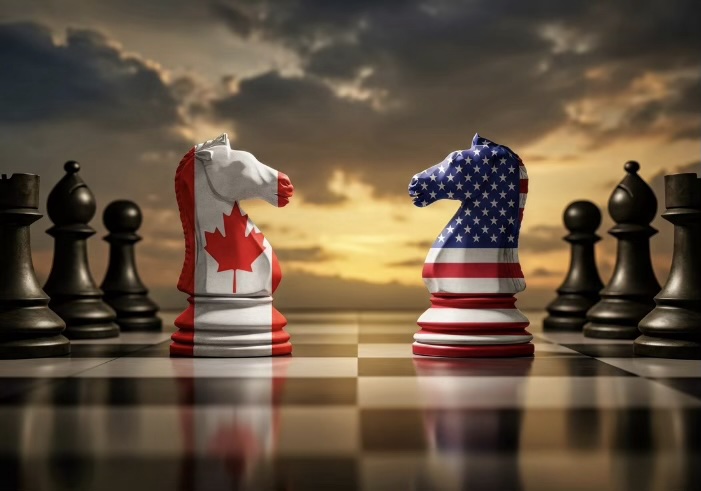
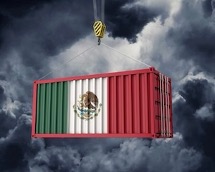
The United States-Mexico-Canada Agreement (USMCA) is a trilateral free trade agreement that went into effect on July 1, 2020, as a replacement for its predecessor, the North American Free Trade Agreement (NAFTA). The three involved governments are preparing to initiate the first formal joint review in July 2026 as part of the sixth anniversary of the agreement entering into effect.

Read More »
IEEPA

IEEPA Litigation – Should you be Involved?

Hundreds of importers have rushed to file lawsuits challenging tariffs imposed under the International Emergency Economic Powers Act (IEEPA) as they await a Supreme Court ruling on the statute’s overall legality.

Read More »
AI

Uncertainty Surrounding the Use of Artificial Intelligence (AI) in Tax and Customs / Foreign Trade Compliance

AI is now deeply embedded in the internet and social media, producing everything from humorous content and realistic simulations to advanced automation. These capabilities have expanded beyond entertainment and productivity, reaching into areas of public administration and government oversight. This raises a critical question: if AI is transforming nearly every sector, how will it reshape tax and customs compliance, and how will it be regulated?

Read More »
DDTC

Advisory Opinions From DDTC – What Are They?

The Directorate of Defense Trade Controls (DDTC) that administers and enforces the ITAR also issues Advisory Opinions (AO). What the heck is an AO? If you come from a Customs compliance background you know about Customs rulings and may have applied for some. An AO is sort of like a Customs ruling in that it is a written interpretation of the regulations.

Read More »
DAO

Integrating DAOs and DUNAs with Stablecoin Ecosystems

We have analyzed Decentralized Autonomous Organizations (DAOs) and how the GENIUS Act will permit regulation of payment stablecoins in prior articles. This article examines how decentralized organizations interact with stablecoin ecosystems and the synergies between organizational and payment infrastructure innovation.

Read More »
Haiti

Renewal of Haiti HOPE/HELP and AGOA Trade Preferences Up to Senate

In its usual fashion, Congress has allowed the tariff preferences for Haiti under the United States-Caribbean Basin Trade Partnership Act (CBTPA) and the African Growth and Opportunity Act (AGOA) to expire on September 30, 2025. Two bills passed the House with bipartisan majorities on January 12, 2026, to renew the tariff preferences retroactively to the date of expiration and then extend them to September 30, 2028. Both bills are now in the Senate Finance Committee awaiting action. This article examines the current status and likely outcomes of Senate review.

Read More »
Section 232 Automotive

Self-Declaring Under the Section 232 Automotive and MHDVP Programs

The October 17, 2025 Presidential Proclamation 10984 Adjusting Imports of Medium- and Heavy-Duty Vehicles, Medium- and Heavy-Duty Vehicle Parts, and Buses into the United States included a provision to self-declare certain auto and truck parts and components as being subject to the tariffs with certain requirements.

Read More »
usmca

USMCA – We Have Some Good News and Some Terrible News

As is well known the US has imposed duties of 25% on imports from Canada and Mexico. This means that those imports will take the regular duty plus 25%. For example, a switchgear assembly classified under 8537.10.91 made in Canada or Mexico will take a duty of 2.7% plus the special tariff of 25% for a total rate of 27.7% of the value.

Read More »
Trump Tariffs

2025 Trade Policy Agenda Provides Rationale for Trump Tariff Actions

On March 3, 2025, the Office of the United States Trade Representative (USTR) released the 2025 Trade Policy Agenda and 2024 Annual Report on the Trade Agreements Program. The report outlines the rationale of the Trump Administration for its trade policy goals and actions. It complements and expands on the America First Trade Policy Executive Order and also encompasses the massive imposition of tariffs by the President on April 2 in his so-called “Liberation Day” Executive Order and Fact Sheet.

Read More »
China in Latin America

How the Trump Administration Pushed China Deeper into Latin America

Donald Trump’s first term in office pursued an aggressive foreign policy toward China, imposing tariffs, restricting technology transfers, and accusing Beijing of unfair trade practices. However, one unintended consequence of this hardline approach has been China’s accelerated expansion into Latin America—a region traditionally within the U.S. sphere of influence.

Read More »
Bitcoin Strategic Reserve

Security for New Bitcoin Strategic Reserve

On March 7, 2025, the White House hosted a Digital Assets Summit to celebrate the creation of a Bitcoin Strategic Reserve and a Digital Assets Stockpile by an Executive Order titled, “Establishment of the Strategic Bitcoin Reserve and United States Digital Asset Stockpile“. The Executive Order recognizes that “The Bitcoin protocol permanently caps the total supply of bitcoin (BTC) at 21 million coins, which is critical to its value proposition as a scarce asset.

Read More »
Lessons from the Smoot–Hawley Tariff Act of 1930

Lessons from the Smoot–Hawley Tariff Act of 1930

The various tariffs that President Trump has imposed since retaking office are based on delegated authority found in several existing statutes. But a century ago, tariffs were primarily the purview of Congress. One of the most controversial manifestations of U.S. tariff legislation (and of American legislation in general) was the Smoot–Hawley Tariff Act of 1930, signed into law by President Hoover shortly after the United States—and the world—fell into the black hole of the Great Depression.

Read More »
America's misunderstood trade deficit

America’s Misunderstood Trade Deficit

Several fundamental conditions are widely presumed necessary for a country to enjoy the benefits of global trade. One condition is that import activity ought not exceed export activity. Put more simply, we must sell more than we buy. On its face this seem reasonable. It seems logical that a trade deficit (that is, selling less than we buy) is a drain on our economy. Indeed, every month the news media feed us the bad news about the negative “balance of trade” data reported by the Commerce Department.

Read More »
Panama-Canal

Options to the Panama Canal Perhaps?

Prior to the origination of the plans for the Panama Canal vessels of trade had few options of getting goods from Europe and Asia to N. America. One was to sail around the southern tip of South America (Cape Horn) adding months to the journey if they were lucky enough to make it through what is known as one of the most hazardous shipping routes in the world, where it’s estimated that over 800 ships have been lost over the last couple of centuries of trade.

Read More »
Section 232 Tariffs

President Trump Restores Section 232 Tariffs

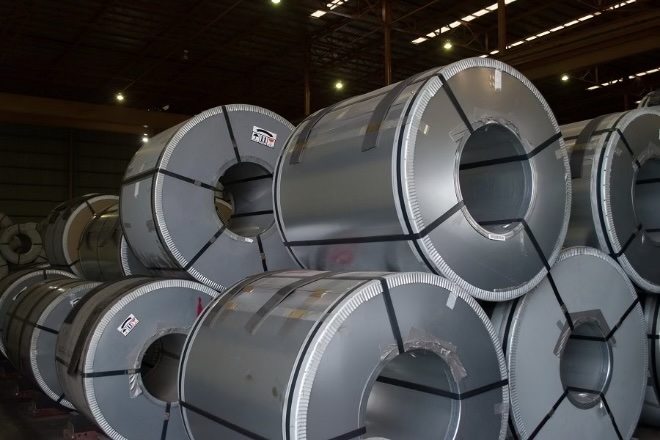
On February 10, 2025, President Trump signed proclamations to reinstate the full 25% tariff on steel imports and increase tariffs on aluminum imports to 25%. Section 232 of the Trade Expansion Act of 1962 affords the President with the authority to adjust imports being brought into the U.S. in quantities or under circumstances that threaten to impair national security. The President says the reinvigorated Section 232 tariffs “will support the program’s original objective of revitalizing the domestic steel and aluminum industries and achieving sustainable capacity utilization of at least 80%.”

Read More »
usmca

USMCA Part Three: What to Do about Joint Review

The United States-Mexico-Canada Agreement (USMCA) joint review process is scheduled to begin on July 1, 2026, but the time to prepare is now. Embedded trade compliance professionals should already be doing scenario analysis—pulling data, calculating the supply chain impacts of potential changes, and helping their companies to strategize accordingly.

Read More »