
Who is the Importer of Record: Security Interests and the Right to Act As IOR
By: Gavin Andersen, Law Clerk, LCB and Adrienne Braumiller, Founding Partner, Braumiller Law Group Last June (2023), in response to a ruling request from Your Special

By: Gavin Andersen, Law Clerk, LCB and Adrienne Braumiller, Founding Partner, Braumiller Law Group Last June (2023), in response to a ruling request from Your Special

At the core of the definition, a Parallel import is a non-counterfeit product imported from another country without the permission of the intellectual property owner. They are also goods that are not authorized for importation into the U.S. It’s a global phenomenon, a very grey area, and their presence varies across different parts of the globe.

One of the most important requirements for importing goods into Mexico is to be registered as an importer under the Mexican importer’s registry. There are 2 types of registries for importers, one is for general importers (Padron de Importadores), and the other is for importers of specific industry sectors (Padron the Importadores de Sectores Especificos) which may import goods identified by the MX tariff code (i.e. chemical products, firearms, cigars, footwear, textiles, alcohol, hydrocarbons, steel, automotive, etc.). Generally, these 2 registries are lists with information of individuals and entities authorized to bring goods into Mexico.

Consider this scenario: a client faced the challenge of deferring duty payments while managing a significant volume of imports destined for re-exportation from the U.S. Initially considering duty drawbacks, which proved unsuitable for their specific needs, we turned our attention to bonded warehouses and free trade zones. This scenario is not uncommon in the trade world and highlights a critical decision point for many businesses: choosing between a bonded warehouse and a Foreign Trade Zone (FTZ).

The First Sale Rule applies in circumstances such as the example above. A US company places an order with a middleman in the US. The middleman in turn subcontracts to a foreign supplier. The supplier then ships the product either to the middleman or to the original US company that placed the order, meaning either could be the importer of record. The entered value could be the amount on the original purchase order or the price paid by the middleman to the foreign supplier.

The world of cryptocurrencies on blockchains and the world of traditional assets in markets have often stood in stark contrast to one another since Bitcoin’s creation in 2008. The lack of a reliable bridge between these two worlds has limited the impact of cryptocurrencies on assets in the real-world outside of on-chain speculation and prevented adoption of the benefits that blockchain technologies can bring to real world processes.

President elect Lai Ching-te’s victory in Taipei ignited tensions across the Taiwan strait and now the geopolitical field waits to see if China will kick off World War Three. I’m only slightly joking, but Beijing has exerted diplomatic pressure on nations maintaining close ties with the island in the past and Taiwan’s decision to remain a democracy will no doubt ramp up China’s reunification process in the coming months. But how will that affect trade relations?

In the complex world of international trade compliance, few people possess the expertise, dedication and problem-solving skills that Brad Menard, President of Braumiller Consulting Group, brings to his clients.

In recent years, the global spotlight has illuminated the grave concerns surrounding human rights violations within China’s Xinjiang region, particularly those impacting the Uyghur population. The Uyghur Forced Labor Prevention Act (UFLPA) stands as a pivotal piece of legislation designed to address these concerns and to ensure that products imported into the United States are devoid of forced labor originating from the Xinjiang region.

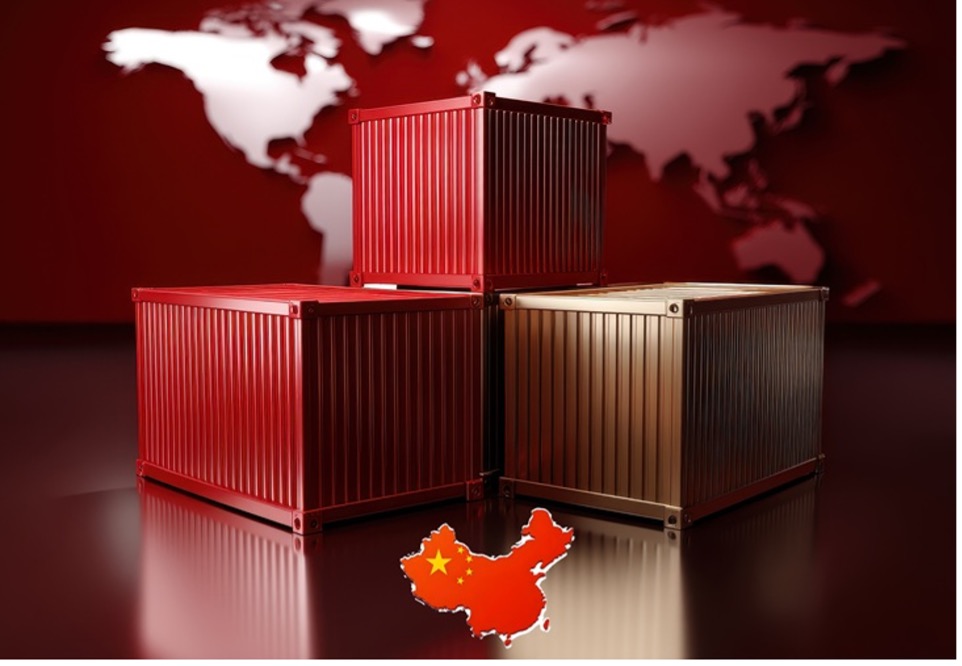
The implementation of trade policies in what many consider acts of protectionism and manipulation are the norm, and of course China and the U.S. are a prime example. Solutions include nearshoring, reshoring, and protectionism. It’s complicated, so for the purpose of this article, let’s stick with nearshoring.

A quiet but significant power shift has been unfolding across Latin America. While the United States has long been the dominant economic and political influence in the region, its recent inward turn under the “America First” doctrine has created openings that China is eager to fill.

A few weeks ago, at the Trade and Cargo Security Summit, held in New Orleans, we learned that CBP (Customs and Border Protection) WAS NOT going to discuss the current administration’s policy during the conference. (Cue the dramatic music). Will you feel better if I tell you the groan across the audience was conspicuously audible? No? Well, I tried.

Many of our basic freedoms are guaranteed by the Constitution. Speech, press, assembly, religion: these are all accepted as sacrosanct rights by reasonable people across the political spectrum. But should we not have the same freedom when it comes to the economy?

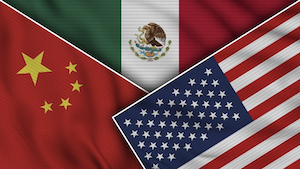
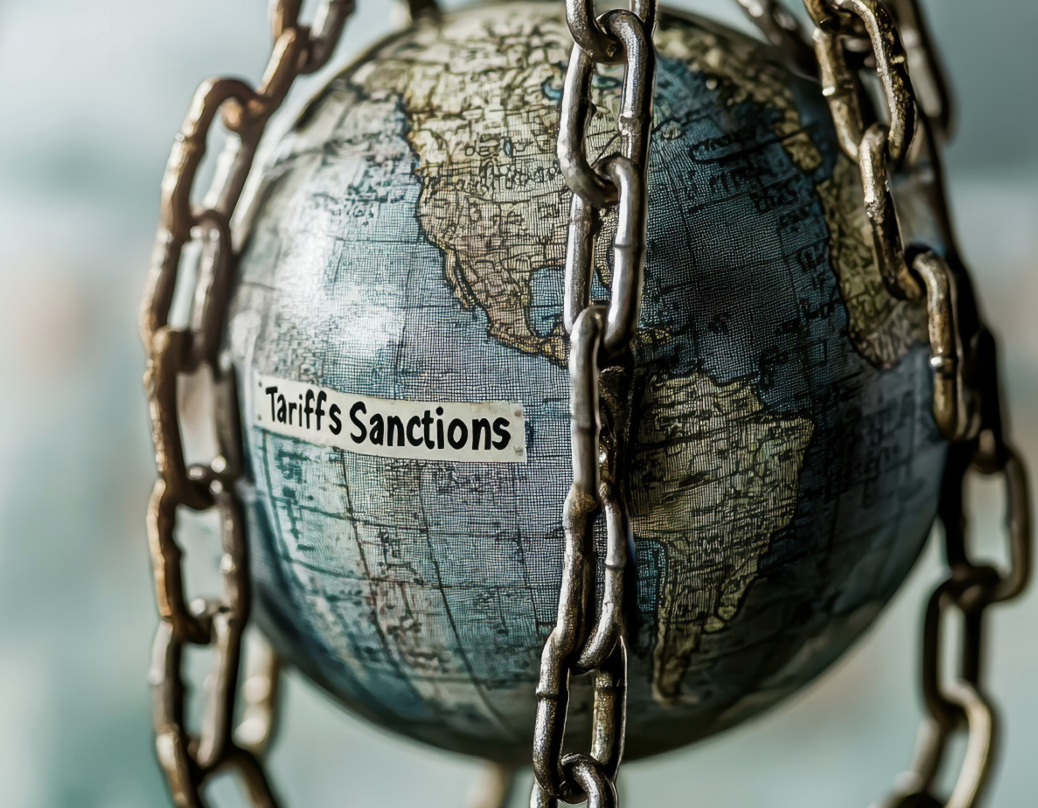
The first quarter of 2025 has reshaped the U.S. trade landscape with a flurry of executive actions by the Trump administration, introducing a new wave of tariffs on imports from almost all U.S. trading partners. The Trump Administration has also levied broad duties on imports from Canada, Mexico, and China, on the basis of emergency powers of the Executive Branch, citing national security, border control, and illicit drug interdiction.

As a broad stroke of tariffs are now levied against various countries to close the trade deficit gap, without truly examining the reason(s) for the imbalance, there will most likely be automatic retaliatory tariffs in a lose-lose situation. The White House stated that currently 50 countries are on the phone with the President, but that is hard to confirm. US consumers will ultimately pay the price, as well as SME’s.

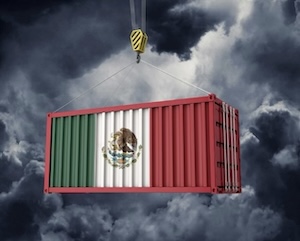
On April 3, 2025, during the presidential daily morning briefing, Mexico’s President Claudia Sheinbaum responded to the import tariffs announced the day before by President Trump, which targeted several countries. She emphasized that, of all the nations affected by these new duties, Mexico was the least impacted. She attributed this to the strong bilateral relationship between Mexico and the United States. She also reiterated that, since Mexico does not impose tariffs on U.S. goods, it is unfair for the U.S. to impose tariffs on Mexican products.

As is well known the US has imposed duties of 25% on imports from Canada and Mexico. This means that those imports will take the regular duty plus 25%. For example, a switchgear assembly classified under 8537.10.91 made in Canada or Mexico will take a duty of 2.7% plus the special tariff of 25% for a total rate of 27.7% of the value.

On March 3, 2025, the Office of the United States Trade Representative (USTR) released the 2025 Trade Policy Agenda and 2024 Annual Report on the Trade Agreements Program. The report outlines the rationale of the Trump Administration for its trade policy goals and actions. It complements and expands on the America First Trade Policy Executive Order and also encompasses the massive imposition of tariffs by the President on April 2 in his so-called “Liberation Day” Executive Order and Fact Sheet.

Donald Trump’s first term in office pursued an aggressive foreign policy toward China, imposing tariffs, restricting technology transfers, and accusing Beijing of unfair trade practices. However, one unintended consequence of this hardline approach has been China’s accelerated expansion into Latin America—a region traditionally within the U.S. sphere of influence.

Liberation Day passed with the promised reciprocal tariffs touted by the Trump administration. The president, surrounded by workers in the Rose Garden on April 2, executed a number of tariffs promising to Make America Wealthy Again. How did they calculate these tariffs? Well, there’s speculation.