
News Articles

De Minimis

De Minimis An Ever-Growing Problem of De Maximus ProportionDe Minimis

De minimis is a term that refers to a threshold below which certain goods are exempt from import duties or taxes. However, in the landscape of international trade, it has become a contentious issue for the United States. Those “bad actors”, and even some, not so bad, but willing to take advantage of a loophole have found a way around the tariffs. This so-called loophole of allowing goods with a fair retail value of $800 or less to enter the U.S. without paying an import tariff has become a monster that Customs needs to find a way to deal with conclusively.

Read More »
IMMEX Customs

The Importance of Pedimento Codes for the IMMEX Customs Regime

In Mexico, a customs regime is the destination or treatment for goods subject to customs control in accordance with the nature and purposes of a customs operation. Companies with an IMMEX program may perform operations under the so-called customs regime of “temporary importation for elaboration, transformation or repair under a maquila program”. This name by itself implies several facts to consider.

Read More »
aluminum extrusions investigation

Aluminum Extrusions II – Scope Modifications Proposed, Dept. of Commerce Questioning Manageability

Since the last update on the AD / CVD aluminum extrusions investigation (dubbed Extrusions II) in what appears to be a response to strong opposition from trade industry groups, legislators, governments, and other interested parties, as well as dubious signals from the Department of Commerce, (Commerce) the Petitioners in the ongoing Aluminum Extrusions investigation have proposed modifications to the scope of the investigation.

Read More »
Legal Norms Artificial Intelligence

Evolving Legal Norms for Artificial Intelligence  in the European Union and the United States

Artificial Intelligence (AI) has been a hot topic for the last 2-3 years for politicians, technologists, and many people in civil societies globally. The use of the technology has obvious benefits for increasing productivity and value produced by businesses and organizations, along with dangers from misuse, such as deep fake propaganda and serious security risks. Two recent efforts to develop legislation addressing AI technology offer an opportunity to compare and contrast the differing approaches in the European Union (EU) and the United States (US).

Read More »
IMMEX Customs

La importancia de los Claves de Pedimentos en el Régimen Aduanero de las IMMEX

En México, un régimen aduanero es el destino o tratamiento que se da a los bienes objeto de control aduanero de conformidad con la naturaleza y propósitos de una operación aduanera. Las empresas con un programa IMMEX pueden realizar operaciones al amparo del régimen aduanero llamado “importación temporal para elaboración, transformación o reparación en programas de maquila”.

Read More »
Trade and Food Security

The Nexus of Trade and Food Security Amid Global Conflicts

The intricate interplay between trade and food security has emerged as a vital global issue, one that is closely interwoven with the tapestry of international conflicts and political instability. Remember the 2019 pandemic when toilet paper supply chains were interrupted?  Now imagine that on a much larger scale with basic food staples like rice, wheat or corn.

Read More »
CTPAT Supply Chain Hero of Trade

The Unsung Hero of Trade: Why CTPAT Matters

In the ever-changing world of trade, where predicting the future is a constant challenge, looking back at the past decade offers valuable insights into the evolution of the supply chain and the tools that have developed to contribute to efficiency and security.

Read More »
Voluntary Self-Disclosures

BIS Unveils Enhanced Voluntary Self Disclosure Protocols

On January 16, 2024, the Bureau of Industry and Security (BIS) under Assistant Secretary for Export Enforcement, Matthew Axelrod, disclosed significant enhancements to the process for Voluntary Self-Disclosures (VSDs) related to the Export Administration Regulations (EAR). These adjustments are strategically designed to streamline export control compliance for U.S. governmental bodies, the commercial sector, and academic entities.

Read More »
Importer Registration

Suspensión del Padron de Importadores

Uno de los requisitos más importantes para importar mercancías a México es estar registrado como importador en el registro de importadores mexicanos. Hay 2 tipos de registros para importadores, uno es para importadores generales (Padrón de Importadores) y el otro es para importadores de sectores industriales específicos (Padrón de Importadores de Sectores Específicos) que pueden importar mercancías identificadas por el código arancelario MX (es decir, productos químicos, armas de fuego, puros, calzado, textiles, alcohol, hidrocarburos, siderurgia, automoción, etc.). Generalmente, estos 2 registros son listados con información de personas y entidades autorizadas para importar mercancías a México.

Read More »
Coercion in International Trade

Is Coercion the Best Approach to North American Trade?

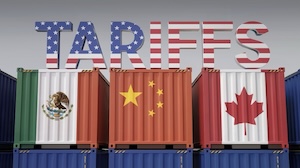
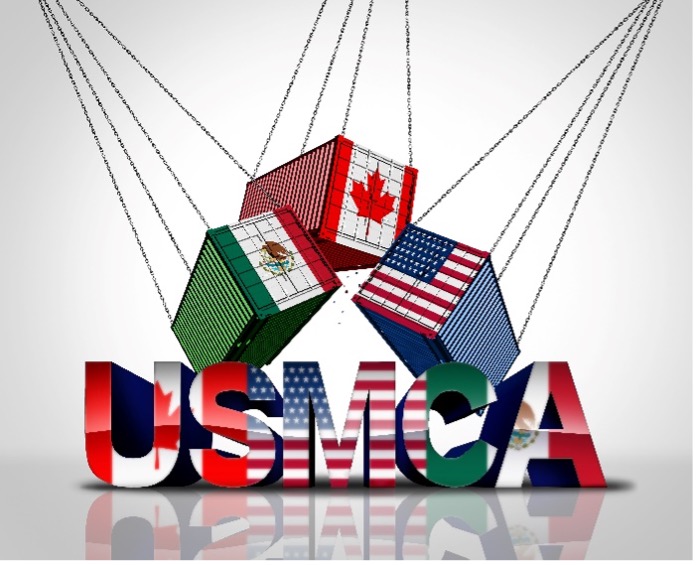
The Trump Administration has demonstrated a willingness to apply new tariffs to goods entering the U.S. as a viable tactic under its America First strategy to achieve greater fairness in its dealings with other countries. The application of tariffs is authorized under a number of standard legal procedures, such as trade remedy investigations to mitigate dumping of goods at less than fair value into the U.S. market or eliminating the unfair price advantages of government subsidies, and use of section 301 duties to respond to unfair trade practices by other countries. However, the broad-brush use of tariffs to coerce our trading partners to make concessions in non-trade areas to resolve a domestic crisis is relatively new.

Read More »
madman theory

Trade War and the Madman Theory: A Personal Reflection

I can’t help but reflect on a negotiation seminar I took in law school, where we studied the Madman Theory, popularized by Richard Nixon. The theory suggests that acting unpredictably or being willing to take extreme actions can create leverage. If your opponent believes you might “blow it all up,” they may feel forced to make concessions. This strategy clearly echoes Trump’s approach to trade policy.

Read More »
external revenue service

The External Revenue Service: A Bureaucratic Overreach or Necessary Reform?

President Donald Trump made headlines when he announced an External Revenue Service (ERS) agency to collect tariff incomes. The announcement sparked a heated debate among trade experts, economists, and business leaders. But, what exactly would be the purpose of the agency? Well, we can take the words spoken from his inauguration address as an answer.

Read More »
china's growing influence in latin america

China’s Growing Influence in Latin America: Infrastructure Investments and Implications for the Panama Canal

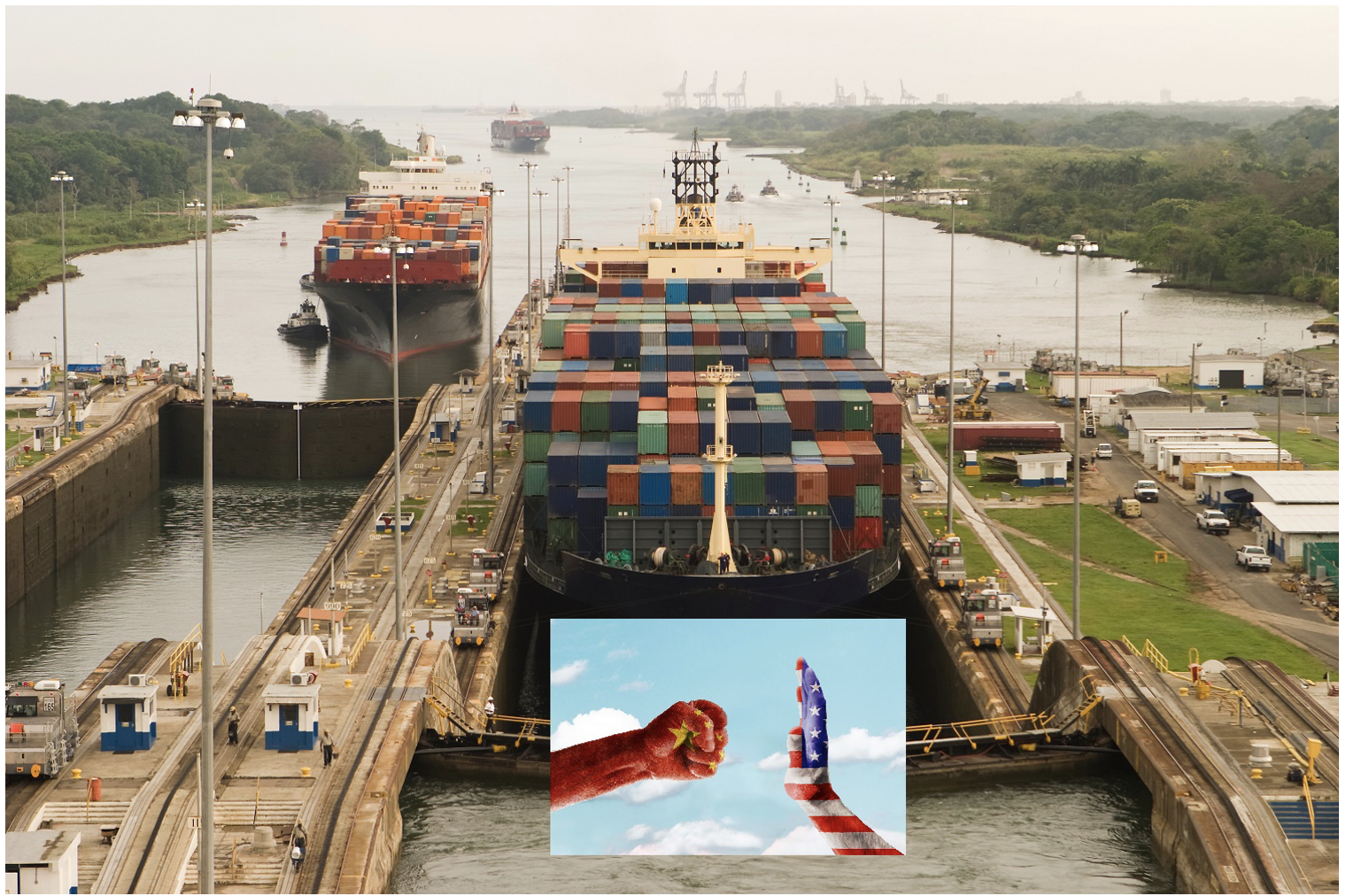
China has significantly expanded its economic and geopolitical footprint in Latin America, particularly through the acquisition and development of critical infrastructure such as ports, airfields, and railways. This strategic move has raised questions about the long-term implications for regional sovereignty, global trade routes, and the future of the Panama Canal, a linchpin of international maritime commerce.

Read More »
Chemical Classification

Chemical Classification, It Matters, Now More Than Ever-To Most

If you have a company that imports chemicals – whether they are used as raw materials or components for onward manufacturing, or finished goods containing chemical components – you have been facing significant challenges over the last half-dozen years. Some of these challenges include the trade wars with China (I’m looking at you, Section 301) and the disruptive impact of COVID-19 to global supply chains. In response to these challenges, you have maybe modified your supply chain to reduce your dependence on Chinese chemical imports.  Or perhaps your supply chain was not largely affected by Section 301 tariffs (if so, consider yourself lucky – and may your luck hold!).

Read More »
Customs broker license exam

The U.S. Customs Broker License Exam: Tips and Perspectives

A customs broker license is issued to a person who has successfully passed a grueling licensing exam (after paying the exam fee), submitted a license application (along with another fee), and passed the subsequent FBI background investigation. The open-book exam, which lasts 4½ hours and comprises 80 multiple-choice questions, is ostensibly intended to measure one’s knowledge about various customs-related regulations and practices yet experience or employment in a customs-related job is not a prerequisite.

Read More »
Harmonized Tax Schedule

Punctuation in the Harmonized Tariff Schedule of the United States

Punctuation matters. I’ve always remembered a poster on the wall of a co-worker’s office—this was back in the 80s—that showed baby seals dancing at a disco under a four-word caption: STOP CLUBBING, BABY SEALS. The poster (which has become an internet meme forty years later) cleverly showed how something as seemingly minor as a comma can change the meaning of a phrase or sentence. If a comma can flip the meaning of a four-word sentence, is it hard to imagine the effect that punctuation, or lack of punctuation, might have on our interpretation of a law or regulation?

Read More »
tariffs

Beyond the Tariff: Proactive Strategies to Mitigate Trade Remedy Impacts

In today’s complex global marketplace, businesses are increasingly confronted with the challenges of supply chain disruptions, rising costs, and fierce competition—all exacerbated by trade remedy tariffs. While many of these tariffs are already in play, President-elect Trump has promised to impose new tariffs and increase old ones.

Read More »
Mercosur

Mercosur-EU – A New Potential Powerhouse in Trade Blocs if Ratified

After 25 years of negotiations, the European Union and the Southern Common Market, commonly known as Mercosur, comprised of Brazil, Argentina, Uruguay, and Paraguay, signed a free trade agreement. I think this, among many more regional deals to come was suddenly expedited due to the anticipated land mines with the upcoming Trump 2.0 administration and trade policy regarding tariffs for all.

Read More »
tariffs

Tariffs, and the Temptation to Use Them as Geopolitical Leverage

The United States has a long history of using tariffs. The first significant tariff legislation was the Tariff Act of 1789, signed by President George Washington. Tariffs have been used for various purposes over the years, including protecting domestic industries, generating government revenue, and negotiating trade agreements. The use of tariffs however has evolved, with significant changes during different historical periods, such as the high tariffs of the 19th century and the shift towards free trade in the mid-20th century, as well as the current U.S. trade war with China, and possibly soon to be with Mexico and Canada.

Read More »