
A Day in the Life of a Trade Compliance Manager: A Corporate Parable
A fly on the wall at an executive retreat for Acme Super Duper Widget Company overhears the following conversation between Pete, the CFO, and Saira, the General Counsel.

A fly on the wall at an executive retreat for Acme Super Duper Widget Company overhears the following conversation between Pete, the CFO, and Saira, the General Counsel.

The CTPAT portal has been a work in progress for a number of years with the latest portal update (3.0) launched at the end of 2023. Let’s take a few minutes to explore a few strategies for best outcomes while avoiding common challenges and the SCSS response request for “more information”.

Those who cannot remember the past are condemned to repeat it.” – George Santayana. As an example of this I present to you the Smoot-Hawley Tariff Act of 1930. If you are not familiar with this, it is worth taking a moment to research.

Recently, President Biden signed a foreign military support bill (H.R. 815) into law, which also encompassed the 21st Century Peace Through Strength Act (the Act), a legislative proposal introduced in the House containing various U.S. sanctions-related measures. These sanctions measures extended the statute of limitations (“SOL”) from five to ten years for civil and criminal violations of sanctions programs administered by the U.S. Treasury Department’s Office of Foreign Assets Control (“OFAC”).

The new world order apparently has some merit as more than 30 nations have reportedly submitted applications to join the BRICS alliance wanting to reduce reliance on the US dollar. This wave of applications is a testament to the trust in the BRICS alliance as a viable option to a traditional economic structure. The BRICS alliance has broad shoulders and is representative of considerable economic growth.

On May 14, 2024, the United States Trade Representative (USTR) released its Final Report relating to the four-year review of actions taken in the Section 301 investigation. Within the Report, the USTR confirmed that it intends to take actions to raise tariffs on specific products as a result of the comprehensive review.

Canada has long enjoyed International Traffic in Arms Regulations (ITAR) license exemptions and minimal controls for items subject to the Export Administration Regulations (EAR). What about some of our other friends, such as Australia and United Kingdom? There are ITAR license exemptions for these countries in Parts 126.16 and 126.17 of the ITAR.

The United States Trade Representative (USTR) recently released a list of Section 301 exclusions that would be extended through May 31, 2025. Within the Notice, the USTR explained that extending these exclusions will support efforts to shift sourcing out of China, or provide additional time where, despite efforts to source products from alternative sources, availability of the product outside of China remains limited.

China’s foreign direct investment (FDI) in Mexico has seen substantial growth in recent years, reflecting a strategic alignment with global economic shifts and regional trade dynamics. This trend positions China as one of the fastest-growing sources of foreign investment in Mexico, with the majority of investments flowing into the manufacturing sector.

Digital assets, including blockchain and cryptocurrency protocols and companies, have been in a defensive posture for much of 2022, 2023 and 2024. The collapse of crypto exchange FTX and numerous enforcement actions taken by the Securities Exchange Commission (SEC) and Commodities Futures Trading Commission (CFTC) have forced the sector to retrench and upgrade their abilities to meet the higher standards of securities laws.

As is well known the US has imposed duties of 25% on imports from Canada and Mexico. This means that those imports will take the regular duty plus 25%. For example, a switchgear assembly classified under 8537.10.91 made in Canada or Mexico will take a duty of 2.7% plus the special tariff of 25% for a total rate of 27.7% of the value.

On March 3, 2025, the Office of the United States Trade Representative (USTR) released the 2025 Trade Policy Agenda and 2024 Annual Report on the Trade Agreements Program. The report outlines the rationale of the Trump Administration for its trade policy goals and actions. It complements and expands on the America First Trade Policy Executive Order and also encompasses the massive imposition of tariffs by the President on April 2 in his so-called “Liberation Day” Executive Order and Fact Sheet.

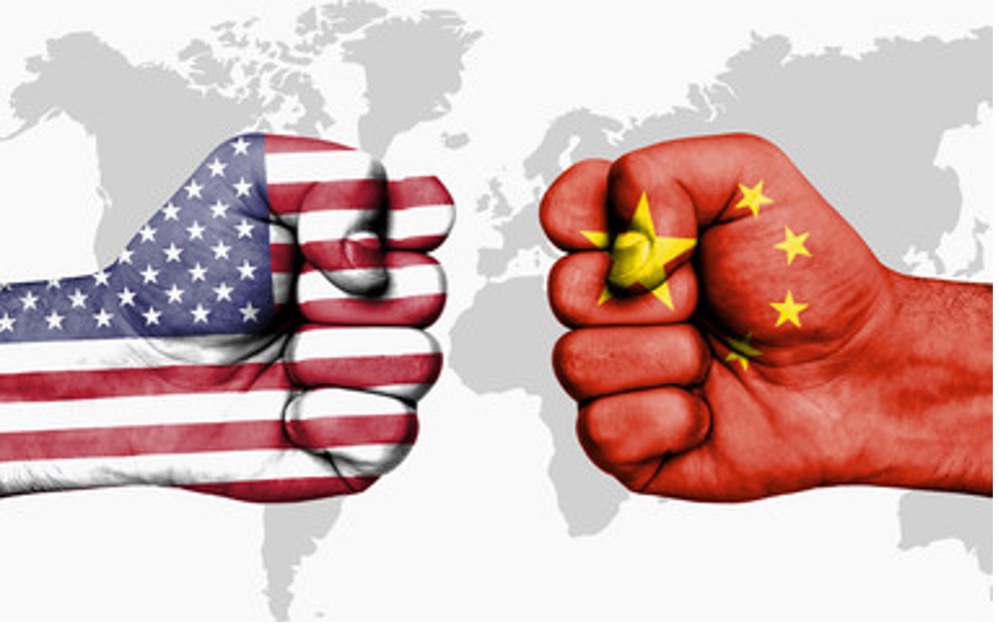
Donald Trump’s first term in office pursued an aggressive foreign policy toward China, imposing tariffs, restricting technology transfers, and accusing Beijing of unfair trade practices. However, one unintended consequence of this hardline approach has been China’s accelerated expansion into Latin America—a region traditionally within the U.S. sphere of influence.

Liberation Day passed with the promised reciprocal tariffs touted by the Trump administration. The president, surrounded by workers in the Rose Garden on April 2, executed a number of tariffs promising to Make America Wealthy Again. How did they calculate these tariffs? Well, there’s speculation.

On March 7, 2025, the White House hosted a Digital Assets Summit to celebrate the creation of a Bitcoin Strategic Reserve and a Digital Assets Stockpile by an Executive Order titled, “Establishment of the Strategic Bitcoin Reserve and United States Digital Asset Stockpile“. The Executive Order recognizes that “The Bitcoin protocol permanently caps the total supply of bitcoin (BTC) at 21 million coins, which is critical to its value proposition as a scarce asset.

The various tariffs that President Trump has imposed since retaking office are based on delegated authority found in several existing statutes. But a century ago, tariffs were primarily the purview of Congress. One of the most controversial manifestations of U.S. tariff legislation (and of American legislation in general) was the Smoot–Hawley Tariff Act of 1930, signed into law by President Hoover shortly after the United States—and the world—fell into the black hole of the Great Depression.

Several fundamental conditions are widely presumed necessary for a country to enjoy the benefits of global trade. One condition is that import activity ought not exceed export activity. Put more simply, we must sell more than we buy. On its face this seem reasonable. It seems logical that a trade deficit (that is, selling less than we buy) is a drain on our economy. Indeed, every month the news media feed us the bad news about the negative “balance of trade” data reported by the Commerce Department.

Prior to the origination of the plans for the Panama Canal vessels of trade had few options of getting goods from Europe and Asia to N. America. One was to sail around the southern tip of South America (Cape Horn) adding months to the journey if they were lucky enough to make it through what is known as one of the most hazardous shipping routes in the world, where it’s estimated that over 800 ships have been lost over the last couple of centuries of trade.

On February 10, 2025, President Trump signed proclamations to reinstate the full 25% tariff on steel imports and increase tariffs on aluminum imports to 25%. Section 232 of the Trade Expansion Act of 1962 affords the President with the authority to adjust imports being brought into the U.S. in quantities or under circumstances that threaten to impair national security. The President says the reinvigorated Section 232 tariffs “will support the program’s original objective of revitalizing the domestic steel and aluminum industries and achieving sustainable capacity utilization of at least 80%.”

The United States-Mexico-Canada Agreement (USMCA) joint review process is scheduled to begin on July 1, 2026, but the time to prepare is now. Embedded trade compliance professionals should already be doing scenario analysis—pulling data, calculating the supply chain impacts of potential changes, and helping their companies to strategize accordingly.