Hot Topics In International Trade: Prior Disclosures #001
Noticed an error trade classifications? Adrienne Braumiller discusses the process and benefits of prior disclosures.

Noticed an error trade classifications? Adrienne Braumiller discusses the process and benefits of prior disclosures.
Uniformity, or rather the lack thereof, in procedures and practices within U.S. Customs and Border Protection’s (CBP) Centers of Excellence and Expertise (Centers) is evidently harming compliant companies within the trade community.

The Trade Act of 1974 grants the President broad powers to manage trade relationships with foreign countries. Section 301 of the act allows the President, acting through the United States Trade Representative (“USTR”), to impose retaliatory tariffs on imports from a country if the USTR determines that country’s economic conduct “is unreasonable or discriminatory and burdens or restricts United States commerce.”

By Adrienne Braumiller, Founding Partner Harold Jackson, Associate Attorney Gavin Andersen, Braumiller Consulting Trade Advisor Section 301 Tariffs on Chinese goods continues to be at the

2023 is more than a brand-new year – it is an opportunity for your company to prioritize supply chain and customs compliance. For some companies, this means filing a prior disclosure with U.S. Customs and Border Protection (CBP). Companies that are frequent importers are seriously considering disclosing entry violations under the condition that Customs will not issue civil penalties against them.
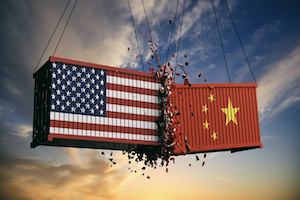
The year 2022 saw a substantial increase in export restrictions applicable to China. The U.S. and China are not only in a trade war but there is also an effort by the U.S. to (1) prevent development of supercomputers, semiconductors and related products and technologies, and (2) prevent use of forced labor – especially involving the Uyghur minority in the Xinjiang region.

After several years of review by U.S. Customs and Border Protection (“CBP”), the Customs Broker community, and the Commercial Customs Operations Advisory Council, CBP unveiled
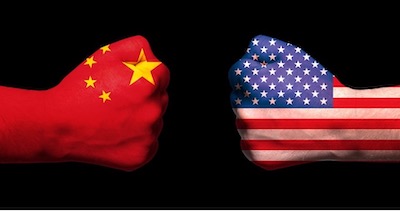
China Tariffs are here to stay – for now. The Biden Administration continues to defend the Trump-era tariffs on goods from China with little guidance as domestic inflation climbs steadily. Meanwhile, 2022 has been a busy year for the Office of the U.S. Trade Representative (“USTR”). The agency was instructed by the Court of International Trade to provide further written justification for the Section 301 Actions for Lists 3 and 4a in the wake of the agency’s obligatory four-year review of each tariff action.

We can all agree that goods made from forced labor, indentured labor or child labor should not be introduced into the U.S. market. Indeed, U.S. law prohibits the entry of goods made from forced labor. The Uyghur Forced Labor Prevention Act (“UFLPA”) which went into effect as of June 21, 2022, expands on this prohibition by placing a ban on goods from the Xinjiang Uyghur Autonomous Region (“XUAR”) where ethnic minorities are being exploited or certain specified entities that are involved in using forced labor
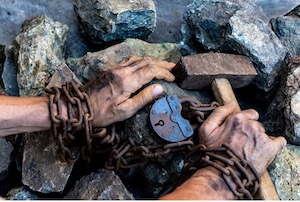
This Primer provides introductory guidance to complying with U.S. forced labor laws for importers, and includes an introductory overview to forced labor laws, U.S. Customs and Border Protection’s (CBP) authority to enforce forced labor laws, outlines importer requirements under The Uyghur Forced Labor Prevention Act, describes the detention processes for imported goods made with forced labor, lists key recommended compliance actions for adhering to U.S. forced labor laws, and provides helpful resources for complying with U.S. forced labor laws.