Key Legal Developments in 2023 Concerning United States Customs and International Trade

By Adrienne Braumiller, Founding Partner Harold Jackson, Associate Attorney Gavin Andersen, Braumiller Consulting Trade Advisor Section 301 Tariffs on Chinese goods continues to be at the forefront of international trade relations with China and the United States. As part of the four-year review required under the relevant statute (19 USC § 2417), the United States Trade […]
Using CBP’s Enforcement Statistics to Assess Forced Labor Risk in the Supply Chain
The U.S. continues to spearhead enforcement against imported goods that were made using forced labor, and public enforcement statistics can help your company assess risks of forced labor.
Complying with BIS’s Advanced Computing and Semiconductor Manufacturing Rules – Knowledge, Due Diligence, and Technology Thresholds

U.S. industries supplying Chinese facilities with products, equipment, software, and technology used in semiconductor development and production are subject to regulatory controls under the Export Administration Regulations (“EAR”). New rules published by the Department of Commerce’s Bureau of Industry and Security (“BIS”) on October 13, 2022, 87 FR 62186, imposed additional license requirements regarding the […]
Primer on Forced Labor Enforcement for U.S. Importers
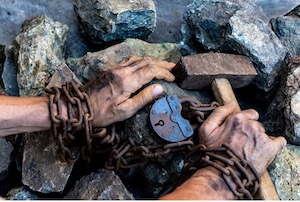
This Primer provides introductory guidance to complying with U.S. forced labor laws for importers, and includes an introductory overview to forced labor laws, U.S. Customs and Border Protection’s (CBP) authority to enforce forced labor laws, outlines importer requirements under The Uyghur Forced Labor Prevention Act, describes the detention processes for imported goods made with forced labor, lists key recommended compliance actions for adhering to U.S. forced labor laws, and provides helpful resources for complying with U.S. forced labor laws.
CBP Releases Guidance related to Complying with the Uyghur Forced Labor Prevention Act
U.S. Customs and Border Protection (“CBP”) released its first set of guidance relating to the Uyghur Forced Labor Prevention Act (“UFLPA”), which is set to take effect on June 21, 2022. CBP’s guidance takes the form of a website that is a homepage for UFLPA-related guidance, FAQs, webinars, graphics, and CBP contact information. This essential UFLPA homepage can be accessed at: www.cbp.gov/trade/forced-labor/UFLPA.
Tariff Classification and the U.S. Federal Courts: The Twenty Most Significant Precedents
Tariff classification-related court precedents have significantly shaped the way importers, brokers, consultants, lawyers, and Customs and Border Protection (CBP) classify goods today under the Harmonized Tariff Schedule of the United States (HTSUS, or simply HTS).
How Does the ACE Portal Modernization Impact You and Your Business?
In December, CBP announced a four-phase transition to a Modernized ACE Portal and decommissioning the legacy ACE Portal. We are currently in Phase I and already seeing client impacts.
I Just Found Out My Imported Goods are Subject to Antidumping – What Should I do?

Currently there are close to 400 active antidumping cases involving nearly 40 countries. The cases cover a wide range of products including steel commodity products and steel articles (number one category), chemical products, other metal commodities and articles, plastics and rubber products, food products, paperboard and manufactured articles. Key countries subject to ADD are China (number one country by far), Korea, Indonesia, Taiwan, Thailand, Turkey, and Vietnam.
2022: Prior Disclosure Woes
The year is 2022, and companies are turning over a new leaf, making a concerted effort to become compliant with U.S. Customs laws and practices. Seemingly, there are no downsides to conducting a comprehensive Customs compliance review and submitting a Prior Disclosure under 19 U.S.C. § 1592(c)(4) and 19 C.F.R. § 162.74.
New Importer, Old Baggage Successor Liability for Antidumping & Countervailing Duties

Imagine your company imports from a vendor in Vietnam and sells them at a competitive margin in the U.S. Business is so-so until the Department of Commerce conducts an Antidumping or Countervailing Duty (“AD/CVD”) review that encompasses your company or its foreign vendor and determines the origin of your goods to be China, which causes you to owe backlogged AD/CVD at rates over 100% ad valorem for the past year.