Signs of Trade Based Money Laundering and the Intersection with CTPAT Requirements
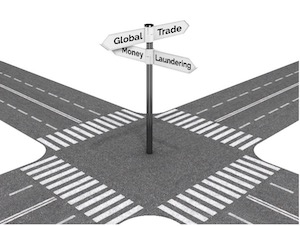
Trade-based money laundering (TBML) is quickly developing into a global tsunami. U.S. Customs and Border Protection (CBP) is looking to Importers for help in identifying risk in this critical area, and for CTPAT participants, it is the newest dimension of the Minimum-Security Criteria (MSC) rolled out in 2020.
In the Middle of Changing the MID CBP Proposal for Global Business Identifier

In a Federal Register Notice on Oct. 6, 2021, U.S. Customs and Border Protection published a 60-Day Notice and request for comments for a Global Business Identifier (GBI) Evaluative Proof of Concept (EPoC).
Customs and Border Protection’s Recent FAQs on Forced Labor Enforcement

U.S. Customs and Border Protection (“CBP”) enforcement into forced labor practices continues into 2021, as CBP has detained 1,213 shipments that contained approximately $ 414 million of goods suspected to be made by forced labor this year.
Updated Requirements to HTS 9801.00.10 – U.S. and Foreign Goods Returned

S. Customs and Border Protection (“CBP” or “Customs”) recently released updated requirements for importers and brokers regarding HTS subheading 9801.00.10, U.S. and Foreign Goods Returned.
CBP August 2021 Operational Update
U.S. Customs and Border Protection (“CBP” or “Customs”) recently released its August 2021 operational statistics. These statistics are important for CBP to review monthly/yearly to better understand and ensure enforcement efforts continue to improve.
USMCA Proposed Rule Change – Expanding Part 102 Marking Rules
By Jennifer Horvath, Partner, Braumiller Law Group
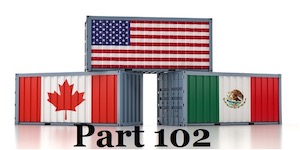
U.S. Customs and Border Protection (“CBP” or “Customs”) recently released a proposed rule (FR 86 35422) which would expand the usage of the U.S. – Canada – Mexico Agreement marking rules found in 19 C.F.R. Part 102 (herein after “Part 102”).
Non-Preferential Origin Rules – Which Do You Prefer?

By: By Adrienne Braumiller, Partner & Founder, Braumiller Law Group
There are two basic sets of country of origin rules that may apply to imports: (1) The preferential origin rules for articles considered “originating” under a free trade agreement; and (2) the non-preferential rules for articles not qualifying under a free trade agreement.