Compliance Issues in Government “Buy America” Solicitations
Whether you are creating a new in-house trade compliance function or evaluating an established one, there is no getting around the perpetual question: Where should Trade Compliance report?

Whether you are creating a new in-house trade compliance function or evaluating an established one, there is no getting around the perpetual question: Where should Trade Compliance report?

By Brenda Cordova, Braumiller Law Group Mexico Legal Counsel Mexico has recently published several legal instruments aimed to prevent and investigate forced and compulsory labor, including

The Trade Act of 1974 grants the President broad powers to manage trade relationships with foreign countries. Section 301 of the act allows the President, acting through the United States Trade Representative (“USTR”), to impose retaliatory tariffs on imports from a country if the USTR determines that country’s economic conduct “is unreasonable or discriminatory and burdens or restricts United States commerce.”

By Adrienne Braumiller, Founding Partner Harold Jackson, Associate Attorney Gavin Andersen, Braumiller Consulting Trade Advisor Section 301 Tariffs on Chinese goods continues to be at the

It’s a little awkward, but in fact, a reality in this day and age that bilateral trade between two countries who view each other as somewhat adversarial, can co-exist economically. As the world turns, so does global trade, take Australia and China for the shining example.

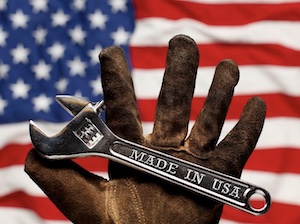
This article provides an overview of federal procurement laws and how the Federal Acquisition Regulations (FAR) implement some of those commitments in government contracts. The FAR, found under 48 C.F.R. Part 25, comprises the list of rules governing procurement of products and materials by federal agencies for public use.

The U.S. continues to spearhead enforcement against imported goods that were made using forced labor, and public enforcement statistics can help your company assess risks of forced labor.

When one company buys another there are typically two ways the purchased company will be treated: (1) It will be incorporated into the parent company and will no longer exist as a separate entity. (2) It will become a separately incorporated subsidiary of the parent company and retain its IRS number.

A large number of companies considering relocating their business abroad have turned their eyes to Mexico, which has become an attractive place for investors to relocate their business, mainly because it is close to the United States and Canada (nearshoring), the labor costs are relatively low, the availability of IMMEX (maquiladora) program, and because there is a preferential treatment to originating goods and foreign investments from the United States and Canada that are protected under the USMCA, among other factors.

2023 is more than a brand-new year – it is an opportunity for your company to prioritize supply chain and customs compliance. For some companies, this means filing a prior disclosure with U.S. Customs and Border Protection (CBP). Companies that are frequent importers are seriously considering disclosing entry violations under the condition that Customs will not issue civil penalties against them.

Since Bitcoin’s creation in 2008, cryptocurrencies and traditional assets have largely existed in parallel. In our previous exploration of Real World Assets (RWAs) (Assessing the Benefits and Challenges of Tokenizing Real World Assets, February 7, 2024), we identified how the lack of reliable bridges between on-chain and off-chain ecosystems has constrained the transformative potential of blockchain technology.

Several lawsuits challenging the legal validity of the tariff actions taken by President Trump since he took office on January 20, 2025, are in process of moving through the federal courts. They raise a variety of important jurisdictional and constitutional questions and seem poised to lead to challenges in federal circuit courts and the Supreme Court.

On May 8, 2025, the United States and United Kingdom (UK) unveiled the new trade terms of an “economic prosperity” deal. This deal comes after President Trump imposed a 10% reciprocal tariff on all products from the UK and additional tariffs on steel and aluminum, and automobiles and automobile parts. While the 10% reciprocal tariff will remain in effect, the two countries were able to agree on alternative arrangements for steel and aluminum, automobiles, and other strategic sectors.

On May 28, 2025, the United States’ Court of International Trade (CIT) struck down the President’s use of the International Economic Emergency Powers Act (IEEPA) to impose tariffs. This includes tariffs imposed on Canada, China, and Mexico in response to the fentanyl crisis at U.S.’ borders and reciprocal tariffs imposed on almost all foreign imports on April 2, 2025. The Government immediately appealed the decision to the U.S. Court of Appeals for the Federal Circuit (CAFC).

A quiet but significant power shift has been unfolding across Latin America. While the United States has long been the dominant economic and political influence in the region, its recent inward turn under the “America First” doctrine has created openings that China is eager to fill.

A few weeks ago, at the Trade and Cargo Security Summit, held in New Orleans, we learned that CBP (Customs and Border Protection) WAS NOT going to discuss the current administration’s policy during the conference. (Cue the dramatic music). Will you feel better if I tell you the groan across the audience was conspicuously audible? No? Well, I tried.

Many of our basic freedoms are guaranteed by the Constitution. Speech, press, assembly, religion: these are all accepted as sacrosanct rights by reasonable people across the political spectrum. But should we not have the same freedom when it comes to the economy?

The first quarter of 2025 has reshaped the U.S. trade landscape with a flurry of executive actions by the Trump administration, introducing a new wave of tariffs on imports from almost all U.S. trading partners. The Trump Administration has also levied broad duties on imports from Canada, Mexico, and China, on the basis of emergency powers of the Executive Branch, citing national security, border control, and illicit drug interdiction.

As a broad stroke of tariffs are now levied against various countries to close the trade deficit gap, without truly examining the reason(s) for the imbalance, there will most likely be automatic retaliatory tariffs in a lose-lose situation. The White House stated that currently 50 countries are on the phone with the President, but that is hard to confirm. US consumers will ultimately pay the price, as well as SME’s.

On April 3, 2025, during the presidential daily morning briefing, Mexico’s President Claudia Sheinbaum responded to the import tariffs announced the day before by President Trump, which targeted several countries. She emphasized that, of all the nations affected by these new duties, Mexico was the least impacted. She attributed this to the strong bilateral relationship between Mexico and the United States. She also reiterated that, since Mexico does not impose tariffs on U.S. goods, it is unfair for the U.S. to impose tariffs on Mexican products.