
News Articles

GENIUS Act

Agencies Request Comments on GENIUS Act Implementation

The GENIUS Act has authorized several regulatory agencies to issue regulations to develop the first comprehensive federal regulatory framework governing payment stablecoins in the United States. The statute directs multiple federal financial regulators to implement a coordinated supervisory structure governing issuance, reserve management, redemption rights, anti-money laundering compliance, custody, and market structure.

Read More »
Taiwan

The Taiwan Question – What are investors thinking after Trump’s Beijing summit?

United States President Donald Trump met with President Xi Jinping of the People’s Republic of China at a summit in Beijing in mid-May. The two leaders spoke for about two hours behind closed doors, discussing the trade relationship between the world’s two largest economies, the emergence of artificial intelligence, and energy cooperation. But it was a pointed comment from Xi about Taiwan that hinted at an unresolved issue that may make or break global relations. 

Read More »
IEEPA Refunds

What a “Mess”: IEEPA Refunds and the Emerging Wave of Consumer Litigation

When the U.S. Supreme Court invalidated certain tariffs imposed under the International Emergency Economic Powers Act (IEEPA) in Learning Resources, Inc. v. Trump, it did more than reshape trade policy. The decision triggered a complex series of questions regarding tariff refunds, consumer rights, and corporate liability – questions whose effects continue to be felt far beyond the trade community, reaching businesses and households across the US.

Read More »
Section 232 Iron

Section 232 and Iron: What CBP’s New Guidance Means for Your Imports – The Difference Between Steel and Iron Has Never Mattered More

We are operating in one of the most volatile trade environments in recent memory. Tariff policy is shifting faster than most compliance programs can absorb. In that context, CBP’s March 15 guidance on Section 232 content value is not just a technical update. It brings meaningful clarity and importers who move quickly may find real money on the table.

Read More »
301 Tariffs

Section 301 Tariffs: A New Phase in U.S. Trade Policy

The resurgence of Section 301 tariff investigations marks a pivotal shift in U.S. trade policy. Following the Supreme Court’s invalidation of tariffs imposed under the International Emergency Economic Powers Act (IEEPA), the Office of the U.S. Trade Representative (USTR) has turned to Section 301 of the Trade Act of 1974 as a more durable legal pathway to reimpose and potentially expand tariff measures.

Read More »
AI Legislation

AI Legislative Framework Proposed by the White House

On March 20, 2026, the Trump Administration announced that it, “is committed to winning the AI race to usher in a new era of human flourishing, economic competitiveness, and national security for the American people.“ The White House issued a new comprehensive national legislative framework that addresses six key objectives.

Read More »
IEEPA

Supreme Court Clarifies Separation of Powers in IEEPA Tariffs Decision

In the final analysis, this case stands as one of the most important separation of powers decisions in the economic domain in U.S. history. It clarifies that tariffs are a form of taxation reserved to Congress, embeds the major questions doctrine in trade law, and reasserts the structural boundary between legislative and executive authority.

Read More »
china

China and Walmart, Please, for the Love of ____, Let’s Observe a Silver Lining Partnership in an Otherwise Dismal Global Landscape

At a glance, gauging where we stand in our relationship with China overall, one would assume the key operative word in most descriptions would be “dismal” at best. This is of course accurate to a certain extent but looking at trade and commerce between the two countries, let’s take a look at the largest retailer in the U.S. as Walmart gives us a prime example of where we stand regarding unity as nations.

Read More »
Mexico judicial

The Reform to the Mexico Judicial System

On September 15th, 2024, the Mexican Congress published on the Diario Oficial de la Federacion (Mexican Official Gazette) a decree to amend, add, and abolish several provisions of the Mexican Constitution regarding the Judicial Power. This reform, as it is being called, is one of the major changes to the Mexican Judicial System and has been met with heated debates by opponents who fear it will put the balance and separation of power at risk as it will result in a weakened and deteriorated judicial system overpassed by the legislative and executive powers.

Read More »
de minimis

What’s Going on With Section 321 De Minimis Entries?

Not only are shipments under $800 exempt from duty but they are also exempt from Section 301 duties on Chinese products, Consumer Product Safety Commission requirements, import quotas and other requirements. Although they are supposed to be subject to Antidumping and Countervailing duty and Food & Drug Administration requirements, many low value shipments pass through the system without meeting these requirements.

Read More »
Open-Source Blockchain

Wyoming’s DUNA Law – A Legal Framework for Non-Profit DAOs and Open-Source Blockchain Networks

Decentralized Autonomous Organizations (DAOs) are a novel form of governance for blockchain-based protocols. Unlike traditional companies or non-profits, DAOs are member-controlled organizations that operate without a central authority or hierarchical management. Instead, DAOS use smart contracts, often on the Ethereum blockchain. DAOs often use governance tokens to enable members to vote on proposals, make collective decisions about the organization’s operations, treasury, and future development.

Read More »
port strike

Legal and Other Issues Being Resolved by Port Strike

The union and management teams reached a settlement agreement that was announced on October 4, 2024 to end the port strike. The settlement does not resolve the issues, but extends the master contract to Jan. 15, 2025, to allow the sides to negotiate outstanding issues. A final agreement must be ratified by union members.

Read More »
aluminum extrusion

Aluminum Extrusions from 13 Countries – Commerce Makes Affirmative Final AD and CVD Determinations 

On September 27, 2024, Commerce announced its affirmative final determination in the ongoing AD / CVD aluminum extrusions investigation. On the same day Commerce also posted its Final Scope Issues and Decision Memorandum. In both, Commerce almost uniformly deferred to Petitioners in dismissing numerous comments of interested parties primarily challenging the scope of the investigation on a wide range of legal theories and practical considerations.

Read More »
environmental protection

The Future of Environmental Protection Laws and Trade Agreements

Historically, trade agreements have focused on reducing barriers to trade—such as tariffs and quotas—while encouraging economic integration and growth. Environmental protection was often considered a separate issue, addressed primarily through national regulations or multilateral environmental agreements like the Paris Agreement. However, recent developments suggest that trade and environmental concerns are converging, with many new trade agreements incorporating specific environmental provisions.

Read More »
usmca joint review

USMCA Joint Review Process Part 1

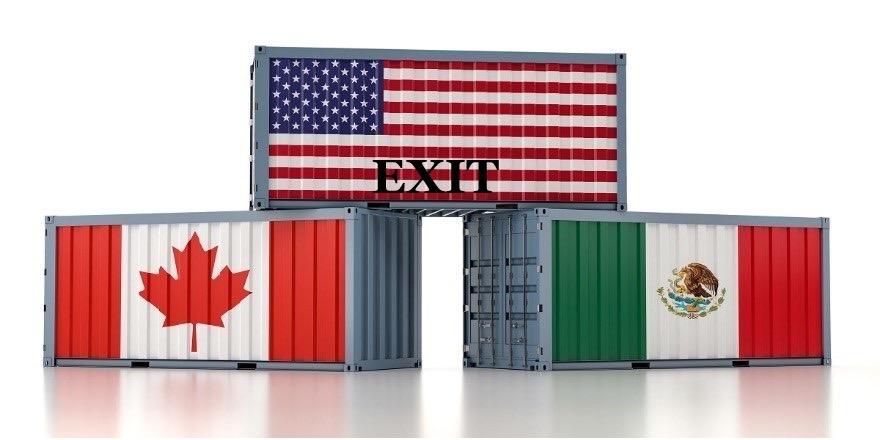
This is the first of a three-part series about the USMCA joint review process, focusing on China, Mexico, and competing visions of a “worker-centered” trade policy. Part one introduces the USMCA joint review process and explores how US trade policy would likely operate during Trump’s second term. Part two outlines some of the major trade issues that will be on the table during joint review, focusing on the Mexico-US relationship, and anticipates Harris’s likely approach to trade policy. Part three offers a critique of the worker-centered trade policy developed under the Biden administration, presents an alternative, and suggests new avenues for multi-stakeholder participation that Harris’s approach might create.

Read More »
arctic region

Coming Soon: A New Polar Icebreaker Competition in the Arctic Region for Trade Route Supremacy

The US, Canada, and Finland are launching a joint partnership to build more ice-breaking ships to compete with China and Russia in Arctic. Sad but true, here we go again. Whether it’s the South China sea, or even the moon, there will be territorial disputes to challenge ownership where no ownership should actually exist. The pact aims to produce a fleet of ice-breaking ships to display a posture of power in the polar regions and enforce international norms and treaties.

Read More »
a head scratcher

A Head Scratcher

A product has a country of origin of China, is not subject to China 301 duties and is eligible for USMCA benefits when imported from Canada – Whaaat!?

Read More »