
A Day in the Life of a Trade Compliance Manager: A Corporate Parable
A fly on the wall at an executive retreat for Acme Super Duper Widget Company overhears the following conversation between Pete, the CFO, and Saira, the General Counsel.

A fly on the wall at an executive retreat for Acme Super Duper Widget Company overhears the following conversation between Pete, the CFO, and Saira, the General Counsel.

The CTPAT portal has been a work in progress for a number of years with the latest portal update (3.0) launched at the end of 2023. Let’s take a few minutes to explore a few strategies for best outcomes while avoiding common challenges and the SCSS response request for “more information”.

Those who cannot remember the past are condemned to repeat it.” – George Santayana. As an example of this I present to you the Smoot-Hawley Tariff Act of 1930. If you are not familiar with this, it is worth taking a moment to research.

Recently, President Biden signed a foreign military support bill (H.R. 815) into law, which also encompassed the 21st Century Peace Through Strength Act (the Act), a legislative proposal introduced in the House containing various U.S. sanctions-related measures. These sanctions measures extended the statute of limitations (“SOL”) from five to ten years for civil and criminal violations of sanctions programs administered by the U.S. Treasury Department’s Office of Foreign Assets Control (“OFAC”).

The new world order apparently has some merit as more than 30 nations have reportedly submitted applications to join the BRICS alliance wanting to reduce reliance on the US dollar. This wave of applications is a testament to the trust in the BRICS alliance as a viable option to a traditional economic structure. The BRICS alliance has broad shoulders and is representative of considerable economic growth.

On May 14, 2024, the United States Trade Representative (USTR) released its Final Report relating to the four-year review of actions taken in the Section 301 investigation. Within the Report, the USTR confirmed that it intends to take actions to raise tariffs on specific products as a result of the comprehensive review.

Canada has long enjoyed International Traffic in Arms Regulations (ITAR) license exemptions and minimal controls for items subject to the Export Administration Regulations (EAR). What about some of our other friends, such as Australia and United Kingdom? There are ITAR license exemptions for these countries in Parts 126.16 and 126.17 of the ITAR.

The United States Trade Representative (USTR) recently released a list of Section 301 exclusions that would be extended through May 31, 2025. Within the Notice, the USTR explained that extending these exclusions will support efforts to shift sourcing out of China, or provide additional time where, despite efforts to source products from alternative sources, availability of the product outside of China remains limited.

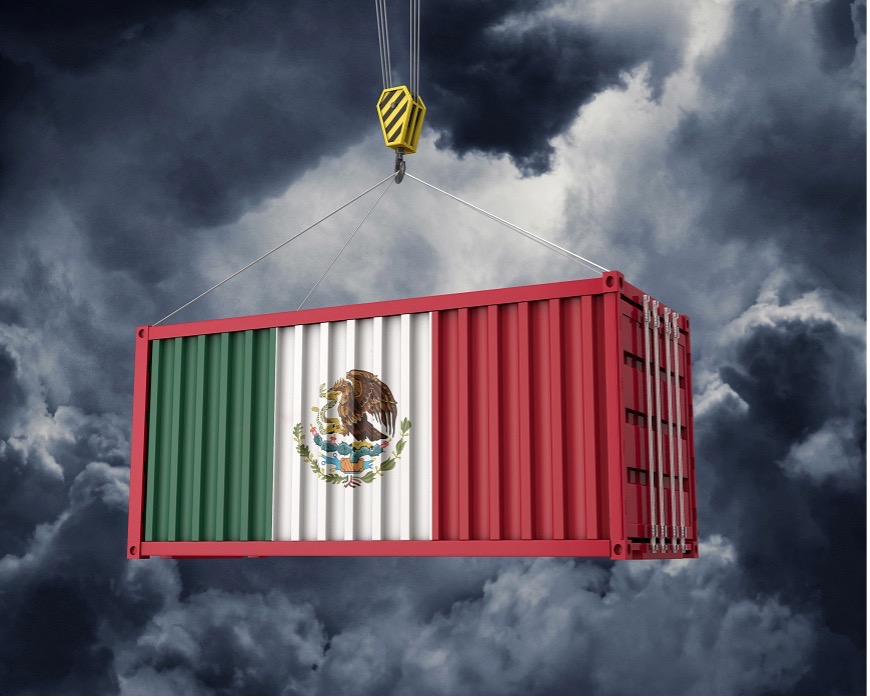
China’s foreign direct investment (FDI) in Mexico has seen substantial growth in recent years, reflecting a strategic alignment with global economic shifts and regional trade dynamics. This trend positions China as one of the fastest-growing sources of foreign investment in Mexico, with the majority of investments flowing into the manufacturing sector.

Digital assets, including blockchain and cryptocurrency protocols and companies, have been in a defensive posture for much of 2022, 2023 and 2024. The collapse of crypto exchange FTX and numerous enforcement actions taken by the Securities Exchange Commission (SEC) and Commodities Futures Trading Commission (CFTC) have forced the sector to retrench and upgrade their abilities to meet the higher standards of securities laws.

By: Judy Davis, Senior Trade Advisor, Braumiller Consulting Group In the global trade universe, where time holds huge importance, weak security practices in your international

Several tribunals and courts were established at various periods of America’s history to resolve trade-related litigation, both at the trial and appellate levels, and even the Supreme Court has played a significant role in these disputes. The jurisdiction and structure of these courts evolved as the complexities and volume of trade disputes grew.

On September 15th, 2024, the Mexican Congress published on the Diario Oficial de la Federacion (Mexican Official Gazette) a decree to amend, add, and abolish several provisions of the Mexican Constitution regarding the Judicial Power. This reform, as it is being called, is one of the major changes to the Mexican Judicial System and has been met with heated debates by opponents who fear it will put the balance and separation of power at risk as it will result in a weakened and deteriorated judicial system overpassed by the legislative and executive powers.

This is the second of a three-part series about the USMCA joint review process, focusing on China, Mexico, and competing visions of a “worker-centered” trade policy. Part one introduces the USMCA joint review process and explores how US trade policy would likely operate during Trump’s second term. Part two outlines some of the major trade issues that will be on the table during joint review, focusing on the Mexico-US relationship, and anticipates Harris’s likely approach to trade policy.

At a glance, gauging where we stand in our relationship with China overall, one would assume the key operative word in most descriptions would be “dismal” at best. This is of course accurate to a certain extent but looking at trade and commerce between the two countries, let’s take a look at the largest retailer in the U.S. as Walmart gives us a prime example of where we stand regarding unity as nations.

On September 15th, 2024, the Mexican Congress published on the Diario Oficial de la Federacion (Mexican Official Gazette) a decree to amend, add, and abolish several provisions of the Mexican Constitution regarding the Judicial Power. This reform, as it is being called, is one of the major changes to the Mexican Judicial System and has been met with heated debates by opponents who fear it will put the balance and separation of power at risk as it will result in a weakened and deteriorated judicial system overpassed by the legislative and executive powers.

Not only are shipments under $800 exempt from duty but they are also exempt from Section 301 duties on Chinese products, Consumer Product Safety Commission requirements, import quotas and other requirements. Although they are supposed to be subject to Antidumping and Countervailing duty and Food & Drug Administration requirements, many low value shipments pass through the system without meeting these requirements.

Decentralized Autonomous Organizations (DAOs) are a novel form of governance for blockchain-based protocols. Unlike traditional companies or non-profits, DAOs are member-controlled organizations that operate without a central authority or hierarchical management. Instead, DAOS use smart contracts, often on the Ethereum blockchain. DAOs often use governance tokens to enable members to vote on proposals, make collective decisions about the organization’s operations, treasury, and future development.

The union and management teams reached a settlement agreement that was announced on October 4, 2024 to end the port strike. The settlement does not resolve the issues, but extends the master contract to Jan. 15, 2025, to allow the sides to negotiate outstanding issues. A final agreement must be ratified by union members.

On September 27, 2024, Commerce announced its affirmative final determination in the ongoing AD / CVD aluminum extrusions investigation. On the same day Commerce also posted its Final Scope Issues and Decision Memorandum. In both, Commerce almost uniformly deferred to Petitioners in dismissing numerous comments of interested parties primarily challenging the scope of the investigation on a wide range of legal theories and practical considerations.