
From Awareness to Action: A Deep Dive into CTPAT Training
By: Judy Davis, Senior Trade Advisor, Braumiller Consulting Group In the global trade universe, where time holds huge importance, weak security practices in your international

By: Judy Davis, Senior Trade Advisor, Braumiller Consulting Group In the global trade universe, where time holds huge importance, weak security practices in your international

Several tribunals and courts were established at various periods of America’s history to resolve trade-related litigation, both at the trial and appellate levels, and even the Supreme Court has played a significant role in these disputes. The jurisdiction and structure of these courts evolved as the complexities and volume of trade disputes grew.

On September 15th, 2024, the Mexican Congress published on the Diario Oficial de la Federacion (Mexican Official Gazette) a decree to amend, add, and abolish several provisions of the Mexican Constitution regarding the Judicial Power. This reform, as it is being called, is one of the major changes to the Mexican Judicial System and has been met with heated debates by opponents who fear it will put the balance and separation of power at risk as it will result in a weakened and deteriorated judicial system overpassed by the legislative and executive powers.

This is the second of a three-part series about the USMCA joint review process, focusing on China, Mexico, and competing visions of a “worker-centered” trade policy. Part one introduces the USMCA joint review process and explores how US trade policy would likely operate during Trump’s second term. Part two outlines some of the major trade issues that will be on the table during joint review, focusing on the Mexico-US relationship, and anticipates Harris’s likely approach to trade policy.

At a glance, gauging where we stand in our relationship with China overall, one would assume the key operative word in most descriptions would be “dismal” at best. This is of course accurate to a certain extent but looking at trade and commerce between the two countries, let’s take a look at the largest retailer in the U.S. as Walmart gives us a prime example of where we stand regarding unity as nations.

On September 15th, 2024, the Mexican Congress published on the Diario Oficial de la Federacion (Mexican Official Gazette) a decree to amend, add, and abolish several provisions of the Mexican Constitution regarding the Judicial Power. This reform, as it is being called, is one of the major changes to the Mexican Judicial System and has been met with heated debates by opponents who fear it will put the balance and separation of power at risk as it will result in a weakened and deteriorated judicial system overpassed by the legislative and executive powers.

Not only are shipments under $800 exempt from duty but they are also exempt from Section 301 duties on Chinese products, Consumer Product Safety Commission requirements, import quotas and other requirements. Although they are supposed to be subject to Antidumping and Countervailing duty and Food & Drug Administration requirements, many low value shipments pass through the system without meeting these requirements.

Decentralized Autonomous Organizations (DAOs) are a novel form of governance for blockchain-based protocols. Unlike traditional companies or non-profits, DAOs are member-controlled organizations that operate without a central authority or hierarchical management. Instead, DAOS use smart contracts, often on the Ethereum blockchain. DAOs often use governance tokens to enable members to vote on proposals, make collective decisions about the organization’s operations, treasury, and future development.

The union and management teams reached a settlement agreement that was announced on October 4, 2024 to end the port strike. The settlement does not resolve the issues, but extends the master contract to Jan. 15, 2025, to allow the sides to negotiate outstanding issues. A final agreement must be ratified by union members.

On September 27, 2024, Commerce announced its affirmative final determination in the ongoing AD / CVD aluminum extrusions investigation. On the same day Commerce also posted its Final Scope Issues and Decision Memorandum. In both, Commerce almost uniformly deferred to Petitioners in dismissing numerous comments of interested parties primarily challenging the scope of the investigation on a wide range of legal theories and practical considerations.

Since Bitcoin’s creation in 2008, cryptocurrencies and traditional assets have largely existed in parallel. In our previous exploration of Real World Assets (RWAs) (Assessing the Benefits and Challenges of Tokenizing Real World Assets, February 7, 2024), we identified how the lack of reliable bridges between on-chain and off-chain ecosystems has constrained the transformative potential of blockchain technology.

Several lawsuits challenging the legal validity of the tariff actions taken by President Trump since he took office on January 20, 2025, are in process of moving through the federal courts. They raise a variety of important jurisdictional and constitutional questions and seem poised to lead to challenges in federal circuit courts and the Supreme Court.

On May 8, 2025, the United States and United Kingdom (UK) unveiled the new trade terms of an “economic prosperity” deal. This deal comes after President Trump imposed a 10% reciprocal tariff on all products from the UK and additional tariffs on steel and aluminum, and automobiles and automobile parts. While the 10% reciprocal tariff will remain in effect, the two countries were able to agree on alternative arrangements for steel and aluminum, automobiles, and other strategic sectors.

On May 28, 2025, the United States’ Court of International Trade (CIT) struck down the President’s use of the International Economic Emergency Powers Act (IEEPA) to impose tariffs. This includes tariffs imposed on Canada, China, and Mexico in response to the fentanyl crisis at U.S.’ borders and reciprocal tariffs imposed on almost all foreign imports on April 2, 2025. The Government immediately appealed the decision to the U.S. Court of Appeals for the Federal Circuit (CAFC).

A quiet but significant power shift has been unfolding across Latin America. While the United States has long been the dominant economic and political influence in the region, its recent inward turn under the “America First” doctrine has created openings that China is eager to fill.

A few weeks ago, at the Trade and Cargo Security Summit, held in New Orleans, we learned that CBP (Customs and Border Protection) WAS NOT going to discuss the current administration’s policy during the conference. (Cue the dramatic music). Will you feel better if I tell you the groan across the audience was conspicuously audible? No? Well, I tried.

Many of our basic freedoms are guaranteed by the Constitution. Speech, press, assembly, religion: these are all accepted as sacrosanct rights by reasonable people across the political spectrum. But should we not have the same freedom when it comes to the economy?

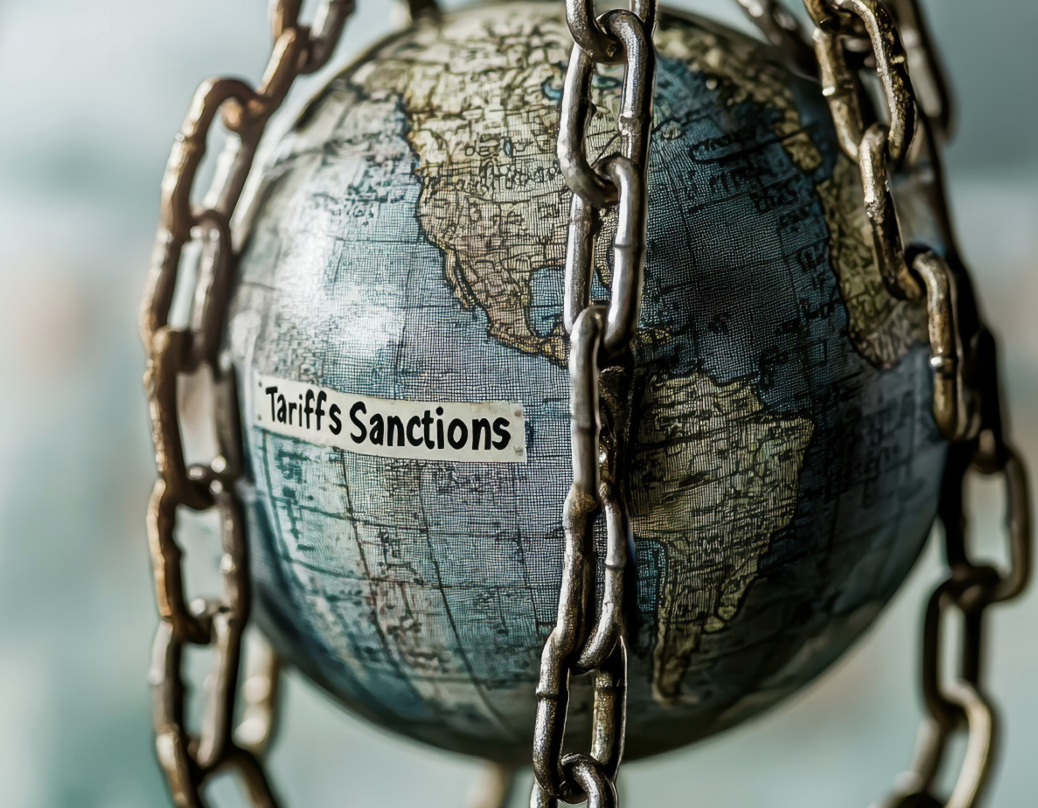
The first quarter of 2025 has reshaped the U.S. trade landscape with a flurry of executive actions by the Trump administration, introducing a new wave of tariffs on imports from almost all U.S. trading partners. The Trump Administration has also levied broad duties on imports from Canada, Mexico, and China, on the basis of emergency powers of the Executive Branch, citing national security, border control, and illicit drug interdiction.

As a broad stroke of tariffs are now levied against various countries to close the trade deficit gap, without truly examining the reason(s) for the imbalance, there will most likely be automatic retaliatory tariffs in a lose-lose situation. The White House stated that currently 50 countries are on the phone with the President, but that is hard to confirm. US consumers will ultimately pay the price, as well as SME’s.

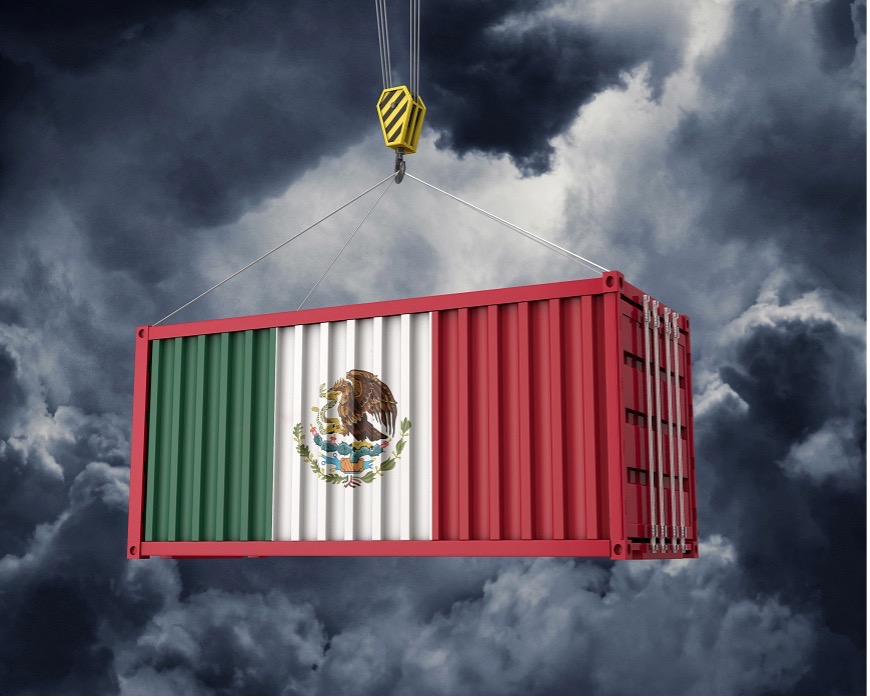
On April 3, 2025, during the presidential daily morning briefing, Mexico’s President Claudia Sheinbaum responded to the import tariffs announced the day before by President Trump, which targeted several countries. She emphasized that, of all the nations affected by these new duties, Mexico was the least impacted. She attributed this to the strong bilateral relationship between Mexico and the United States. She also reiterated that, since Mexico does not impose tariffs on U.S. goods, it is unfair for the U.S. to impose tariffs on Mexican products.