
From Awareness to Action: A Deep Dive into CTPAT Training
By: Judy Davis, Senior Trade Advisor, Braumiller Consulting Group In the global trade universe, where time holds huge importance, weak security practices in your international

By: Judy Davis, Senior Trade Advisor, Braumiller Consulting Group In the global trade universe, where time holds huge importance, weak security practices in your international

Several tribunals and courts were established at various periods of America’s history to resolve trade-related litigation, both at the trial and appellate levels, and even the Supreme Court has played a significant role in these disputes. The jurisdiction and structure of these courts evolved as the complexities and volume of trade disputes grew.

On September 15th, 2024, the Mexican Congress published on the Diario Oficial de la Federacion (Mexican Official Gazette) a decree to amend, add, and abolish several provisions of the Mexican Constitution regarding the Judicial Power. This reform, as it is being called, is one of the major changes to the Mexican Judicial System and has been met with heated debates by opponents who fear it will put the balance and separation of power at risk as it will result in a weakened and deteriorated judicial system overpassed by the legislative and executive powers.

This is the second of a three-part series about the USMCA joint review process, focusing on China, Mexico, and competing visions of a “worker-centered” trade policy. Part one introduces the USMCA joint review process and explores how US trade policy would likely operate during Trump’s second term. Part two outlines some of the major trade issues that will be on the table during joint review, focusing on the Mexico-US relationship, and anticipates Harris’s likely approach to trade policy.

At a glance, gauging where we stand in our relationship with China overall, one would assume the key operative word in most descriptions would be “dismal” at best. This is of course accurate to a certain extent but looking at trade and commerce between the two countries, let’s take a look at the largest retailer in the U.S. as Walmart gives us a prime example of where we stand regarding unity as nations.

On September 15th, 2024, the Mexican Congress published on the Diario Oficial de la Federacion (Mexican Official Gazette) a decree to amend, add, and abolish several provisions of the Mexican Constitution regarding the Judicial Power. This reform, as it is being called, is one of the major changes to the Mexican Judicial System and has been met with heated debates by opponents who fear it will put the balance and separation of power at risk as it will result in a weakened and deteriorated judicial system overpassed by the legislative and executive powers.

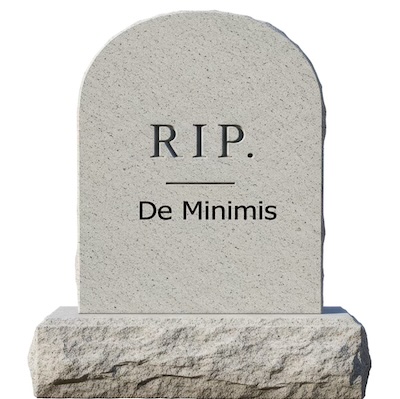
Not only are shipments under $800 exempt from duty but they are also exempt from Section 301 duties on Chinese products, Consumer Product Safety Commission requirements, import quotas and other requirements. Although they are supposed to be subject to Antidumping and Countervailing duty and Food & Drug Administration requirements, many low value shipments pass through the system without meeting these requirements.

Decentralized Autonomous Organizations (DAOs) are a novel form of governance for blockchain-based protocols. Unlike traditional companies or non-profits, DAOs are member-controlled organizations that operate without a central authority or hierarchical management. Instead, DAOS use smart contracts, often on the Ethereum blockchain. DAOs often use governance tokens to enable members to vote on proposals, make collective decisions about the organization’s operations, treasury, and future development.

The union and management teams reached a settlement agreement that was announced on October 4, 2024 to end the port strike. The settlement does not resolve the issues, but extends the master contract to Jan. 15, 2025, to allow the sides to negotiate outstanding issues. A final agreement must be ratified by union members.

On September 27, 2024, Commerce announced its affirmative final determination in the ongoing AD / CVD aluminum extrusions investigation. On the same day Commerce also posted its Final Scope Issues and Decision Memorandum. In both, Commerce almost uniformly deferred to Petitioners in dismissing numerous comments of interested parties primarily challenging the scope of the investigation on a wide range of legal theories and practical considerations.

The President signed into law the Guiding and Establishing National Innovation for U.S. Stablecoins of 2025’or ‘‘GENIUS Act of 2025’” (the Act) on July 18, 2025. The new law establishes a basis for regulators to permit a variety of bank and non-bank entities to issue payment stablecoins that will be used for payments and reserves for a variety of purposes. This analysis covers the major provisions of the new law.

Since taking office on January 20, 2025, the Trump Administration has undertaken an aggressive trade policy that has impacted, and will continue to impact, all countries trading with the US. Many of the actions seek to reverse the established principles of trade policy that have been supported by both political parties, enshrined in the rules of international agreements and organizations, and regulated by executive branch agencies since the end of World War II.

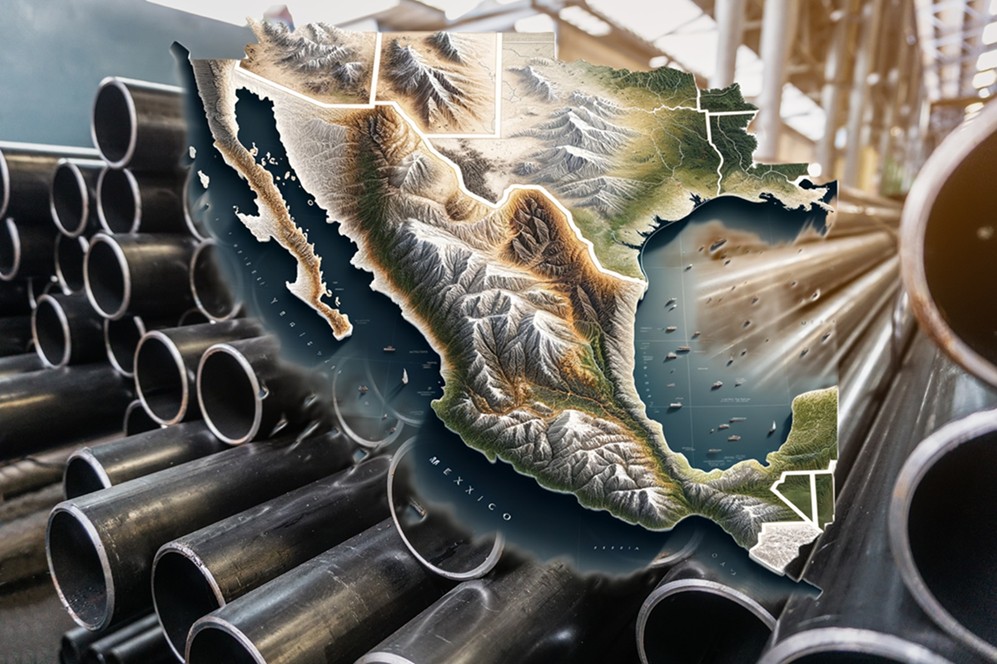
From a Mexican resident’s perspective, who is also involved in international trade, it appears that since the Trump administration took office, the global economic scenario has been altered by an escalating trade war, characterized by the imposition of tariffs by the U.S. government, on a range of countries. These measures, intended to safeguard the U.S. interests, have affected the relationships with certain international markets, as the U.S. is showing signs of progressive isolationist practices.

My internship in Mexico was with the Servicio de Administración Tributaria (SAT), the office responsible for applying tax and customs legislation, which facilitates trade through customs administration. With its influence extending across both the public and private sectors, SAT stands at the forefront of Mexico’s efforts to promote transparency, efficiency, and fiscal responsibility. My internship experience within this institution offered invaluable insights into its operations and the impact it has on the nation’s economic landscape.

It comes as no surprise China has been a major focus point of the second Trump administration. One of the key reasons for this focus is the increasing national security concerns over technology. In particular, the smuggling of AI chips, which China intends to use in developing advanced AI systems for military purposes and surveillance.

Question 1: How are you advising businesses in your jurisdiction when protecting themselves from the impact of trade wars and sanctions, and what strategies can professional services firms offer to mitigate these risks?

If I heard it once, I’ve heard it a thousand times, China is the sourcing capital of the world. I’ve also repeated this statement at least 400+ times in many conversations over the years regarding global trade. China, it’s also where the global market goes for rare earth minerals, among thousands of other necessary elements for a veritable plethora of life’s essential things.

On April 2, 2025, President Trump announced reciprocal tariffs, setting a baseline rate of 10% on imports from all countries, with higher rates on dozens of countries which the United States (U.S.) runs trade deficits. Specifically, Trump imposed a 34% tariff on all Chinese imports in response to China’s 67% tariff and non-tariff barriers on U.S. exports, aiming to address what he sees as an unfair trade imbalance.

Since Trump’s first term, tensions between the United States and China, the world’s two largest economies, have been on the rise. President Trump ran for his second presidential term on a promise to reduce reliance on China – and promise kept. In one of his first Presidential actions, President Trump issued an “America First Trade Policy” memorandum dedicating an entire section to trade relations with China. Since then, several tariffs have been imposed on Chinese goods and the duty-free de minimis treatment for goods valued at $800 or less ended.

In a recent Federal Register notice the Bureau of Industry & Security (BIS) of the Department of Commerce announced that “On May 1, 2025, the Secretary of Commerce initiated an investigation to determine the effects on the national security of imports of commercial aircraft and jet engines, and parts for commercial aircraft and jet engines. This investigation has been initiated under section 232 of the Trade Expansion Act of 1962, as amended (Section 232).” The investigation may take up to 270 days but it can be concluded sooner.