
From Awareness to Action: A Deep Dive into CTPAT Training
By: Judy Davis, Senior Trade Advisor, Braumiller Consulting Group In the global trade universe, where time holds huge importance, weak security practices in your international

By: Judy Davis, Senior Trade Advisor, Braumiller Consulting Group In the global trade universe, where time holds huge importance, weak security practices in your international

Several tribunals and courts were established at various periods of America’s history to resolve trade-related litigation, both at the trial and appellate levels, and even the Supreme Court has played a significant role in these disputes. The jurisdiction and structure of these courts evolved as the complexities and volume of trade disputes grew.

On September 15th, 2024, the Mexican Congress published on the Diario Oficial de la Federacion (Mexican Official Gazette) a decree to amend, add, and abolish several provisions of the Mexican Constitution regarding the Judicial Power. This reform, as it is being called, is one of the major changes to the Mexican Judicial System and has been met with heated debates by opponents who fear it will put the balance and separation of power at risk as it will result in a weakened and deteriorated judicial system overpassed by the legislative and executive powers.

This is the second of a three-part series about the USMCA joint review process, focusing on China, Mexico, and competing visions of a “worker-centered” trade policy. Part one introduces the USMCA joint review process and explores how US trade policy would likely operate during Trump’s second term. Part two outlines some of the major trade issues that will be on the table during joint review, focusing on the Mexico-US relationship, and anticipates Harris’s likely approach to trade policy.

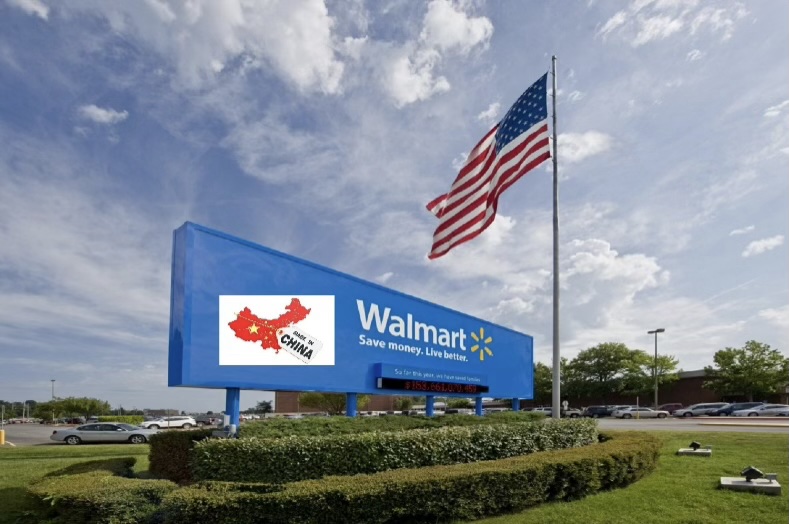
At a glance, gauging where we stand in our relationship with China overall, one would assume the key operative word in most descriptions would be “dismal” at best. This is of course accurate to a certain extent but looking at trade and commerce between the two countries, let’s take a look at the largest retailer in the U.S. as Walmart gives us a prime example of where we stand regarding unity as nations.

On September 15th, 2024, the Mexican Congress published on the Diario Oficial de la Federacion (Mexican Official Gazette) a decree to amend, add, and abolish several provisions of the Mexican Constitution regarding the Judicial Power. This reform, as it is being called, is one of the major changes to the Mexican Judicial System and has been met with heated debates by opponents who fear it will put the balance and separation of power at risk as it will result in a weakened and deteriorated judicial system overpassed by the legislative and executive powers.

Not only are shipments under $800 exempt from duty but they are also exempt from Section 301 duties on Chinese products, Consumer Product Safety Commission requirements, import quotas and other requirements. Although they are supposed to be subject to Antidumping and Countervailing duty and Food & Drug Administration requirements, many low value shipments pass through the system without meeting these requirements.

Decentralized Autonomous Organizations (DAOs) are a novel form of governance for blockchain-based protocols. Unlike traditional companies or non-profits, DAOs are member-controlled organizations that operate without a central authority or hierarchical management. Instead, DAOS use smart contracts, often on the Ethereum blockchain. DAOs often use governance tokens to enable members to vote on proposals, make collective decisions about the organization’s operations, treasury, and future development.

The union and management teams reached a settlement agreement that was announced on October 4, 2024 to end the port strike. The settlement does not resolve the issues, but extends the master contract to Jan. 15, 2025, to allow the sides to negotiate outstanding issues. A final agreement must be ratified by union members.

On September 27, 2024, Commerce announced its affirmative final determination in the ongoing AD / CVD aluminum extrusions investigation. On the same day Commerce also posted its Final Scope Issues and Decision Memorandum. In both, Commerce almost uniformly deferred to Petitioners in dismissing numerous comments of interested parties primarily challenging the scope of the investigation on a wide range of legal theories and practical considerations.

We are operating in one of the most volatile trade environments in recent memory. Tariff policy is shifting faster than most compliance programs can absorb. In that context, CBP’s March 15 guidance on Section 232 content value is not just a technical update. It brings meaningful clarity and importers who move quickly may find real money on the table.

The resurgence of Section 301 tariff investigations marks a pivotal shift in U.S. trade policy. Following the Supreme Court’s invalidation of tariffs imposed under the International Emergency Economic Powers Act (IEEPA), the Office of the U.S. Trade Representative (USTR) has turned to Section 301 of the Trade Act of 1974 as a more durable legal pathway to reimpose and potentially expand tariff measures.

On March 20, 2026, the Trump Administration announced that it, “is committed to winning the AI race to usher in a new era of human flourishing, economic competitiveness, and national security for the American people.“ The White House issued a new comprehensive national legislative framework that addresses six key objectives.

In the final analysis, this case stands as one of the most important separation of powers decisions in the economic domain in U.S. history. It clarifies that tariffs are a form of taxation reserved to Congress, embeds the major questions doctrine in trade law, and reasserts the structural boundary between legislative and executive authority.

One of my recently published articles covered the World Economic Forum Davos speech by Canadian Prime Minister Mark Carney, where he summoned the middle powers of the earth to unite against the US forces who are demanding that they take a knee and capitulate, per Governor Newsom who was in attendance handing out knee pads. (Really) Well, to say the least, that’s not happening by even the longest stretch of anyone’s imagination.

The global supply chain is the backbone of the U.S. economy, moving millions of tons of cargo daily. To keep things running smoothly and safely, U.S. Customs and Border Protection (CBP) place a significant reliance on the Customs Trade Partnership Against Terrorism (CTPAT). This voluntary program trades “gold star” benefits—like fewer inspections, business resumption priority, and faster border crossings—for a company’s commitment to high-level security.

On March 9th, 2026, maritime tracking data showed just one outbound vessel, bearing an Iranian flag, transiting the Strait of Hormuz, with no inbound movements recorded at all. This lone vessel signifies a global conflict in a very important region around global trade.

Many trade practitioners that have had experience with a CBP prior disclosure or penalty action have encountered a request by CBP to execute a Statute of Limitations (SOL) waiver. These are usually accompanied by a request for the importer to provide a corporate resolution or the equivalent evidencing the authority of the SOL waiver signatory to sign the waiver on behalf of the importer / company.

Mexico’s Tax Administration Service (SAT) launched the 2026 Fiscal Regularization Program on January 22, offering businesses a strategic opportunity to resolve outstanding tax obligations with unprecedented penalty relief.

El marco jurídico mexicano en materia aduanera y de comercio exterior ha evolucionado hacia un modelo de cumplimiento más estricto y controlado. Las autoridades ya no solo exigen que los importadores identifiquen cual es la mercancía objeto de la importación, sino también que acrediten bajo que términos y condiciones se realiza la operación de comercio exterior.