
From Awareness to Action: A Deep Dive into CTPAT Training
By: Judy Davis, Senior Trade Advisor, Braumiller Consulting Group In the global trade universe, where time holds huge importance, weak security practices in your international

By: Judy Davis, Senior Trade Advisor, Braumiller Consulting Group In the global trade universe, where time holds huge importance, weak security practices in your international

Several tribunals and courts were established at various periods of America’s history to resolve trade-related litigation, both at the trial and appellate levels, and even the Supreme Court has played a significant role in these disputes. The jurisdiction and structure of these courts evolved as the complexities and volume of trade disputes grew.

On September 15th, 2024, the Mexican Congress published on the Diario Oficial de la Federacion (Mexican Official Gazette) a decree to amend, add, and abolish several provisions of the Mexican Constitution regarding the Judicial Power. This reform, as it is being called, is one of the major changes to the Mexican Judicial System and has been met with heated debates by opponents who fear it will put the balance and separation of power at risk as it will result in a weakened and deteriorated judicial system overpassed by the legislative and executive powers.

This is the second of a three-part series about the USMCA joint review process, focusing on China, Mexico, and competing visions of a “worker-centered” trade policy. Part one introduces the USMCA joint review process and explores how US trade policy would likely operate during Trump’s second term. Part two outlines some of the major trade issues that will be on the table during joint review, focusing on the Mexico-US relationship, and anticipates Harris’s likely approach to trade policy.

At a glance, gauging where we stand in our relationship with China overall, one would assume the key operative word in most descriptions would be “dismal” at best. This is of course accurate to a certain extent but looking at trade and commerce between the two countries, let’s take a look at the largest retailer in the U.S. as Walmart gives us a prime example of where we stand regarding unity as nations.

On September 15th, 2024, the Mexican Congress published on the Diario Oficial de la Federacion (Mexican Official Gazette) a decree to amend, add, and abolish several provisions of the Mexican Constitution regarding the Judicial Power. This reform, as it is being called, is one of the major changes to the Mexican Judicial System and has been met with heated debates by opponents who fear it will put the balance and separation of power at risk as it will result in a weakened and deteriorated judicial system overpassed by the legislative and executive powers.

Not only are shipments under $800 exempt from duty but they are also exempt from Section 301 duties on Chinese products, Consumer Product Safety Commission requirements, import quotas and other requirements. Although they are supposed to be subject to Antidumping and Countervailing duty and Food & Drug Administration requirements, many low value shipments pass through the system without meeting these requirements.

Decentralized Autonomous Organizations (DAOs) are a novel form of governance for blockchain-based protocols. Unlike traditional companies or non-profits, DAOs are member-controlled organizations that operate without a central authority or hierarchical management. Instead, DAOS use smart contracts, often on the Ethereum blockchain. DAOs often use governance tokens to enable members to vote on proposals, make collective decisions about the organization’s operations, treasury, and future development.

The union and management teams reached a settlement agreement that was announced on October 4, 2024 to end the port strike. The settlement does not resolve the issues, but extends the master contract to Jan. 15, 2025, to allow the sides to negotiate outstanding issues. A final agreement must be ratified by union members.

On September 27, 2024, Commerce announced its affirmative final determination in the ongoing AD / CVD aluminum extrusions investigation. On the same day Commerce also posted its Final Scope Issues and Decision Memorandum. In both, Commerce almost uniformly deferred to Petitioners in dismissing numerous comments of interested parties primarily challenging the scope of the investigation on a wide range of legal theories and practical considerations.

Punctuation matters. I’ve always remembered a poster on the wall of a co-worker’s office—this was back in the 80s—that showed baby seals dancing at a disco under a four-word caption: STOP CLUBBING, BABY SEALS. The poster (which has become an internet meme forty years later) cleverly showed how something as seemingly minor as a comma can change the meaning of a phrase or sentence. If a comma can flip the meaning of a four-word sentence, is it hard to imagine the effect that punctuation, or lack of punctuation, might have on our interpretation of a law or regulation?

In today’s complex global marketplace, businesses are increasingly confronted with the challenges of supply chain disruptions, rising costs, and fierce competition—all exacerbated by trade remedy tariffs. While many of these tariffs are already in play, President-elect Trump has promised to impose new tariffs and increase old ones.

After 25 years of negotiations, the European Union and the Southern Common Market, commonly known as Mercosur, comprised of Brazil, Argentina, Uruguay, and Paraguay, signed a free trade agreement. I think this, among many more regional deals to come was suddenly expedited due to the anticipated land mines with the upcoming Trump 2.0 administration and trade policy regarding tariffs for all.

The United States has a long history of using tariffs. The first significant tariff legislation was the Tariff Act of 1789, signed by President George Washington. Tariffs have been used for various purposes over the years, including protecting domestic industries, generating government revenue, and negotiating trade agreements. The use of tariffs however has evolved, with significant changes during different historical periods, such as the high tariffs of the 19th century and the shift towards free trade in the mid-20th century, as well as the current U.S. trade war with China, and possibly soon to be with Mexico and Canada.

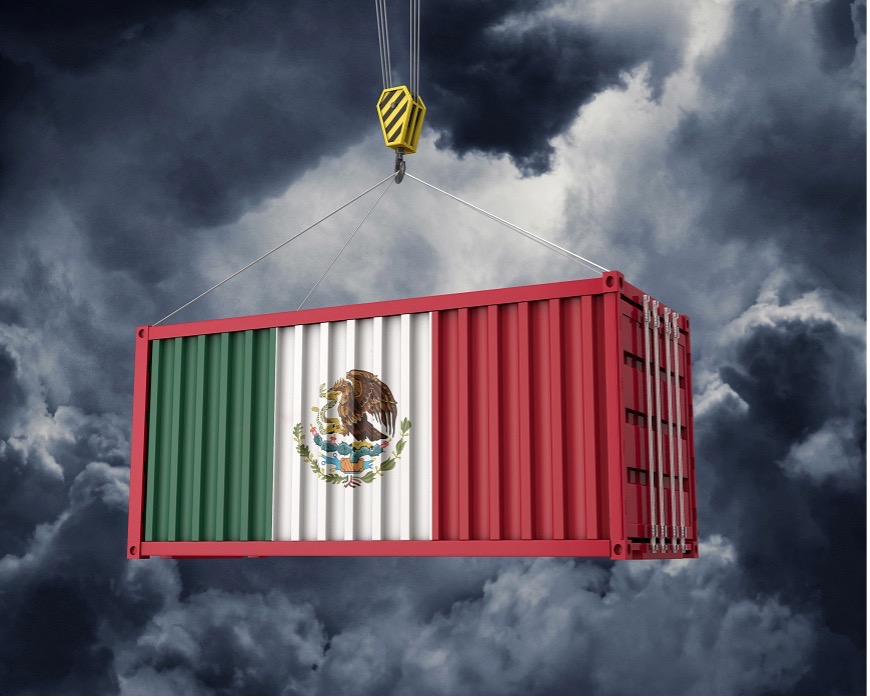
Recently, US elected President Trump threatened that when he takes office one of his first orders will be a 25% import duty on all goods coming from MX into the US. The intention is to put pressure on Mexico to stop the flow of illegal drugs and immigrants.

On October 23, 2024, the Directorate of Defense Trade Controls published proposed changes to the International Traffic in Arms Regulations (ITAR) affecting exports of spacecraft and launch vehicles and related activities. Subsequently the department extended the comment period from Nov. 22 to Dec. 23, 2024. The Bureau of Industry & Security (BIS) of the Department of Commerce published corresponding proposed changes to the Export Administration Regulations on Oct. 23, 2024.

This article examines the constitutional authorities and various statutes that reserve tariff authorities for Congress and some legal authorities in which Congress has delegated tariff authorities to the President. The U.S. is a party to numerous multilateral and regional trade agreements that have binding tariff commitments that will be impacted as well.

Historically, trade agreements have focused on reducing barriers to trade—such as tariffs and quotas—while encouraging economic integration and growth. Environmental protection was often considered a separate issue, addressed primarily through national regulations or multilateral environmental agreements like the Paris Agreement. However, recent developments suggest that trade and environmental concerns are converging, with many new trade agreements incorporating specific environmental provisions.

President-elect Trump has repeatedly stated that he will increase tariffs. While it is unclear to what extent, while campaigning he proposed a 10% to 20% tariff on all imports and an additional 60% or more on goods from China.

One of the most anticipated decisions of the Supreme Court’s recent term was Loper Bright Enterprises v. Raimondo. While the specific underlying dispute in Loper Bright isn’t relevant to the trade community—did fishermen have to pay for government-mandated observers on their vessels?—the Court used this case to overturn the broadly applicable judicial deference test established in 1984 in Chevron U.S.A. Inc., v. Natural Resources Defense Council.