Primer on Forced Labor Enforcement for U.S. Importers
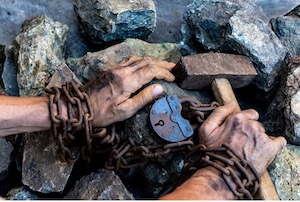
This Primer provides introductory guidance to complying with U.S. forced labor laws for importers, and includes an introductory overview to forced labor laws, U.S. Customs and Border Protection’s (CBP) authority to enforce forced labor laws, outlines importer requirements under The Uyghur Forced Labor Prevention Act, describes the detention processes for imported goods made with forced labor, lists key recommended compliance actions for adhering to U.S. forced labor laws, and provides helpful resources for complying with U.S. forced labor laws.
Incursion and World Trade, Part 4: Are India and China Coming to Putin’s Rescue? The New Elephant in the Room
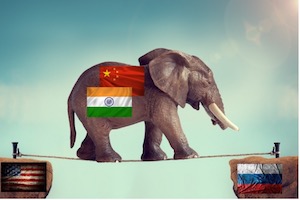
Calculations by top economists show that Russia is accumulating about one billion dollars a day on oil and gas exports to fund the invasion.
Relations Between the U.S. and China In One Word, Dismal Is a Decline in Trade Inevitable?
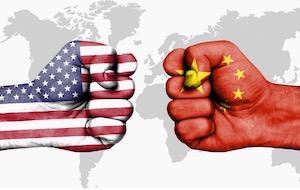
It’s goes without saying, but I will say it anyway, the recent visit to Taiwan by U.S. House Speaker Nancy Pelosi certainly didn’t help the already strained relations much, but within her reasoning for defiance of Beijing, the democracies of the world must stand together. The Chinese Embassy has now threatened to go to war with the U.S. over Taiwan.
U.S. Initiates Indo-Pacific Economic Framework in the South Pacific

On May 23 in Tokyo, Japan, the U.S., and other countries in the Pacific region launched the Indo-Pacific Economic Framework for Prosperity (“IPEF”). The countries included are Australia, Brunei, India, Indonesia, Japan, South Korea, Malaysia, New Zealand, the Philippines, Singapore, Thailand, and Vietnam.
CBP Releases Guidance related to Complying with the Uyghur Forced Labor Prevention Act
U.S. Customs and Border Protection (“CBP”) released its first set of guidance relating to the Uyghur Forced Labor Prevention Act (“UFLPA”), which is set to take effect on June 21, 2022. CBP’s guidance takes the form of a website that is a homepage for UFLPA-related guidance, FAQs, webinars, graphics, and CBP contact information. This essential UFLPA homepage can be accessed at: www.cbp.gov/trade/forced-labor/UFLPA.
Indo-Pacific Trade Initiative to Enhance U.S. Economic Influence
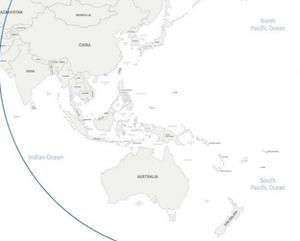
On May 23, 2022, President Biden launched the Indo-Pacific Economic Framework for Prosperity (IPEF) with a dozen initial partners: Australia, Brunei, India, Indonesia, Japan, Republic of Korea, Malaysia, New Zealand, the Philippines, Singapore, Thailand, and Vietnam.
Critical Updates from the U.S. Trade Representative – The U.S.-China Trade Relationship
Since taking office as the U.S. Trade Representative (“USTR”), Katherine Tai has prioritized trade policies focused on protecting American workers’ rights and promoting sustainable environmental practices through trade agreements.
The Uyghur Forced Labor Prevention Act & The Future of Forced Labor Enforcement
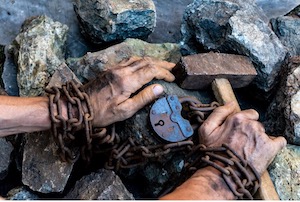
The Uyghur Forced Labor Prevention Act (“UFLPA”), which takes effect on June 21, 2022, bans the importation of all goods made in the Xinjiang Uyghur Autonomous Region (“XUAR”) in China. President Biden signed this law on December 23, 2021, which unanimously passed both houses of Congress.
Predicting the Future in U.S. Trade with China Limbo, a Status Quo, and a Really bad Accident Waiting to Happen
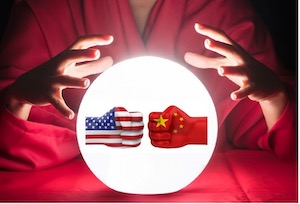
It’s a well-known fact in the often-tumultuous world of international trade that what happens between the two largest economies, the U.S. and China, has a ripple affect around the globe.
China’s Dual Circulation Policy
Almost two years now into the global pandemic and the world’s two most powerful economies are having to take a hard long look at their supply chain shortcomings, as well as becoming economically self-sufficient to a great extent. During the pandemic it became painfully obvious that the U.S. has become far too dependent on China for imports of many essential needs.