Using CBP’s Enforcement Statistics to Assess Forced Labor Risk in the Supply Chain
The U.S. continues to spearhead enforcement against imported goods that were made using forced labor, and public enforcement statistics can help your company assess risks of forced labor.
Doing Business with China Continues to Get More Difficult for U.S. Companies
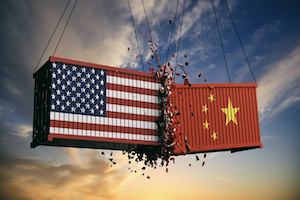
The year 2022 saw a substantial increase in export restrictions applicable to China. The U.S. and China are not only in a trade war but there is also an effort by the U.S. to (1) prevent development of supercomputers, semiconductors and related products and technologies, and (2) prevent use of forced labor – especially involving the Uyghur minority in the Xinjiang region.
China and India, A Year Later, Post Invasion, Still Walking the Tightrope With the U.S. as They Continue to Set Records in Trade with Russia
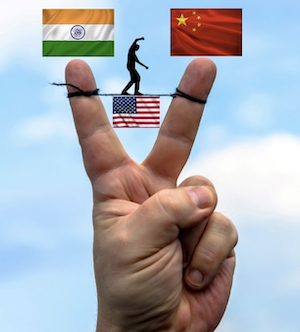
China’s trade with Russia hit a record $190 billion U.S. in 2022, key operative word “record.” China is setting a course to become Russia’s top trade partner and prove to the world just what the “no limits” partnership can produce. An additional “maybe some limits” friend to Russia among the world’s larger economies is India.
Is There Any Hope for Hong Kong to Regain its Special Trade Status with the U.S.? (It’s Officially Hong-China now)

It seems like it was a couple decades ago, but it was only about 5 years that I was last in Hong Kong on business. I was staying at a very nice upscale hotel (plenty to choose from) directly across from a massive port, marveling at the operations that seemed to go 24/7 with the […]
Update: Quartz Surface Products from China – New Certification Requirements for Shipments from Malaysia

On October 21, 2022, the Department of Commerce, International Trade Administration (The DOC) published its Final Scope Ruling on Malaysian Processed Quartz Slab. The DOC determined that imports of quartz slab manufactured in the People’s Republic of China (China) and processed in Malaysia are covered by the scope of the antidumping duty (AD) and countervailing […]
Complying with BIS’s Advanced Computing and Semiconductor Manufacturing Rules – Knowledge, Due Diligence, and Technology Thresholds
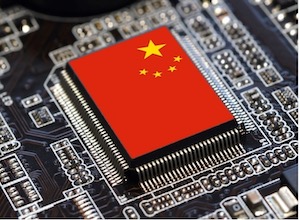
U.S. industries supplying Chinese facilities with products, equipment, software, and technology used in semiconductor development and production are subject to regulatory controls under the Export Administration Regulations (“EAR”). New rules published by the Department of Commerce’s Bureau of Industry and Security (“BIS”) on October 13, 2022, 87 FR 62186, imposed additional license requirements regarding the […]
China’s Economic Cost of Invading Taiwan

China and Taiwan have been locked in a tussle for decades over who gets to call the island country home. China considers Taiwan a breakaway province, while Taiwan sees itself as a sovereign nation. The recent increase in tensions between China and Taiwan has many experts worried that Chinese forces may soon attempt to retake the mainland by force, but that won’t happen anytime soon. China would face a prolonged conflict on its doorstep that would worsen its already strained economic conditions.
Forced Labor Due Diligence – Supply Chain Tracing Requirements to Comply with UFLPA, Withhold Release Orders, and More

We can all agree that goods made from forced labor, indentured labor or child labor should not be introduced into the U.S. market. Indeed, U.S. law prohibits the entry of goods made from forced labor. The Uyghur Forced Labor Prevention Act (“UFLPA”) which went into effect as of June 21, 2022, expands on this prohibition by placing a ban on goods from the Xinjiang Uyghur Autonomous Region (“XUAR”) where ethnic minorities are being exploited or certain specified entities that are involved in using forced labor
Primer on Forced Labor Enforcement for U.S. Importers
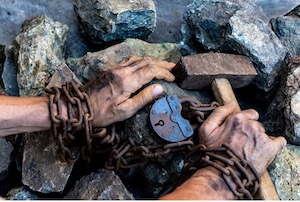
This Primer provides introductory guidance to complying with U.S. forced labor laws for importers, and includes an introductory overview to forced labor laws, U.S. Customs and Border Protection’s (CBP) authority to enforce forced labor laws, outlines importer requirements under The Uyghur Forced Labor Prevention Act, describes the detention processes for imported goods made with forced labor, lists key recommended compliance actions for adhering to U.S. forced labor laws, and provides helpful resources for complying with U.S. forced labor laws.
Incursion and World Trade, Part 4: Are India and China Coming to Putin’s Rescue? The New Elephant in the Room

Calculations by top economists show that Russia is accumulating about one billion dollars a day on oil and gas exports to fund the invasion.