
Another China Competition Bill: The Future of Section 301 Exclusions
The Trade Act of 1974 grants the President broad powers to manage trade relationships with foreign countries. Section 301 of the act allows the President, acting through the United States Trade Representative (“USTR”), to impose retaliatory tariffs on imports from a country if the USTR determines that country’s economic conduct “is unreasonable or discriminatory and burdens or restricts United States commerce.”
Despite Geopolitical Tension…Can Robust Bilateral Trade Exist? Australia and China, a Good Example Perhaps
It’s a little awkward, but in fact, a reality in this day and age that bilateral trade between two countries who view each other as somewhat adversarial, can co-exist economically. As the world turns, so does global trade, take Australia and China for the shining example.
Doing Business with China Continues to Get More Difficult for U.S. Companies
The year 2022 saw a substantial increase in export restrictions applicable to China. The U.S. and China are not only in a trade war but there is also an effort by the U.S. to (1) prevent development of supercomputers, semiconductors and related products and technologies, and (2) prevent use of forced labor – especially involving the Uyghur minority in the Xinjiang region.
China and India, A Year Later, Post Invasion, Still Walking the Tightrope With the U.S. as They Continue to Set Records in Trade with Russia
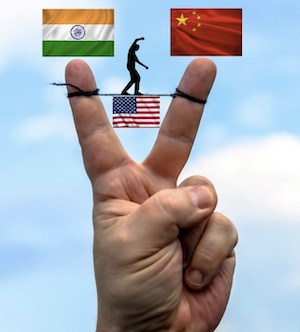
China’s trade with Russia hit a record $190 billion U.S. in 2022, key operative word “record.” China is setting a course to become Russia’s top trade partner and prove to the world just what the “no limits” partnership can produce. An additional “maybe some limits” friend to Russia among the world’s larger economies is India.
Complying with BIS’s Advanced Computing and Semiconductor Manufacturing Rules – Knowledge, Due Diligence, and Technology Thresholds
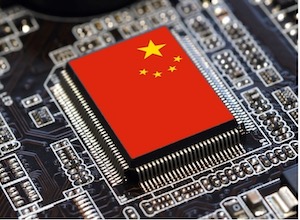
U.S. industries supplying Chinese facilities with products, equipment, software, and technology used in semiconductor development and production are subject to regulatory controls under the Export Administration Regulations (“EAR”). New rules published by the Department of Commerce’s Bureau of Industry and Security (“BIS”) on October 13, 2022, 87 FR 62186, imposed additional license requirements regarding the […]
Forced Labor Due Diligence – Supply Chain Tracing Requirements to Comply with UFLPA, Withhold Release Orders, and More

We can all agree that goods made from forced labor, indentured labor or child labor should not be introduced into the U.S. market. Indeed, U.S. law prohibits the entry of goods made from forced labor. The Uyghur Forced Labor Prevention Act (“UFLPA”) which went into effect as of June 21, 2022, expands on this prohibition by placing a ban on goods from the Xinjiang Uyghur Autonomous Region (“XUAR”) where ethnic minorities are being exploited or certain specified entities that are involved in using forced labor
Incursion and World Trade, Part 4: Are India and China Coming to Putin’s Rescue? The New Elephant in the Room
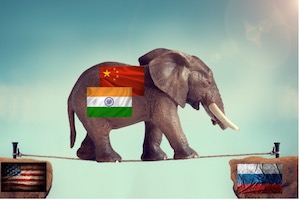
Calculations by top economists show that Russia is accumulating about one billion dollars a day on oil and gas exports to fund the invasion.
Relations Between the U.S. and China In One Word, Dismal Is a Decline in Trade Inevitable?
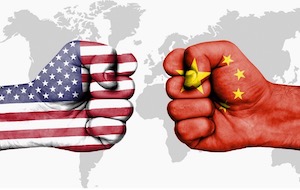
It’s goes without saying, but I will say it anyway, the recent visit to Taiwan by U.S. House Speaker Nancy Pelosi certainly didn’t help the already strained relations much, but within her reasoning for defiance of Beijing, the democracies of the world must stand together. The Chinese Embassy has now threatened to go to war with the U.S. over Taiwan.
Indo-Pacific Trade Initiative to Enhance U.S. Economic Influence
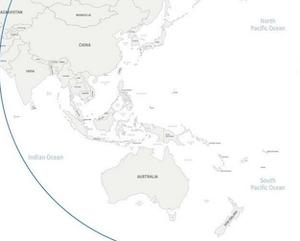
On May 23, 2022, President Biden launched the Indo-Pacific Economic Framework for Prosperity (IPEF) with a dozen initial partners: Australia, Brunei, India, Indonesia, Japan, Republic of Korea, Malaysia, New Zealand, the Philippines, Singapore, Thailand, and Vietnam.
Predicting the Future in U.S. Trade with China Limbo, a Status Quo, and a Really bad Accident Waiting to Happen
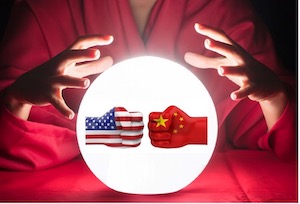
It’s a well-known fact in the often-tumultuous world of international trade that what happens between the two largest economies, the U.S. and China, has a ripple affect around the globe.