
News Articles

artificial intelligence

The U.S. Effort to Keep AI Out of China’s Hands

It comes as no surprise China has been a major focus point of the second Trump administration. One of the key reasons for this focus is the increasing national security concerns over technology. In particular, the smuggling of AI chips, which China intends to use in developing advanced AI systems for military purposes and surveillance.

Read More »
rare earth element

Rare Earth Minerals, and China’s Global Dominance

If I heard it once, I’ve heard it a thousand times, China is the sourcing capital of the world. I’ve also repeated this statement at least 400+ times in many conversations over the years regarding global trade. China, it’s also where the global market goes for rare earth minerals, among thousands of other necessary elements for a veritable plethora of life’s essential things.

Read More »
tariffs on us beef

Tariffs and the Future of U.S. Beef

On April 2, 2025, President Trump announced reciprocal tariffs, setting a baseline rate of 10% on imports from all countries, with higher rates on dozens of countries which the United States (U.S.) runs trade deficits. Specifically, Trump imposed a 34% tariff on all Chinese imports in response to China’s 67% tariff and non-tariff barriers on U.S. exports, aiming to address what he sees as an unfair trade imbalance.

Read More »
us china trade relations

U.S.-China Trade Relations: An Update on Tariffs

Since Trump’s first term, tensions between the United States and China, the world’s two largest economies, have been on the rise. President Trump ran for his second presidential term on a promise to reduce reliance on China – and promise kept. In one of his first Presidential actions, President Trump issued an “America First Trade Policy” memorandum dedicating an entire section to trade relations with China. Since then, several tariffs have been imposed on Chinese goods and the duty-free de minimis treatment for goods valued at $800 or less ended.

Read More »
section 232 commercial aircraft

Section 232 Investigation of Commercial Aircraft, Jet Engines and Parts

In a recent Federal Register notice the Bureau of Industry & Security (BIS) of the Department of Commerce announced that “On May 1, 2025, the Secretary of Commerce initiated an investigation to determine the effects on the national security of imports of commercial aircraft and jet engines, and parts for commercial aircraft and jet engines. This investigation has been initiated under section 232 of the Trade Expansion Act of 1962, as amended (Section 232).” The investigation may take up to 270 days but it can be concluded sooner.

Read More »
okenization Rulebook

The Tokenization Rulebook: Compliance Strategies for the Digital Asset Revolution

Since Bitcoin’s creation in 2008, cryptocurrencies and traditional assets have largely existed in parallel. In our previous exploration of Real World Assets (RWAs) (Assessing the Benefits and Challenges of Tokenizing Real World Assets, February 7, 2024), we identified how the lack of reliable bridges between on-chain and off-chain ecosystems has constrained the transformative potential of blockchain technology.

Read More »
uk deal

The Art of the (UK) Deal

On May 8, 2025, the United States and United Kingdom (UK) unveiled the new trade terms of an “economic prosperity” deal. This deal comes after President Trump imposed a 10% reciprocal tariff on all products from the UK and additional tariffs on steel and aluminum, and automobiles and automobile parts. While the 10% reciprocal tariff will remain in effect, the two countries were able to agree on alternative arrangements for steel and aluminum, automobiles, and other strategic sectors.

Read More »
plan b for tariffs

Trump’s Plan B for Tariffs

On May 28, 2025, the United States’ Court of International Trade (CIT) struck down the President’s use of the International Economic Emergency Powers Act (IEEPA) to impose tariffs. This includes tariffs imposed on Canada, China, and Mexico in response to the fentanyl crisis at U.S.’ borders and reciprocal tariffs imposed on almost all foreign imports on April 2, 2025. The Government immediately appealed the decision to the U.S. Court of Appeals for the Federal Circuit (CAFC).

Read More »
Stablecoin

Activating HTTP 402: The x402 Protocol and Legal Framework for Internet-Native Stablecoin Payments

The convergence of payment stablecoins, blockchain settlement infrastructure, and the regulatory clarity provided by the GENIUS Act of 2025 has created conditions for HTTP 402’s activation. The x402 protocol, developed by Coinbase in collaboration with Cloudflare and others through the x402 Foundation, operationalizes this long-reserved status code to enable instant, automated payments: particularly for autonomous AI agents conducting machine-to-machine commerce.

Read More »
critical Minerals

Critical Minerals Focus of White House Trade Agreements in 2025

The Trump Administration is pursuing a new style of trade management based on use of tariffs to rectify trade deficits and to set new “reciprocal” tariff rates to level the playing field for all of its trading partners. Critical minerals are a key component of the strategy, because the U.S. is heavily dependent of foreign sources for most of the critical minerals used in modern manufacturing. In response to Trump-imposed tariffs and threats of other trade actions, China has repeatedly used export controls on rare earths and other critical minerals as leverage. This article looks at the current state of critical minerals trade actions, starting with new US agreements with multiple trading partners, then reviewing international norms and proceeding through other trade actions involving critical minerals.

Read More »
BIS

BIS “Affiliates Rule” Suspended One Year, But No Time to Rest

On November 10, 2025, the U.S. Bureau of Industry and Security (“BIS”) delayed the effective date of its new Affiliates Rule for a one-year period, until November 9, 2026, after U.S. and China trade talks. The Affiliates Rule, announced on September 29, 2025, expands export controls under the Export Administration Regulations (“EAR”) to extend to non-listed “affiliates” owned or controlled by listed entities (on the Entity List, the Military End User List “MEU”, or certain sanctioned parties) 50% or more in the aggregate.

Read More »
section 232

Section 232 Steel & Aluminum Derivative Products Inclusion Process Expands Scope of the National Security Purpose of Section 232 Investigations

On February 10, 2025, the President issued Presidential Proclamations Under Section 232 of the U.S. Code adjusting imports of steel and aluminum into the United States. These Proclamations provided an expanded listing of steel and aluminum derivative articles but also instructed the Secretary of Commerce (Secretary) to establish a process for including additional derivative aluminum and steel articles within the scope of the ad valorem duties.

Read More »
auto industry and china

The Automotive Industry, China’s Semi Grip on Supply Chains, and General Motors 2027 Exit Strategy for Suppliers (Is a clean break even possible?)

General Motors (GM) has instructed thousands of its suppliers to phase out sourcing parts and materials from China by 2027. The exit strategy began in early 2024, with the directive gaining momentum in spring of this year, 2025. This directive is part of GM’s broader strategy to enhance supply chain resiliency and reduce exposure to geopolitical risks, particularly amid escalating, or let’s just say, continuously fluctuating, U.S.–China trade tensions.

Read More »
brics

Can BRICS Break the Dollar’s Grip?

For decades, the U.S. dollar has ruled the world. Whether a Brazilian farmer sells soybeans to China or an Indian company buys oil from the Middle East, chances are the transaction runs through greenbacks. Nearly 80 percent of global trade is still denominated in dollars—even when neither the buyer nor the seller is American.

Read More »
Mexican steel

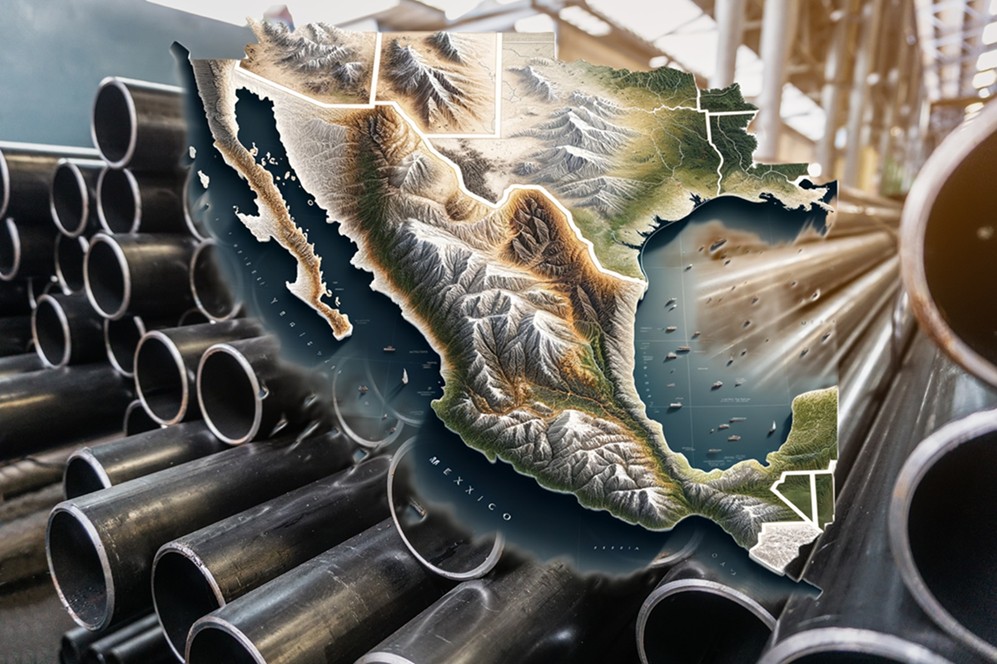
Importing Steel into Mexico A Pillar of Compliance for Suppliers Trading with Mexico

The steel trade with Mexico is particularly strategic at this moment. Companies are shifting supply chains to North America, and Mexico which has been an attractive manufacturing hub for various industries, such as automotive, aerospace, construction, electronics, household appliances, and more. This trend is driving strong demand for imported steel while simultaneously creating new export opportunities for Mexican producers. Much of this advantage stems from the USMCA, because steel originating within the USCMA region can qualify for preferential tariff treatment when traded within the United States and Canada, provided that the applicable rules of origin are fully met.

Read More »
Rare Earth

Rare Earth Minerals-Part 2 – Enter Greenland’s Global Significance

It’s been more than a little concerning to the Trump Administration as these deposits have everything to do with international security as they are needed in the production of the very high-end microchips. So, now that it has been discovered that Greenland apparently has one of the largest deposits on the planet, Trump has stated that we will have Greenland, one way or another. While he hasn’t explicitly committed to military action, he’s made it clear that he won’t rule it out.

Read More »
Stablecoin

Wyoming Laws More Crypto-Friendly with Issuance of State Stablecoin

On August 29, 2025, Wyoming made history becoming the first state in the United States to issue its own stablecoin, the Frontier (FRNT) token, marking a groundbreaking moment in state-level cryptocurrency adoption. Wyoming’s pioneering move represents more than just technological innovation. It signals a fundamental shift in how states can leverage blockchain technology with robust legal frameworks to modernize their financial infrastructure and maintain competitive advantages in the evolving digital economy.

Read More »