Compliance Issues in Government “Buy America” Solicitations
Whether you are creating a new in-house trade compliance function or evaluating an established one, there is no getting around the perpetual question: Where should Trade Compliance report?

Whether you are creating a new in-house trade compliance function or evaluating an established one, there is no getting around the perpetual question: Where should Trade Compliance report?

By Brenda Cordova, Braumiller Law Group Mexico Legal Counsel Mexico has recently published several legal instruments aimed to prevent and investigate forced and compulsory labor, including

The Trade Act of 1974 grants the President broad powers to manage trade relationships with foreign countries. Section 301 of the act allows the President, acting through the United States Trade Representative (“USTR”), to impose retaliatory tariffs on imports from a country if the USTR determines that country’s economic conduct “is unreasonable or discriminatory and burdens or restricts United States commerce.”

By Adrienne Braumiller, Founding Partner Harold Jackson, Associate Attorney Gavin Andersen, Braumiller Consulting Trade Advisor Section 301 Tariffs on Chinese goods continues to be at the

It’s a little awkward, but in fact, a reality in this day and age that bilateral trade between two countries who view each other as somewhat adversarial, can co-exist economically. As the world turns, so does global trade, take Australia and China for the shining example.

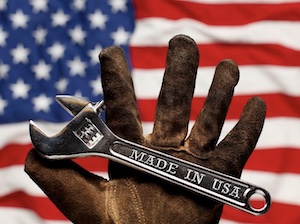
This article provides an overview of federal procurement laws and how the Federal Acquisition Regulations (FAR) implement some of those commitments in government contracts. The FAR, found under 48 C.F.R. Part 25, comprises the list of rules governing procurement of products and materials by federal agencies for public use.

The U.S. continues to spearhead enforcement against imported goods that were made using forced labor, and public enforcement statistics can help your company assess risks of forced labor.

When one company buys another there are typically two ways the purchased company will be treated: (1) It will be incorporated into the parent company and will no longer exist as a separate entity. (2) It will become a separately incorporated subsidiary of the parent company and retain its IRS number.

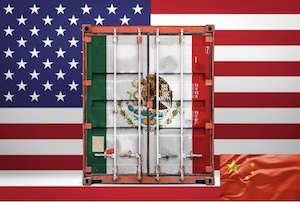
A large number of companies considering relocating their business abroad have turned their eyes to Mexico, which has become an attractive place for investors to relocate their business, mainly because it is close to the United States and Canada (nearshoring), the labor costs are relatively low, the availability of IMMEX (maquiladora) program, and because there is a preferential treatment to originating goods and foreign investments from the United States and Canada that are protected under the USMCA, among other factors.

2023 is more than a brand-new year – it is an opportunity for your company to prioritize supply chain and customs compliance. For some companies, this means filing a prior disclosure with U.S. Customs and Border Protection (CBP). Companies that are frequent importers are seriously considering disclosing entry violations under the condition that Customs will not issue civil penalties against them.

Tensions are escalating in the South China Sea, a vital maritime route for international trade. Taiwan remains at the center of this conflict and in an increasingly interconnected world, the prospect of a Taiwan invasion has far-reaching implications for global trade and geopolitics. It’s becoming even more crucial to understand the potential repercussions of such an event on the global economy as a potential invasion from China becomes increasingly more likely.

Maximizing value is crucial when companies contemplate bringing on external support for any organizational function. While a company may consider several value categories, this article explores five primary categories – productivity, profitability, image, experience, and convenience. By maintaining a value proposition mindset when requesting consultant resources, selecting consultants, and working with consultants, trade compliance professionals leverage the benefits of external experts.

Employee education supports organizational growth and development. Its benefits are generally well known, but how do you ensure that training, in any form, generates the outcomes and advances you desire? Measuring and benchmarking success can be especially difficult when creating customized training programs, which are often needed for international trade compliance topics.

Uniformity, or rather the lack thereof, in procedures and practices within U.S. Customs and Border Protection’s (CBP) Centers of Excellence and Expertise (Centers) is evidently harming compliant companies within the trade community.

A little over a year ago on June 1, 2022, the United States and Taiwan launched the United States-Taiwan Initiative on 21st-Century Trade to deepen their economic ties and trade relationship, and advance mutual trade priorities based on shared values, promoting innovation, and economic growth for workers and businesses.

This article examines Target Corporation v. United States, Slip Op. 23-106 (Ct Int’l Trade July 20, 2023), a recent ruling by the Court of International Trade (CIT) and its implications on liquidation matters.

The United States Mexico Agreement (USMCA – the free trade agreement signed between Mexico, the United States and Canada) promotes and protects the trading of tequila between these 3 countries as it acknowledges it is a distinctive product of Mexico.

U.S. Customs & Border Protection (CBP) published the Final Rule on continuing education for individual customs broker license holders in the Federal Register on June 23, 2023. This Final Rule made several changes to Part 111 of the Customs Regulations and imposed a continuing education requirement on individual license holders.

The realm of international trade and commerce operates under a complicated system of export control regimes that are designed to protect national security, curb the proliferation of sensitive technologies, and ensure strict adherence to economic and trade sanctions.

This article discusses compliance “Buy America” provisions in federal procurement laws and how the Federal Acquisition Regulations (FAR) implement some of those commitments in government contracts.