Compliance Issues in Government “Buy America” Solicitations
Whether you are creating a new in-house trade compliance function or evaluating an established one, there is no getting around the perpetual question: Where should Trade Compliance report?

Whether you are creating a new in-house trade compliance function or evaluating an established one, there is no getting around the perpetual question: Where should Trade Compliance report?

By Brenda Cordova, Braumiller Law Group Mexico Legal Counsel Mexico has recently published several legal instruments aimed to prevent and investigate forced and compulsory labor, including

The Trade Act of 1974 grants the President broad powers to manage trade relationships with foreign countries. Section 301 of the act allows the President, acting through the United States Trade Representative (“USTR”), to impose retaliatory tariffs on imports from a country if the USTR determines that country’s economic conduct “is unreasonable or discriminatory and burdens or restricts United States commerce.”

By Adrienne Braumiller, Founding Partner Harold Jackson, Associate Attorney Gavin Andersen, Braumiller Consulting Trade Advisor Section 301 Tariffs on Chinese goods continues to be at the

It’s a little awkward, but in fact, a reality in this day and age that bilateral trade between two countries who view each other as somewhat adversarial, can co-exist economically. As the world turns, so does global trade, take Australia and China for the shining example.

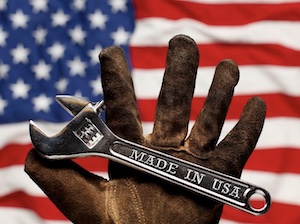
This article provides an overview of federal procurement laws and how the Federal Acquisition Regulations (FAR) implement some of those commitments in government contracts. The FAR, found under 48 C.F.R. Part 25, comprises the list of rules governing procurement of products and materials by federal agencies for public use.

The U.S. continues to spearhead enforcement against imported goods that were made using forced labor, and public enforcement statistics can help your company assess risks of forced labor.

When one company buys another there are typically two ways the purchased company will be treated: (1) It will be incorporated into the parent company and will no longer exist as a separate entity. (2) It will become a separately incorporated subsidiary of the parent company and retain its IRS number.

A large number of companies considering relocating their business abroad have turned their eyes to Mexico, which has become an attractive place for investors to relocate their business, mainly because it is close to the United States and Canada (nearshoring), the labor costs are relatively low, the availability of IMMEX (maquiladora) program, and because there is a preferential treatment to originating goods and foreign investments from the United States and Canada that are protected under the USMCA, among other factors.

2023 is more than a brand-new year – it is an opportunity for your company to prioritize supply chain and customs compliance. For some companies, this means filing a prior disclosure with U.S. Customs and Border Protection (CBP). Companies that are frequent importers are seriously considering disclosing entry violations under the condition that Customs will not issue civil penalties against them.

The intricate interplay between trade and food security has emerged as a vital global issue, one that is closely interwoven with the tapestry of international conflicts and political instability. Remember the 2019 pandemic when toilet paper supply chains were interrupted? Now imagine that on a much larger scale with basic food staples like rice, wheat or corn.

In the ever-changing world of trade, where predicting the future is a constant challenge, looking back at the past decade offers valuable insights into the evolution of the supply chain and the tools that have developed to contribute to efficiency and security.

On January 16, 2024, the Bureau of Industry and Security (BIS) under Assistant Secretary for Export Enforcement, Matthew Axelrod, disclosed significant enhancements to the process for Voluntary Self-Disclosures (VSDs) related to the Export Administration Regulations (EAR). These adjustments are strategically designed to streamline export control compliance for U.S. governmental bodies, the commercial sector, and academic entities.

Uno de los requisitos más importantes para importar mercancías a México es estar registrado como importador en el registro de importadores mexicanos. Hay 2 tipos de registros para importadores, uno es para importadores generales (Padrón de Importadores) y el otro es para importadores de sectores industriales específicos (Padrón de Importadores de Sectores Específicos) que pueden importar mercancías identificadas por el código arancelario MX (es decir, productos químicos, armas de fuego, puros, calzado, textiles, alcohol, hidrocarburos, siderurgia, automoción, etc.). Generalmente, estos 2 registros son listados con información de personas y entidades autorizadas para importar mercancías a México.

By: Gavin Andersen, Law Clerk, LCB and Adrienne Braumiller, Founding Partner, Braumiller Law Group Last June (2023), in response to a ruling request from Your Special

At the core of the definition, a Parallel import is a non-counterfeit product imported from another country without the permission of the intellectual property owner. They are also goods that are not authorized for importation into the U.S. It’s a global phenomenon, a very grey area, and their presence varies across different parts of the globe.

One of the most important requirements for importing goods into Mexico is to be registered as an importer under the Mexican importer’s registry. There are 2 types of registries for importers, one is for general importers (Padron de Importadores), and the other is for importers of specific industry sectors (Padron the Importadores de Sectores Especificos) which may import goods identified by the MX tariff code (i.e. chemical products, firearms, cigars, footwear, textiles, alcohol, hydrocarbons, steel, automotive, etc.). Generally, these 2 registries are lists with information of individuals and entities authorized to bring goods into Mexico.

Consider this scenario: a client faced the challenge of deferring duty payments while managing a significant volume of imports destined for re-exportation from the U.S. Initially considering duty drawbacks, which proved unsuitable for their specific needs, we turned our attention to bonded warehouses and free trade zones. This scenario is not uncommon in the trade world and highlights a critical decision point for many businesses: choosing between a bonded warehouse and a Foreign Trade Zone (FTZ).

The First Sale Rule applies in circumstances such as the example above. A US company places an order with a middleman in the US. The middleman in turn subcontracts to a foreign supplier. The supplier then ships the product either to the middleman or to the original US company that placed the order, meaning either could be the importer of record. The entered value could be the amount on the original purchase order or the price paid by the middleman to the foreign supplier.

The world of cryptocurrencies on blockchains and the world of traditional assets in markets have often stood in stark contrast to one another since Bitcoin’s creation in 2008. The lack of a reliable bridge between these two worlds has limited the impact of cryptocurrencies on assets in the real-world outside of on-chain speculation and prevented adoption of the benefits that blockchain technologies can bring to real world processes.