
Who is the Importer of Record: Security Interests and the Right to Act As IOR
By: Gavin Andersen, Law Clerk, LCB and Adrienne Braumiller, Founding Partner, Braumiller Law Group Last June (2023), in response to a ruling request from Your Special

By: Gavin Andersen, Law Clerk, LCB and Adrienne Braumiller, Founding Partner, Braumiller Law Group Last June (2023), in response to a ruling request from Your Special

At the core of the definition, a Parallel import is a non-counterfeit product imported from another country without the permission of the intellectual property owner. They are also goods that are not authorized for importation into the U.S. It’s a global phenomenon, a very grey area, and their presence varies across different parts of the globe.

One of the most important requirements for importing goods into Mexico is to be registered as an importer under the Mexican importer’s registry. There are 2 types of registries for importers, one is for general importers (Padron de Importadores), and the other is for importers of specific industry sectors (Padron the Importadores de Sectores Especificos) which may import goods identified by the MX tariff code (i.e. chemical products, firearms, cigars, footwear, textiles, alcohol, hydrocarbons, steel, automotive, etc.). Generally, these 2 registries are lists with information of individuals and entities authorized to bring goods into Mexico.

Consider this scenario: a client faced the challenge of deferring duty payments while managing a significant volume of imports destined for re-exportation from the U.S. Initially considering duty drawbacks, which proved unsuitable for their specific needs, we turned our attention to bonded warehouses and free trade zones. This scenario is not uncommon in the trade world and highlights a critical decision point for many businesses: choosing between a bonded warehouse and a Foreign Trade Zone (FTZ).

The First Sale Rule applies in circumstances such as the example above. A US company places an order with a middleman in the US. The middleman in turn subcontracts to a foreign supplier. The supplier then ships the product either to the middleman or to the original US company that placed the order, meaning either could be the importer of record. The entered value could be the amount on the original purchase order or the price paid by the middleman to the foreign supplier.

The world of cryptocurrencies on blockchains and the world of traditional assets in markets have often stood in stark contrast to one another since Bitcoin’s creation in 2008. The lack of a reliable bridge between these two worlds has limited the impact of cryptocurrencies on assets in the real-world outside of on-chain speculation and prevented adoption of the benefits that blockchain technologies can bring to real world processes.

President elect Lai Ching-te’s victory in Taipei ignited tensions across the Taiwan strait and now the geopolitical field waits to see if China will kick off World War Three. I’m only slightly joking, but Beijing has exerted diplomatic pressure on nations maintaining close ties with the island in the past and Taiwan’s decision to remain a democracy will no doubt ramp up China’s reunification process in the coming months. But how will that affect trade relations?

In the complex world of international trade compliance, few people possess the expertise, dedication and problem-solving skills that Brad Menard, President of Braumiller Consulting Group, brings to his clients.

In recent years, the global spotlight has illuminated the grave concerns surrounding human rights violations within China’s Xinjiang region, particularly those impacting the Uyghur population. The Uyghur Forced Labor Prevention Act (UFLPA) stands as a pivotal piece of legislation designed to address these concerns and to ensure that products imported into the United States are devoid of forced labor originating from the Xinjiang region.

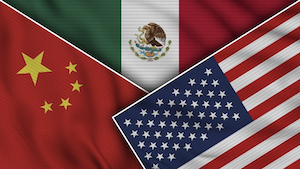
The implementation of trade policies in what many consider acts of protectionism and manipulation are the norm, and of course China and the U.S. are a prime example. Solutions include nearshoring, reshoring, and protectionism. It’s complicated, so for the purpose of this article, let’s stick with nearshoring.

The convergence of payment stablecoins, blockchain settlement infrastructure, and the regulatory clarity provided by the GENIUS Act of 2025 has created conditions for HTTP 402’s activation. The x402 protocol, developed by Coinbase in collaboration with Cloudflare and others through the x402 Foundation, operationalizes this long-reserved status code to enable instant, automated payments: particularly for autonomous AI agents conducting machine-to-machine commerce.

The Trump Administration is pursuing a new style of trade management based on use of tariffs to rectify trade deficits and to set new “reciprocal” tariff rates to level the playing field for all of its trading partners. Critical minerals are a key component of the strategy, because the U.S. is heavily dependent of foreign sources for most of the critical minerals used in modern manufacturing. In response to Trump-imposed tariffs and threats of other trade actions, China has repeatedly used export controls on rare earths and other critical minerals as leverage. This article looks at the current state of critical minerals trade actions, starting with new US agreements with multiple trading partners, then reviewing international norms and proceeding through other trade actions involving critical minerals.

On November 10, 2025, the U.S. Bureau of Industry and Security (“BIS”) delayed the effective date of its new Affiliates Rule for a one-year period, until November 9, 2026, after U.S. and China trade talks. The Affiliates Rule, announced on September 29, 2025, expands export controls under the Export Administration Regulations (“EAR”) to extend to non-listed “affiliates” owned or controlled by listed entities (on the Entity List, the Military End User List “MEU”, or certain sanctioned parties) 50% or more in the aggregate.

On February 10, 2025, the President issued Presidential Proclamations Under Section 232 of the U.S. Code adjusting imports of steel and aluminum into the United States. These Proclamations provided an expanded listing of steel and aluminum derivative articles but also instructed the Secretary of Commerce (Secretary) to establish a process for including additional derivative aluminum and steel articles within the scope of the ad valorem duties.

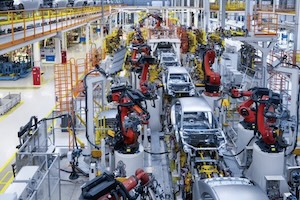
General Motors (GM) has instructed thousands of its suppliers to phase out sourcing parts and materials from China by 2027. The exit strategy began in early 2024, with the directive gaining momentum in spring of this year, 2025. This directive is part of GM’s broader strategy to enhance supply chain resiliency and reduce exposure to geopolitical risks, particularly amid escalating, or let’s just say, continuously fluctuating, U.S.–China trade tensions.

For decades, the U.S. dollar has ruled the world. Whether a Brazilian farmer sells soybeans to China or an Indian company buys oil from the Middle East, chances are the transaction runs through greenbacks. Nearly 80 percent of global trade is still denominated in dollars—even when neither the buyer nor the seller is American.

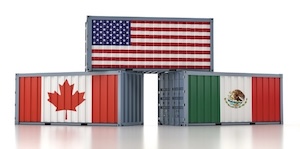
The steel trade with Mexico is particularly strategic at this moment. Companies are shifting supply chains to North America, and Mexico which has been an attractive manufacturing hub for various industries, such as automotive, aerospace, construction, electronics, household appliances, and more. This trend is driving strong demand for imported steel while simultaneously creating new export opportunities for Mexican producers. Much of this advantage stems from the USMCA, because steel originating within the USCMA region can qualify for preferential tariff treatment when traded within the United States and Canada, provided that the applicable rules of origin are fully met.

China owns outright or has majority control in 17 overseas ports globally, according to recent estimates. However, its broader footprint is much larger with 129 port projects worldwide that involve Chinese investment, construction, or operational control. 115 of these are active, spanning every continent except Antarctica, which is next.

It’s been more than a little concerning to the Trump Administration as these deposits have everything to do with international security as they are needed in the production of the very high-end microchips. So, now that it has been discovered that Greenland apparently has one of the largest deposits on the planet, Trump has stated that we will have Greenland, one way or another. While he hasn’t explicitly committed to military action, he’s made it clear that he won’t rule it out.

On August 29, 2025, Wyoming made history becoming the first state in the United States to issue its own stablecoin, the Frontier (FRNT) token, marking a groundbreaking moment in state-level cryptocurrency adoption. Wyoming’s pioneering move represents more than just technological innovation. It signals a fundamental shift in how states can leverage blockchain technology with robust legal frameworks to modernize their financial infrastructure and maintain competitive advantages in the evolving digital economy.