
News Articles

De Minimis

De Minimis An Ever-Growing Problem of De Maximus ProportionDe Minimis

De minimis is a term that refers to a threshold below which certain goods are exempt from import duties or taxes. However, in the landscape of international trade, it has become a contentious issue for the United States. Those “bad actors”, and even some, not so bad, but willing to take advantage of a loophole have found a way around the tariffs. This so-called loophole of allowing goods with a fair retail value of $800 or less to enter the U.S. without paying an import tariff has become a monster that Customs needs to find a way to deal with conclusively.

Read More »
IMMEX Customs

The Importance of Pedimento Codes for the IMMEX Customs Regime

In Mexico, a customs regime is the destination or treatment for goods subject to customs control in accordance with the nature and purposes of a customs operation. Companies with an IMMEX program may perform operations under the so-called customs regime of “temporary importation for elaboration, transformation or repair under a maquila program”. This name by itself implies several facts to consider.

Read More »
aluminum extrusions investigation

Aluminum Extrusions II – Scope Modifications Proposed, Dept. of Commerce Questioning Manageability

Since the last update on the AD / CVD aluminum extrusions investigation (dubbed Extrusions II) in what appears to be a response to strong opposition from trade industry groups, legislators, governments, and other interested parties, as well as dubious signals from the Department of Commerce, (Commerce) the Petitioners in the ongoing Aluminum Extrusions investigation have proposed modifications to the scope of the investigation.

Read More »
Legal Norms Artificial Intelligence

Evolving Legal Norms for Artificial Intelligence  in the European Union and the United States

Artificial Intelligence (AI) has been a hot topic for the last 2-3 years for politicians, technologists, and many people in civil societies globally. The use of the technology has obvious benefits for increasing productivity and value produced by businesses and organizations, along with dangers from misuse, such as deep fake propaganda and serious security risks. Two recent efforts to develop legislation addressing AI technology offer an opportunity to compare and contrast the differing approaches in the European Union (EU) and the United States (US).

Read More »
IMMEX Customs

La importancia de los Claves de Pedimentos en el Régimen Aduanero de las IMMEX

En México, un régimen aduanero es el destino o tratamiento que se da a los bienes objeto de control aduanero de conformidad con la naturaleza y propósitos de una operación aduanera. Las empresas con un programa IMMEX pueden realizar operaciones al amparo del régimen aduanero llamado “importación temporal para elaboración, transformación o reparación en programas de maquila”.

Read More »
Trade and Food Security

The Nexus of Trade and Food Security Amid Global Conflicts

The intricate interplay between trade and food security has emerged as a vital global issue, one that is closely interwoven with the tapestry of international conflicts and political instability. Remember the 2019 pandemic when toilet paper supply chains were interrupted?  Now imagine that on a much larger scale with basic food staples like rice, wheat or corn.

Read More »
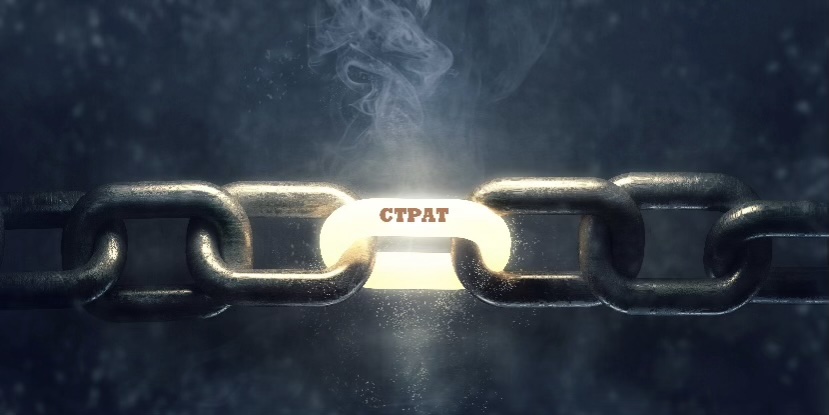
CTPAT Supply Chain Hero of Trade

The Unsung Hero of Trade: Why CTPAT Matters

In the ever-changing world of trade, where predicting the future is a constant challenge, looking back at the past decade offers valuable insights into the evolution of the supply chain and the tools that have developed to contribute to efficiency and security.

Read More »
Voluntary Self-Disclosures

BIS Unveils Enhanced Voluntary Self Disclosure Protocols

On January 16, 2024, the Bureau of Industry and Security (BIS) under Assistant Secretary for Export Enforcement, Matthew Axelrod, disclosed significant enhancements to the process for Voluntary Self-Disclosures (VSDs) related to the Export Administration Regulations (EAR). These adjustments are strategically designed to streamline export control compliance for U.S. governmental bodies, the commercial sector, and academic entities.

Read More »
Importer Registration

Suspensión del Padron de Importadores

Uno de los requisitos más importantes para importar mercancías a México es estar registrado como importador en el registro de importadores mexicanos. Hay 2 tipos de registros para importadores, uno es para importadores generales (Padrón de Importadores) y el otro es para importadores de sectores industriales específicos (Padrón de Importadores de Sectores Específicos) que pueden importar mercancías identificadas por el código arancelario MX (es decir, productos químicos, armas de fuego, puros, calzado, textiles, alcohol, hidrocarburos, siderurgia, automoción, etc.). Generalmente, estos 2 registros son listados con información de personas y entidades autorizadas para importar mercancías a México.

Read More »
DDTC

Advisory Opinions From DDTC – What Are They?

The Directorate of Defense Trade Controls (DDTC) that administers and enforces the ITAR also issues Advisory Opinions (AO). What the heck is an AO? If you come from a Customs compliance background you know about Customs rulings and may have applied for some. An AO is sort of like a Customs ruling in that it is a written interpretation of the regulations.

Read More »
DAO

Integrating DAOs and DUNAs with Stablecoin Ecosystems

We have analyzed Decentralized Autonomous Organizations (DAOs) and how the GENIUS Act will permit regulation of payment stablecoins in prior articles. This article examines how decentralized organizations interact with stablecoin ecosystems and the synergies between organizational and payment infrastructure innovation.

Read More »
Haiti

Renewal of Haiti HOPE/HELP and AGOA Trade Preferences Up to Senate

In its usual fashion, Congress has allowed the tariff preferences for Haiti under the United States-Caribbean Basin Trade Partnership Act (CBTPA) and the African Growth and Opportunity Act (AGOA) to expire on September 30, 2025. Two bills passed the House with bipartisan majorities on January 12, 2026, to renew the tariff preferences retroactively to the date of expiration and then extend them to September 30, 2028. Both bills are now in the Senate Finance Committee awaiting action. This article examines the current status and likely outcomes of Senate review.

Read More »
Section 232 Automotive

Self-Declaring Under the Section 232 Automotive and MHDVP Programs

The October 17, 2025 Presidential Proclamation 10984 Adjusting Imports of Medium- and Heavy-Duty Vehicles, Medium- and Heavy-Duty Vehicle Parts, and Buses into the United States included a provision to self-declare certain auto and truck parts and components as being subject to the tariffs with certain requirements.

Read More »
Mercosur

Mercosur Update

Let’s rewind to December 6, 2024. A deal more than 25 years in the making, covering over 700 million people and a combined GDP approaching $22 trillion, became realized. Since then, the agreement has made notable institutional progress while encountering renewed legal and political resistance that will shape its path to implementation. What’s happened recently?

Read More »
BRICS

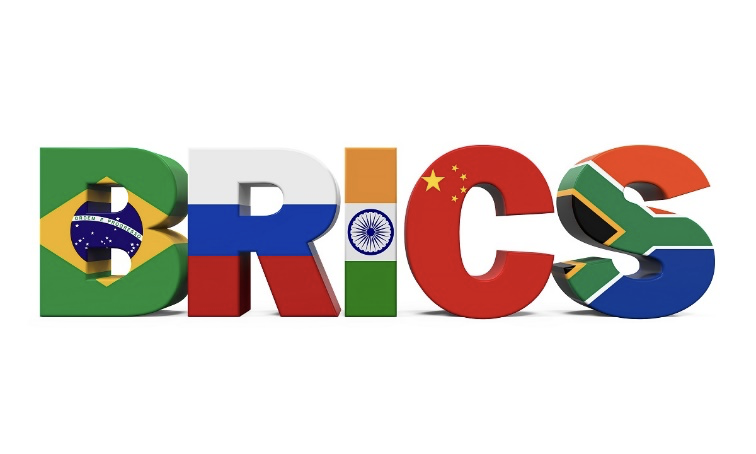
BRICS: An Update and a Challenge

Has BRICS finally produced an alternative to the “petrodollar” after twenty years? And does it live up to the hype? Depending on where you look online, key details are being left out. So, let’s slow down and review what’s actually happening.

Read More »
EU and India

After Two Decades of Failing to Come to an Agreement “The Mother of All Deals” is Done – Kudos to India and the EU

As of 1/27/2026, India and the EU have finalized a free trade agreement described by both sides as the “mother of all deals” that slashes tariffs, opens markets, and creates a combined economic region of roughly two billion people. This FTA stands as one of the most consequential global trade realignments in years, driven in part by U.S. tariff pressure and a shift in strategy toward diversifying one’s supply chains.

Read More »
Davos Canada

Hot Topics in International Trade – The Davos Speech by Canadian Prime Minister Mark Carney The Middle Powers Playbook and a Global Trade Realignment in the Making

For whatever reason, if you missed the spectacle created by President Trump on the world stage recently in Davos, Switzerland at the World Economic Forum, you really need to pay close attention now to the fall out. Top business executives in global economies were watching and probably also wondering just who the hell was going to stand-up to the U.S. pressure campaign, and that’s where Canadian Prime Minister Mark Carney stepped up to the mic and delivered a speech that sent shockwaves across continents.

Read More »