News Articles

China’s Belt and Road

China’s Belt and Road Initiative, Building Global Infrastructure Regarding Trade, It’s a Major Competition

In 2024, China’s Belt and Road Initiative (BRI) saw significant financial engagement. Preliminary data indicates that China invested approximately $92.4 billion in various projects across the 149 countries involved in the BRI. China’s Belt and Road Initiative (BRI) encompasses numerous large-scale infrastructure projects across the globe.

Read More »
China in Mexico

Chinese Industrial Parks in Mexico, Mexico a Growing Hub for Chinese FDI (And BYD)

As of now, the start of 2025, there are several Chinese industrial parks in Mexico, with notable examples including the Hofusan Industrial Park near Monterrey, which hosts manufacturing plants for ten Chinese companies. When one is considering how to navigate the U.S. import tariffs, for many Chinese manufacturers, pulling the trigger on nearshoring is the right move.

Read More »
America First Trade Policy

Should we Expect More Tariffs in the Future? Understanding Trump’s America First Trade Policy

As one of his first official acts as President, Trump released his memorandum on America First Trade Policy. The policy offers insight into the new administration’s trade priorities and calls for a review of current trade-related policies. President Trump says his goal is to establish “a robust and reinvigorated trade policy that promotes investment and productivity, enhances our Nation’s industrial and technological advantages, defends our economic and national security, and — above all — benefits American workers, manufacturers, farmers, ranchers, entrepreneurs, and businesses.” 

Read More »
Coercion in International Trade

Is Coercion the Best Approach to North American Trade?

The Trump Administration has demonstrated a willingness to apply new tariffs to goods entering the U.S. as a viable tactic under its America First strategy to achieve greater fairness in its dealings with other countries. The application of tariffs is authorized under a number of standard legal procedures, such as trade remedy investigations to mitigate dumping of goods at less than fair value into the U.S. market or eliminating the unfair price advantages of government subsidies, and use of section 301 duties to respond to unfair trade practices by other countries. However, the broad-brush use of tariffs to coerce our trading partners to make concessions in non-trade areas to resolve a domestic crisis is relatively new.

Read More »
madman theory

Trade War and the Madman Theory: A Personal Reflection

I can’t help but reflect on a negotiation seminar I took in law school, where we studied the Madman Theory, popularized by Richard Nixon. The theory suggests that acting unpredictably or being willing to take extreme actions can create leverage. If your opponent believes you might “blow it all up,” they may feel forced to make concessions. This strategy clearly echoes Trump’s approach to trade policy.

Read More »
external revenue service

The External Revenue Service: A Bureaucratic Overreach or Necessary Reform?

President Donald Trump made headlines when he announced an External Revenue Service (ERS) agency to collect tariff incomes. The announcement sparked a heated debate among trade experts, economists, and business leaders. But, what exactly would be the purpose of the agency? Well, we can take the words spoken from his inauguration address as an answer.

Read More »
china's growing influence in latin america

China’s Growing Influence in Latin America: Infrastructure Investments and Implications for the Panama Canal

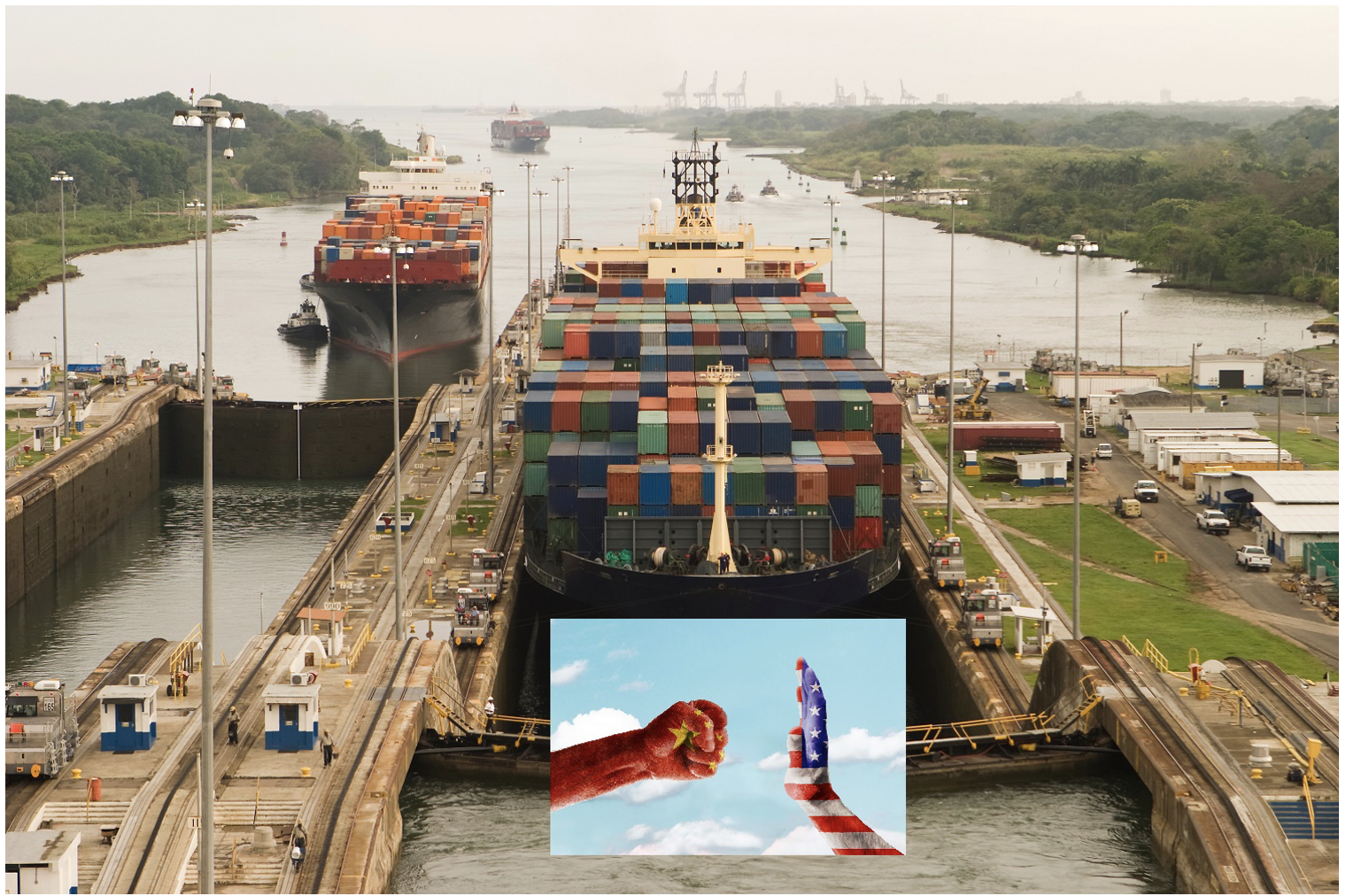
China has significantly expanded its economic and geopolitical footprint in Latin America, particularly through the acquisition and development of critical infrastructure such as ports, airfields, and railways. This strategic move has raised questions about the long-term implications for regional sovereignty, global trade routes, and the future of the Panama Canal, a linchpin of international maritime commerce.

Read More »
Chemical Classification

Chemical Classification, It Matters, Now More Than Ever-To Most

If you have a company that imports chemicals – whether they are used as raw materials or components for onward manufacturing, or finished goods containing chemical components – you have been facing significant challenges over the last half-dozen years. Some of these challenges include the trade wars with China (I’m looking at you, Section 301) and the disruptive impact of COVID-19 to global supply chains. In response to these challenges, you have maybe modified your supply chain to reduce your dependence on Chinese chemical imports.  Or perhaps your supply chain was not largely affected by Section 301 tariffs (if so, consider yourself lucky – and may your luck hold!).

Read More »
Customs broker license exam

The U.S. Customs Broker License Exam: Tips and Perspectives

A customs broker license is issued to a person who has successfully passed a grueling licensing exam (after paying the exam fee), submitted a license application (along with another fee), and passed the subsequent FBI background investigation. The open-book exam, which lasts 4½ hours and comprises 80 multiple-choice questions, is ostensibly intended to measure one’s knowledge about various customs-related regulations and practices yet experience or employment in a customs-related job is not a prerequisite.

Read More »
environmental protection

The Future of Environmental Protection Laws and Trade Agreements

Historically, trade agreements have focused on reducing barriers to trade—such as tariffs and quotas—while encouraging economic integration and growth. Environmental protection was often considered a separate issue, addressed primarily through national regulations or multilateral environmental agreements like the Paris Agreement. However, recent developments suggest that trade and environmental concerns are converging, with many new trade agreements incorporating specific environmental provisions.

Read More »
usmca joint review

USMCA Joint Review Process Part 1

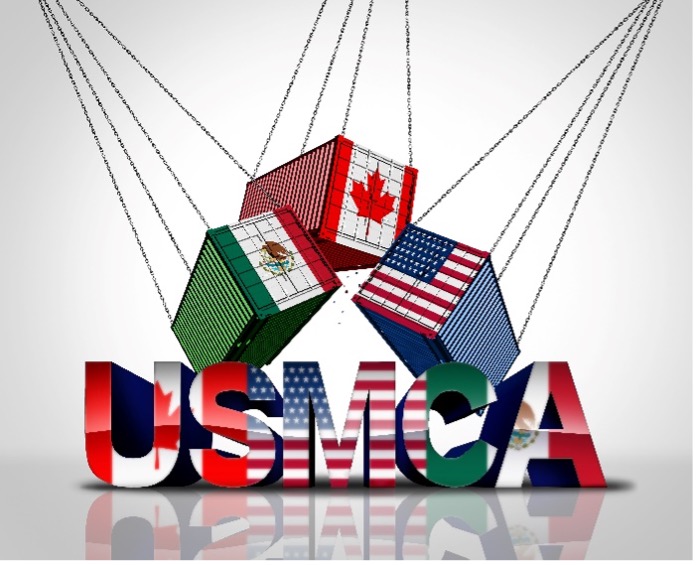
This is the first of a three-part series about the USMCA joint review process, focusing on China, Mexico, and competing visions of a “worker-centered” trade policy. Part one introduces the USMCA joint review process and explores how US trade policy would likely operate during Trump’s second term. Part two outlines some of the major trade issues that will be on the table during joint review, focusing on the Mexico-US relationship, and anticipates Harris’s likely approach to trade policy. Part three offers a critique of the worker-centered trade policy developed under the Biden administration, presents an alternative, and suggests new avenues for multi-stakeholder participation that Harris’s approach might create.

Read More »
arctic region

Coming Soon: A New Polar Icebreaker Competition in the Arctic Region for Trade Route Supremacy

The US, Canada, and Finland are launching a joint partnership to build more ice-breaking ships to compete with China and Russia in Arctic. Sad but true, here we go again. Whether it’s the South China sea, or even the moon, there will be territorial disputes to challenge ownership where no ownership should actually exist. The pact aims to produce a fleet of ice-breaking ships to display a posture of power in the polar regions and enforce international norms and treaties.

Read More »
a head scratcher

A Head Scratcher

A product has a country of origin of China, is not subject to China 301 duties and is eligible for USMCA benefits when imported from Canada – Whaaat!?

Read More »
Commercial International Trade Contracts

Using a Contract Review Checklist for Commercial International Trade Contracts

In the complex world of commercial international trade, contracts serve as the foundation for successful transactions. A well-prepared contract review checklist provides a basis for lawyers to ensure that all necessary terms and conditions are covered, protecting all parties involved. This article outlines the essential components of a contract review checklist related to goods in international trade. The goal is to provide a structured approach to reviewing and drafting contracts, beyond the basics of INCOTERMS.

Read More »
brics

BRICS – Shaping the Future of Global Finance and Investment

Imagine a world where five powerhouse nations are redefining the global economic landscape. BRICS—an acronym for Brazil, Russia, India, China, and South Africa—is not just a coalition of emerging markets; it is a formidable alliance shaping the future of global finance and investment. You can read about the coalition’s attempt to unseat the US dollar in our previous newsletter.

Read More »
texas

The Trade Powerhouse: Analyzing Texas’ Role in Global and National Trade

Texas isn’t just celebrated for its breathtaking landscapes and rich history—it’s a dynamic powerhouse in international and interstate trade. As the second-largest state in the U.S., Texas capitalizes on its strategic location, diverse economy, and vast infrastructure to fuel an extraordinary flow of goods and services. If Texas was a country, it would be ranked as the eighth- largest economy in the world, ahead of both Canada and Russia.

Read More »
steel and aluminum

New Presidential Proclamations – Section 232 Duties on Certain Steel and Aluminum Products from Mexico

On July 10, 2024, the President issued two Presidential Proclamations related to the imposition of Section 232 duties on certain steel and aluminum products from Mexico. The first establishes a “melt and pour” requirement for imports of steel articles that are products of Mexico and will increase the section 232 duty rate for imports of steel articles and derivative steel articles that are products of Mexico that are melted and poured in a country other than Mexico, Canada, or the United States.

Read More »
CTPAT security review

Navigating the Hurdles: Challenges of Conducting an Annual CTPAT Security Review

The Customs-Trade Partnership Against Terrorism (CTPAT) program can offer a fast thoroughfare for international trade. But navigating the annual security audits that ensure CTPAT compliance can feel like a maze. Don’t worry, we’ve got you covered! Let’s explore some common hurdles faced during CTPAT security audits, along with practical tips to simplify the process.

Read More »
judicial deference

Judicial Deference in Customs Litigation

One of the most anticipated decisions of the Supreme Court’s recent term was Loper Bright Enterprises v. Raimondo. While the specific underlying dispute in Loper Bright isn’t relevant to the trade community—did fishermen have to pay for government-mandated observers on their vessels?—the Court used this case to overturn the broadly applicable judicial deference test established in 1984 in Chevron U.S.A. Inc., v. Natural Resources Defense Council.

Read More »