News Articles

usmca

USMCA – We Have Some Good News and Some Terrible News

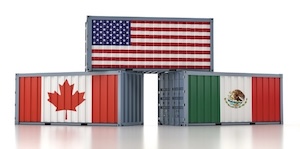
As is well known the US has imposed duties of 25% on imports from Canada and Mexico. This means that those imports will take the regular duty plus 25%. For example, a switchgear assembly classified under 8537.10.91 made in Canada or Mexico will take a duty of 2.7% plus the special tariff of 25% for a total rate of 27.7% of the value.

Read More »
Trump Tariffs

2025 Trade Policy Agenda Provides Rationale for Trump Tariff Actions

On March 3, 2025, the Office of the United States Trade Representative (USTR) released the 2025 Trade Policy Agenda and 2024 Annual Report on the Trade Agreements Program. The report outlines the rationale of the Trump Administration for its trade policy goals and actions. It complements and expands on the America First Trade Policy Executive Order and also encompasses the massive imposition of tariffs by the President on April 2 in his so-called “Liberation Day” Executive Order and Fact Sheet.

Read More »
China in Latin America

How the Trump Administration Pushed China Deeper into Latin America

Donald Trump’s first term in office pursued an aggressive foreign policy toward China, imposing tariffs, restricting technology transfers, and accusing Beijing of unfair trade practices. However, one unintended consequence of this hardline approach has been China’s accelerated expansion into Latin America—a region traditionally within the U.S. sphere of influence.

Read More »
Bitcoin Strategic Reserve

Security for New Bitcoin Strategic Reserve

On March 7, 2025, the White House hosted a Digital Assets Summit to celebrate the creation of a Bitcoin Strategic Reserve and a Digital Assets Stockpile by an Executive Order titled, “Establishment of the Strategic Bitcoin Reserve and United States Digital Asset Stockpile“. The Executive Order recognizes that “The Bitcoin protocol permanently caps the total supply of bitcoin (BTC) at 21 million coins, which is critical to its value proposition as a scarce asset.

Read More »
Lessons from the Smoot–Hawley Tariff Act of 1930

Lessons from the Smoot–Hawley Tariff Act of 1930

The various tariffs that President Trump has imposed since retaking office are based on delegated authority found in several existing statutes. But a century ago, tariffs were primarily the purview of Congress. One of the most controversial manifestations of U.S. tariff legislation (and of American legislation in general) was the Smoot–Hawley Tariff Act of 1930, signed into law by President Hoover shortly after the United States—and the world—fell into the black hole of the Great Depression.

Read More »
America's misunderstood trade deficit

America’s Misunderstood Trade Deficit

Several fundamental conditions are widely presumed necessary for a country to enjoy the benefits of global trade. One condition is that import activity ought not exceed export activity. Put more simply, we must sell more than we buy. On its face this seem reasonable. It seems logical that a trade deficit (that is, selling less than we buy) is a drain on our economy. Indeed, every month the news media feed us the bad news about the negative “balance of trade” data reported by the Commerce Department.

Read More »
Panama-Canal

Options to the Panama Canal Perhaps?

Prior to the origination of the plans for the Panama Canal vessels of trade had few options of getting goods from Europe and Asia to N. America. One was to sail around the southern tip of South America (Cape Horn) adding months to the journey if they were lucky enough to make it through what is known as one of the most hazardous shipping routes in the world, where it’s estimated that over 800 ships have been lost over the last couple of centuries of trade.

Read More »
Section 232 Tariffs

President Trump Restores Section 232 Tariffs

On February 10, 2025, President Trump signed proclamations to reinstate the full 25% tariff on steel imports and increase tariffs on aluminum imports to 25%. Section 232 of the Trade Expansion Act of 1962 affords the President with the authority to adjust imports being brought into the U.S. in quantities or under circumstances that threaten to impair national security. The President says the reinvigorated Section 232 tariffs “will support the program’s original objective of revitalizing the domestic steel and aluminum industries and achieving sustainable capacity utilization of at least 80%.”

Read More »
usmca

USMCA Part Three: What to Do about Joint Review

The United States-Mexico-Canada Agreement (USMCA) joint review process is scheduled to begin on July 1, 2026, but the time to prepare is now. Embedded trade compliance professionals should already be doing scenario analysis—pulling data, calculating the supply chain impacts of potential changes, and helping their companies to strategize accordingly.

Read More »
Mexican Customs

New Mexican Customs Law – Nueva Ley Aduanera de Mexico

On November 19, 2025, a Decree amending, adding and repealing various legal provisions of the Mexican Customs law was published in the Diario Oficial de la Federacion (Mexican Official Gazette). This reform will enter into force on January 1, 2026. Although the Customs Law has been amended multiple times in the last 30 years, this reform is widely considered the most significant since December 15, 1995.

Read More »
tequila

Developing a Tequila Brand for Export from Mexico

The development of a tequila brand begins with a foundational step: registering a trademark in Mexico, the United States, or any other intended markets. However, trademark protection is only the starting point. Building a tequila brand requires a broader business and regulatory strategy involving multiple teams—Customs and trade, finance, marketing, and legal—to plan for production, cost structures, distribution, sales, and export-related compliance.

Read More »
New Value Manifest

New Value Manifest/Manifestacion de Valor – via VUCEM

Beginning December 9, 2025, importers in Mexico will be required to complete and submit the Electronic Value Manifest through VUCEM (Mexico’s Electronic Single Window). This measure increases the importer’s direct participation and responsibility in determining and declaring the correct customs value of imported goods.

Read More »
tariffs

Tariffs, Deals, Steel, Aluminum and AI – Oh My!  Welcome to the New Normal

New tariffs, changed tariffs, and reduced tariffs are announced with short notice. The duties on merchandise can change while a shipment is in the middle of the ocean. The status of free trade agreements has become uncertain. New detailed duties are assessed on steel and aluminum and their derivatives. Artificial intelligence is playing an increasing role.

Read More »
Stablecoin

Activating HTTP 402: The x402 Protocol and Legal Framework for Internet-Native Stablecoin Payments

The convergence of payment stablecoins, blockchain settlement infrastructure, and the regulatory clarity provided by the GENIUS Act of 2025 has created conditions for HTTP 402’s activation. The x402 protocol, developed by Coinbase in collaboration with Cloudflare and others through the x402 Foundation, operationalizes this long-reserved status code to enable instant, automated payments: particularly for autonomous AI agents conducting machine-to-machine commerce.

Read More »
critical Minerals

Critical Minerals Focus of White House Trade Agreements in 2025

The Trump Administration is pursuing a new style of trade management based on use of tariffs to rectify trade deficits and to set new “reciprocal” tariff rates to level the playing field for all of its trading partners. Critical minerals are a key component of the strategy, because the U.S. is heavily dependent of foreign sources for most of the critical minerals used in modern manufacturing. In response to Trump-imposed tariffs and threats of other trade actions, China has repeatedly used export controls on rare earths and other critical minerals as leverage. This article looks at the current state of critical minerals trade actions, starting with new US agreements with multiple trading partners, then reviewing international norms and proceeding through other trade actions involving critical minerals.

Read More »
BIS

BIS “Affiliates Rule” Suspended One Year, But No Time to Rest

On November 10, 2025, the U.S. Bureau of Industry and Security (“BIS”) delayed the effective date of its new Affiliates Rule for a one-year period, until November 9, 2026, after U.S. and China trade talks. The Affiliates Rule, announced on September 29, 2025, expands export controls under the Export Administration Regulations (“EAR”) to extend to non-listed “affiliates” owned or controlled by listed entities (on the Entity List, the Military End User List “MEU”, or certain sanctioned parties) 50% or more in the aggregate.

Read More »
section 232

Section 232 Steel & Aluminum Derivative Products Inclusion Process Expands Scope of the National Security Purpose of Section 232 Investigations

On February 10, 2025, the President issued Presidential Proclamations Under Section 232 of the U.S. Code adjusting imports of steel and aluminum into the United States. These Proclamations provided an expanded listing of steel and aluminum derivative articles but also instructed the Secretary of Commerce (Secretary) to establish a process for including additional derivative aluminum and steel articles within the scope of the ad valorem duties.

Read More »
auto industry and china

The Automotive Industry, China’s Semi Grip on Supply Chains, and General Motors 2027 Exit Strategy for Suppliers (Is a clean break even possible?)

General Motors (GM) has instructed thousands of its suppliers to phase out sourcing parts and materials from China by 2027. The exit strategy began in early 2024, with the directive gaining momentum in spring of this year, 2025. This directive is part of GM’s broader strategy to enhance supply chain resiliency and reduce exposure to geopolitical risks, particularly amid escalating, or let’s just say, continuously fluctuating, U.S.–China trade tensions.

Read More »
brics

Can BRICS Break the Dollar’s Grip?

For decades, the U.S. dollar has ruled the world. Whether a Brazilian farmer sells soybeans to China or an Indian company buys oil from the Middle East, chances are the transaction runs through greenbacks. Nearly 80 percent of global trade is still denominated in dollars—even when neither the buyer nor the seller is American.

Read More »