News Articles

usmca

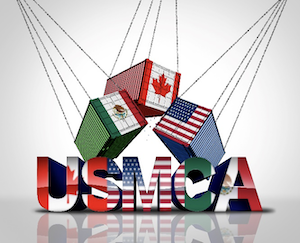
USMCA – We Have Some Good News and Some Terrible News

As is well known the US has imposed duties of 25% on imports from Canada and Mexico. This means that those imports will take the regular duty plus 25%. For example, a switchgear assembly classified under 8537.10.91 made in Canada or Mexico will take a duty of 2.7% plus the special tariff of 25% for a total rate of 27.7% of the value.

Read More »
Trump Tariffs

2025 Trade Policy Agenda Provides Rationale for Trump Tariff Actions

On March 3, 2025, the Office of the United States Trade Representative (USTR) released the 2025 Trade Policy Agenda and 2024 Annual Report on the Trade Agreements Program. The report outlines the rationale of the Trump Administration for its trade policy goals and actions. It complements and expands on the America First Trade Policy Executive Order and also encompasses the massive imposition of tariffs by the President on April 2 in his so-called “Liberation Day” Executive Order and Fact Sheet.

Read More »
China in Latin America

How the Trump Administration Pushed China Deeper into Latin America

Donald Trump’s first term in office pursued an aggressive foreign policy toward China, imposing tariffs, restricting technology transfers, and accusing Beijing of unfair trade practices. However, one unintended consequence of this hardline approach has been China’s accelerated expansion into Latin America—a region traditionally within the U.S. sphere of influence.

Read More »
Bitcoin Strategic Reserve

Security for New Bitcoin Strategic Reserve

On March 7, 2025, the White House hosted a Digital Assets Summit to celebrate the creation of a Bitcoin Strategic Reserve and a Digital Assets Stockpile by an Executive Order titled, “Establishment of the Strategic Bitcoin Reserve and United States Digital Asset Stockpile“. The Executive Order recognizes that “The Bitcoin protocol permanently caps the total supply of bitcoin (BTC) at 21 million coins, which is critical to its value proposition as a scarce asset.

Read More »
Lessons from the Smoot–Hawley Tariff Act of 1930

Lessons from the Smoot–Hawley Tariff Act of 1930

The various tariffs that President Trump has imposed since retaking office are based on delegated authority found in several existing statutes. But a century ago, tariffs were primarily the purview of Congress. One of the most controversial manifestations of U.S. tariff legislation (and of American legislation in general) was the Smoot–Hawley Tariff Act of 1930, signed into law by President Hoover shortly after the United States—and the world—fell into the black hole of the Great Depression.

Read More »
America's misunderstood trade deficit

America’s Misunderstood Trade Deficit

Several fundamental conditions are widely presumed necessary for a country to enjoy the benefits of global trade. One condition is that import activity ought not exceed export activity. Put more simply, we must sell more than we buy. On its face this seem reasonable. It seems logical that a trade deficit (that is, selling less than we buy) is a drain on our economy. Indeed, every month the news media feed us the bad news about the negative “balance of trade” data reported by the Commerce Department.

Read More »
Panama-Canal

Options to the Panama Canal Perhaps?

Prior to the origination of the plans for the Panama Canal vessels of trade had few options of getting goods from Europe and Asia to N. America. One was to sail around the southern tip of South America (Cape Horn) adding months to the journey if they were lucky enough to make it through what is known as one of the most hazardous shipping routes in the world, where it’s estimated that over 800 ships have been lost over the last couple of centuries of trade.

Read More »
Section 232 Tariffs

President Trump Restores Section 232 Tariffs

On February 10, 2025, President Trump signed proclamations to reinstate the full 25% tariff on steel imports and increase tariffs on aluminum imports to 25%. Section 232 of the Trade Expansion Act of 1962 affords the President with the authority to adjust imports being brought into the U.S. in quantities or under circumstances that threaten to impair national security. The President says the reinvigorated Section 232 tariffs “will support the program’s original objective of revitalizing the domestic steel and aluminum industries and achieving sustainable capacity utilization of at least 80%.”

Read More »
usmca

USMCA Part Three: What to Do about Joint Review

The United States-Mexico-Canada Agreement (USMCA) joint review process is scheduled to begin on July 1, 2026, but the time to prepare is now. Embedded trade compliance professionals should already be doing scenario analysis—pulling data, calculating the supply chain impacts of potential changes, and helping their companies to strategize accordingly.

Read More »
environmental protection

The Future of Environmental Protection Laws and Trade Agreements

Historically, trade agreements have focused on reducing barriers to trade—such as tariffs and quotas—while encouraging economic integration and growth. Environmental protection was often considered a separate issue, addressed primarily through national regulations or multilateral environmental agreements like the Paris Agreement. However, recent developments suggest that trade and environmental concerns are converging, with many new trade agreements incorporating specific environmental provisions.

Read More »
usmca joint review

USMCA Joint Review Process Part 1

This is the first of a three-part series about the USMCA joint review process, focusing on China, Mexico, and competing visions of a “worker-centered” trade policy. Part one introduces the USMCA joint review process and explores how US trade policy would likely operate during Trump’s second term. Part two outlines some of the major trade issues that will be on the table during joint review, focusing on the Mexico-US relationship, and anticipates Harris’s likely approach to trade policy. Part three offers a critique of the worker-centered trade policy developed under the Biden administration, presents an alternative, and suggests new avenues for multi-stakeholder participation that Harris’s approach might create.

Read More »
arctic region

Coming Soon: A New Polar Icebreaker Competition in the Arctic Region for Trade Route Supremacy

The US, Canada, and Finland are launching a joint partnership to build more ice-breaking ships to compete with China and Russia in Arctic. Sad but true, here we go again. Whether it’s the South China sea, or even the moon, there will be territorial disputes to challenge ownership where no ownership should actually exist. The pact aims to produce a fleet of ice-breaking ships to display a posture of power in the polar regions and enforce international norms and treaties.

Read More »
a head scratcher

A Head Scratcher

A product has a country of origin of China, is not subject to China 301 duties and is eligible for USMCA benefits when imported from Canada – Whaaat!?

Read More »
Commercial International Trade Contracts

Using a Contract Review Checklist for Commercial International Trade Contracts

In the complex world of commercial international trade, contracts serve as the foundation for successful transactions. A well-prepared contract review checklist provides a basis for lawyers to ensure that all necessary terms and conditions are covered, protecting all parties involved. This article outlines the essential components of a contract review checklist related to goods in international trade. The goal is to provide a structured approach to reviewing and drafting contracts, beyond the basics of INCOTERMS.

Read More »
brics

BRICS – Shaping the Future of Global Finance and Investment

Imagine a world where five powerhouse nations are redefining the global economic landscape. BRICS—an acronym for Brazil, Russia, India, China, and South Africa—is not just a coalition of emerging markets; it is a formidable alliance shaping the future of global finance and investment. You can read about the coalition’s attempt to unseat the US dollar in our previous newsletter.

Read More »
texas

The Trade Powerhouse: Analyzing Texas’ Role in Global and National Trade

Texas isn’t just celebrated for its breathtaking landscapes and rich history—it’s a dynamic powerhouse in international and interstate trade. As the second-largest state in the U.S., Texas capitalizes on its strategic location, diverse economy, and vast infrastructure to fuel an extraordinary flow of goods and services. If Texas was a country, it would be ranked as the eighth- largest economy in the world, ahead of both Canada and Russia.

Read More »
steel and aluminum

New Presidential Proclamations – Section 232 Duties on Certain Steel and Aluminum Products from Mexico

On July 10, 2024, the President issued two Presidential Proclamations related to the imposition of Section 232 duties on certain steel and aluminum products from Mexico. The first establishes a “melt and pour” requirement for imports of steel articles that are products of Mexico and will increase the section 232 duty rate for imports of steel articles and derivative steel articles that are products of Mexico that are melted and poured in a country other than Mexico, Canada, or the United States.

Read More »
CTPAT security review

Navigating the Hurdles: Challenges of Conducting an Annual CTPAT Security Review

The Customs-Trade Partnership Against Terrorism (CTPAT) program can offer a fast thoroughfare for international trade. But navigating the annual security audits that ensure CTPAT compliance can feel like a maze. Don’t worry, we’ve got you covered! Let’s explore some common hurdles faced during CTPAT security audits, along with practical tips to simplify the process.

Read More »
judicial deference

Judicial Deference in Customs Litigation

One of the most anticipated decisions of the Supreme Court’s recent term was Loper Bright Enterprises v. Raimondo. While the specific underlying dispute in Loper Bright isn’t relevant to the trade community—did fishermen have to pay for government-mandated observers on their vessels?—the Court used this case to overturn the broadly applicable judicial deference test established in 1984 in Chevron U.S.A. Inc., v. Natural Resources Defense Council.

Read More »