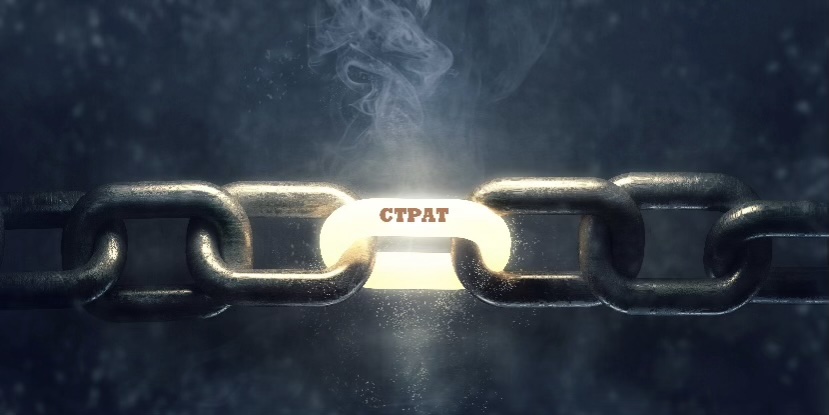
The global supply chain is the backbone of the U.S. economy, moving millions of tons of cargo daily. To keep things running smoothly and safely, U.S. Customs and Border Protection (CBP) place a significant reliance on the Customs Trade Partnership Against Terrorism (CTPAT). This voluntary program trades “gold star” benefits—like fewer inspections, business resumption priority, and faster border crossings—for a company’s commitment to high-level security.
A recent GAO investigation (https://www.gao.gov/products/gao-26-107893) took a magnifying glass to how this partnership is working, and while the numbers show participants are generally doing a great job, there are some fascinating “detective facts” that point toward a more data-driven future for the program.
“Just the facts, Ma’am” – By the Numbers
The GAO looked at five years of data (FY 2020–2024) to see how often CTPAT members were involved in security incidents like smuggling or trademark violations, drug incidents, and other security deficiencies. Here’s the breakdown:
- The 1% Factor: Out of approximately 215,000 total cargo security incidents, CTPAT participants were involved in only about 1%. This shows that, for the most part, the “trusted security partner” status is well-earned.
- The “Frequent Flyers”: While 480 participants were linked to roughly 2,200 incidents, 160 of those companies were involved in multiple incidents. (Opps, don’t want to be one of those – no names included)
- Who & Where: Licensed U.S. customs brokers and highway carriers made up 59% of the participants involved in incidents. When looking at the type of transport, air carriers (35%) and sea carriers (26%) saw the highest proportion of trouble.
- The “What”: What exactly is being found? Nearly half (49%) of the incidents were drug related. Other common issues included ammunition or weapons parts (20%) and intellectual property rights violations (16%).
- The Enforcement Gap: Of the 480 participants involved in incidents, 166 were suspended or removed from the program

What to Expect: The CTPAT “Level Up”
The investigation did more than just count incidents; it identified where the program can trim the fat and tighten its belt. If you are a CTPAT partner, here is the roadmap for what’s coming next and how you can prepare.
1. Bulletproof Documentation
The GAO found that CBP’s data was often incomplete or inconsistent due to manual entry errors. Expect a major push for stronger data controls. Participants should ensure their internal logs are 100% consistent with what they report to CTPAT. Think of it as “syncing” your records; if an incident happens, your company’s internal investigation should mirror the details (location, commodity, quantity, action, etc.) found in the CTPAT Portal to avoid red flags.
2. Stay Ahead of the Curve
We are in an “Accelerated Evolution of Change”, my new Trade Compliance Motto, and the GAO noted that the program’s “Minimum Security Criteria” (MSC) aren’t keeping up with updates, especially in cargo, cyber, and training objectives. CBP is already working on broadening the program, such as piloting participation for additional Third-Party Logistics (3PL) entities.
Heads UP: (easy one) Make sure your Points of Contact (POCs) in the CTPAT Portal are current and opted-in for email alerts. You don’t want to be “that guy/gal” who misses a critical update because it was sent to an inbox belonging to someone who left the company three years ago!
3. Clarify the Rules of the Road
CBP is updating its investigative and enforcement guidance to make it clearer exactly when a company might be jeopardized after a breach. Now is the time to ensure your security policies are not just sitting on a shelf but are actively implemented across your entire business partner network. You should have a “break glass in case of emergency” plan: know how to identify a breach, who to report it to at CTPAT, and how to document your corrective actions immediately. (If you are not sure about this part Braumiller Consulting Group can help).
The Long and Short of it (Mostly the Short)
The, “what is the big picture”? While the report highlights areas for improvement, the takeaway is actually very positive.
The fact that CTPAT members are involved in such a tiny fraction of total security incidents proves the program works. The upcoming changes aren’t about “catching” people; they are about refining a successful partnership.
By tightening data quality and clarifying enforcement, CBP is making the CTPAT “seal of approval” even more valuable. For participants, this means a more predictable environment, (who’s not in favor of that). More reliable data to help manage their own risks, and a stronger, more resilient global supply chain for everyone.
The future of CTPAT is more transparent, more digital, and more secure—and that’s a win for the whole economy.