
Tariffs Legal Decisions Under IEEPA Raise Constitutional Issues for Circuit Courts

Several lawsuits challenging the legal validity of the tariff actions taken by President Trump since he took office on January 20, 2025, are in process of moving through the federal courts. They raise a variety of important jurisdictional and constitutional questions and seem poised to lead to challenges in federal circuit courts and the Supreme Court.
The Art of the (UK) Deal

On May 8, 2025, the United States and United Kingdom (UK) unveiled the new trade terms of an “economic prosperity” deal. This deal comes after President Trump imposed a 10% reciprocal tariff on all products from the UK and additional tariffs on steel and aluminum, and automobiles and automobile parts. While the 10% reciprocal tariff will remain in effect, the two countries were able to agree on alternative arrangements for steel and aluminum, automobiles, and other strategic sectors.
Trump’s Plan B for Tariffs
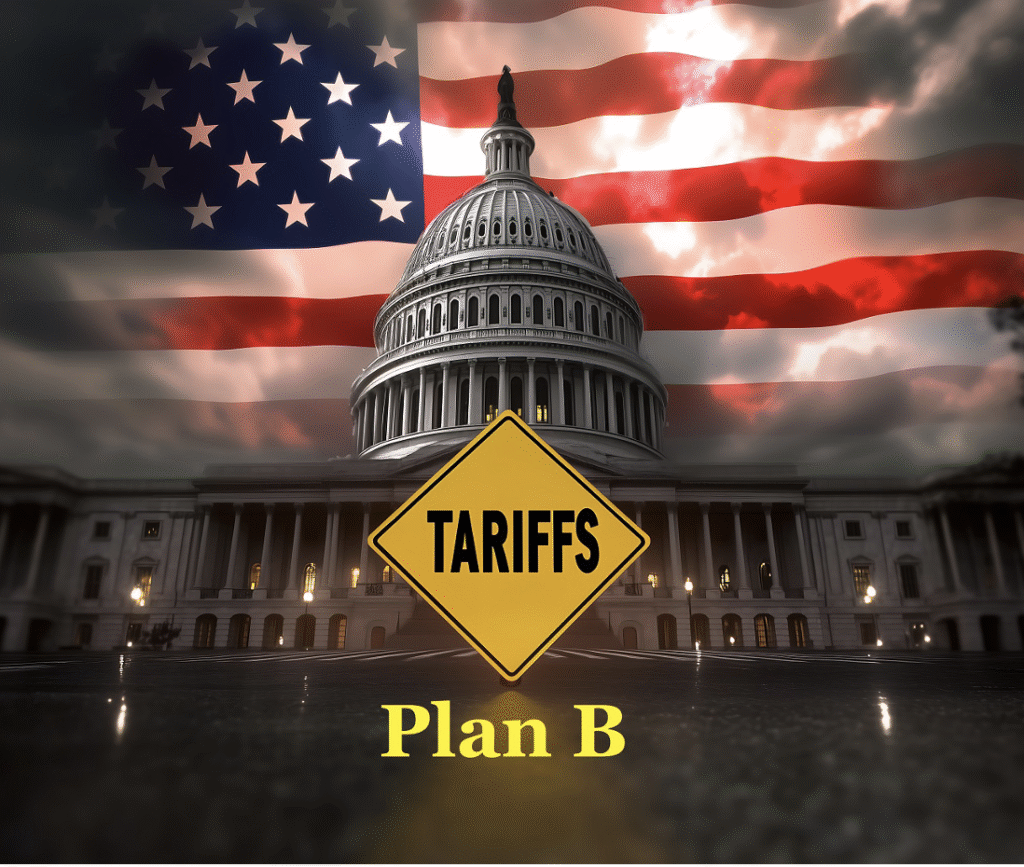
On May 28, 2025, the United States’ Court of International Trade (CIT) struck down the President’s use of the International Economic Emergency Powers Act (IEEPA) to impose tariffs. This includes tariffs imposed on Canada, China, and Mexico in response to the fentanyl crisis at U.S.’ borders and reciprocal tariffs imposed on almost all foreign imports on April 2, 2025. The Government immediately appealed the decision to the U.S. Court of Appeals for the Federal Circuit (CAFC).
U.S. vs China as a Global Trade Partner, Are We (U.S.) the Bad Guys?
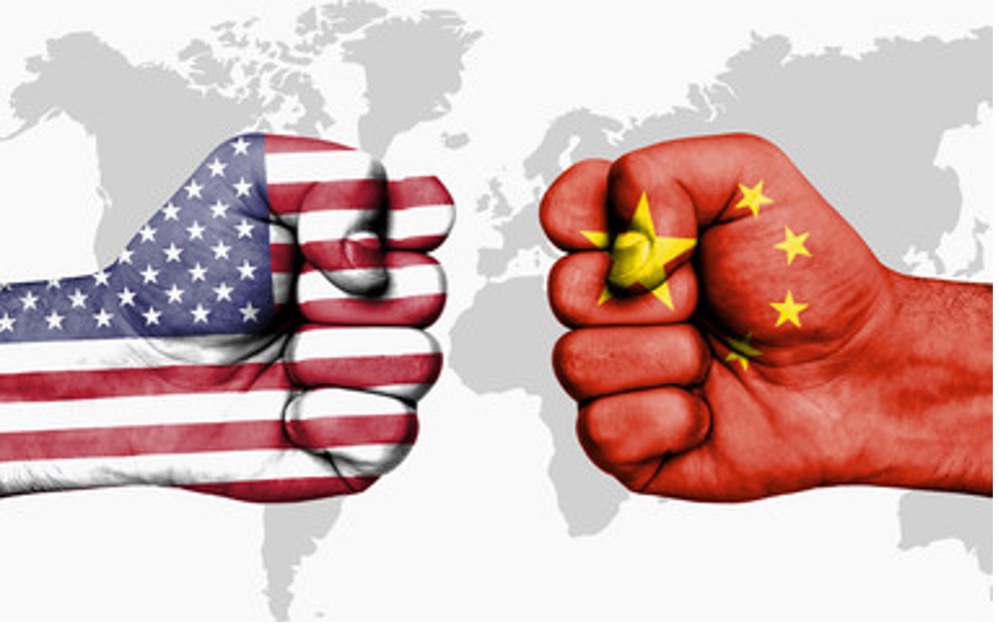
A quiet but significant power shift has been unfolding across Latin America. While the United States has long been the dominant economic and political influence in the region, its recent inward turn under the “America First” doctrine has created openings that China is eager to fill.
Terrified by Tariffs

Terrified by Tariffs. Bob Brewer, VP Marketing and NBD for Braumiller Law Group sits down with Jim Holbein, Of Counsel. Braumiller Law Group to discuss the current landscape in tariffs and trade.
Coping with Tariffs

Coping with Tariffs. Bob Brewer, VP Marketing and NBD for Braumiller Law Group sits down with Jim Holbein, Of Counsel. Braumiller Law Group to discuss the current landscape in tariffs and trade.
Tit for Tat

The simple phrase “tit for tat” regarding a trade war with China is 125% on US goods entering China and 145% on Chinese goods entering the US. Tit for tat Is becoming as famous as it once was from a familiar Hollywood film, and in the “tit for tat”, Clarice, nobody thus far has eaten the others liver with a bottle of chianti and some fava beans. Yep! So far, so good, nobody’s made lamb chops either of little Ricky. Let’s all hope for the best. We are doing our best to navigate the challenges. Global trade compliance is what we do at Braumiller Law Group.
All Is Fair in Love and War, But Apparently Not Trade. Closing the Gap on Global Trade Deficits with the U.S. (A monumental task for a variety of reasons)

As a broad stroke of tariffs are now levied against various countries to close the trade deficit gap, without truly examining the reason(s) for the imbalance, there will most likely be automatic retaliatory tariffs in a lose-lose situation. The White House stated that currently 50 countries are on the phone with the President, but that is hard to confirm. US consumers will ultimately pay the price, as well as SME’s.
Sheinbaum’s Response to Trump´s Tariffs and the Origin of the Goods
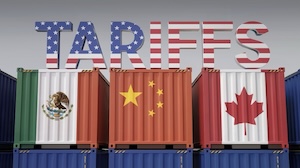
On April 3, 2025, during the presidential daily morning briefing, Mexico’s President Claudia Sheinbaum responded to the import tariffs announced the day before by President Trump, which targeted several countries. She emphasized that, of all the nations affected by these new duties, Mexico was the least impacted. She attributed this to the strong bilateral relationship between Mexico and the United States. She also reiterated that, since Mexico does not impose tariffs on U.S. goods, it is unfair for the U.S. to impose tariffs on Mexican products.
USMCA – We Have Some Good News and Some Terrible News
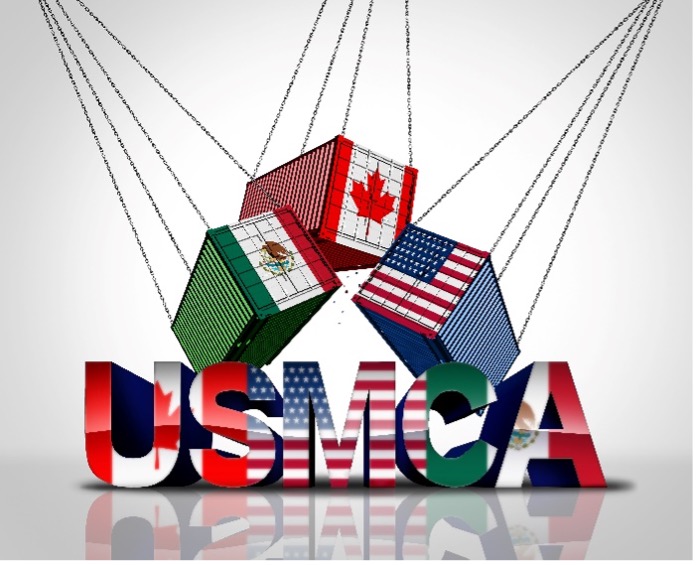
As is well known the US has imposed duties of 25% on imports from Canada and Mexico. This means that those imports will take the regular duty plus 25%. For example, a switchgear assembly classified under 8537.10.91 made in Canada or Mexico will take a duty of 2.7% plus the special tariff of 25% for a total rate of 27.7% of the value.