News Articles

okenization Rulebook

The Tokenization Rulebook: Compliance Strategies for the Digital Asset Revolution

Since Bitcoin’s creation in 2008, cryptocurrencies and traditional assets have largely existed in parallel. In our previous exploration of Real World Assets (RWAs) (Assessing the Benefits and Challenges of Tokenizing Real World Assets, February 7, 2024), we identified how the lack of reliable bridges between on-chain and off-chain ecosystems has constrained the transformative potential of blockchain technology.

Read More »
uk deal

The Art of the (UK) Deal

On May 8, 2025, the United States and United Kingdom (UK) unveiled the new trade terms of an “economic prosperity” deal. This deal comes after President Trump imposed a 10% reciprocal tariff on all products from the UK and additional tariffs on steel and aluminum, and automobiles and automobile parts. While the 10% reciprocal tariff will remain in effect, the two countries were able to agree on alternative arrangements for steel and aluminum, automobiles, and other strategic sectors.

Read More »
plan b for tariffs

Trump’s Plan B for Tariffs

On May 28, 2025, the United States’ Court of International Trade (CIT) struck down the President’s use of the International Economic Emergency Powers Act (IEEPA) to impose tariffs. This includes tariffs imposed on Canada, China, and Mexico in response to the fentanyl crisis at U.S.’ borders and reciprocal tariffs imposed on almost all foreign imports on April 2, 2025. The Government immediately appealed the decision to the U.S. Court of Appeals for the Federal Circuit (CAFC).

Read More »
CTPAT Trade Storms

CTPAT: An Anchor for Weathering the Trade Storms

A few weeks ago, at the Trade and Cargo Security Summit, held in New Orleans, we learned that CBP (Customs and Border Protection) WAS NOT going to discuss the current administration’s policy during the conference. (Cue the dramatic music). Will you feel better if I tell you the groan across the audience was conspicuously audible? No? Well, I tried.

Read More »
Protectionism or free trade

Protectionism or Free Trade?

Many of our basic freedoms are guaranteed by the Constitution. Speech, press, assembly, religion: these are all accepted as sacrosanct rights by reasonable people across the political spectrum. But should we not have the same freedom when it comes to the economy?

Read More »
2025 Tariff Wave

Surviving the 2025 Tariff Wave: A Strategic Guide for U.S. Importers

The first quarter of 2025 has reshaped the U.S. trade landscape with a flurry of executive actions by the Trump administration, introducing a new wave of tariffs on imports from almost all U.S. trading partners. The Trump Administration has also levied broad duties on imports from Canada, Mexico, and China, on the basis of emergency powers of the Executive Branch, citing national security, border control, and illicit drug interdiction.

Read More »
US Trade Deficits

All Is Fair in Love and War, But Apparently Not Trade. Closing the Gap on Global Trade Deficits with the U.S. (A monumental task for a variety of reasons)

As a broad stroke of tariffs are now levied against various countries to close the trade deficit gap, without truly examining the reason(s) for the imbalance, there will most likely be automatic retaliatory tariffs in a lose-lose situation. The White House stated that currently 50 countries are on the phone with the President, but that is hard to confirm. US consumers will ultimately pay the price, as well as SME’s.

Read More »
trump tariffs

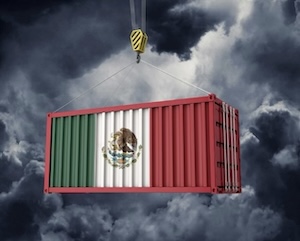
Sheinbaum’s Response to Trump´s Tariffs and the Origin of the Goods

On April 3, 2025, during the presidential daily morning briefing, Mexico’s President Claudia Sheinbaum responded to the import tariffs announced the day before by President Trump, which targeted several countries. She emphasized that, of all the nations affected by these new duties, Mexico was the least impacted. She attributed this to the strong bilateral relationship between Mexico and the United States. She also reiterated that, since Mexico does not impose tariffs on U.S. goods, it is unfair for the U.S. to impose tariffs on Mexican products.

Read More »
Foreign Direct Investment

Foreign Direct Investment Trends in 2024

Foreign Direct Investment (FDI) is a driving force behind global economic growth and development, acting as a lifeline of funding for nations around the world. Imagine a company from one corner of the globe setting up shop or acquiring a business in another – that’s FDI in action.

Read More »
China’s FDI in Mexico

机遇与挑战:中国企业赴墨西哥投资

中国在墨西哥的外国直接投资 (FDI) 近年来显着增长,这反映了中国与全球经济格局转变和区域贸易动态的战略性协调。这一趋势使中国成为墨西哥增长最快的外国投资来源国之一,其中大部分投资流向制造业。

Read More »
Uyghur Forced Labor

Forced Labor Questionnaires: Another Helpful Hint

In February 2024, Customs and Border Protection (CBP) began taking a new approach to Uyghur Forced Labor Prevention Act (UFLPA) enforcement—questionnaires. Once again, the solar industry is among the first targets, vanguards among importers, hacking their way through new regulatory growth, hopefully exposing a clear way through for all who follow. Active enforcement mechanisms like questionnaires—and the Forced Labor Enforcement Task Force (FLETF) itself—are still evolving.

Read More »
Global Trade Network, international trade, BCG

BIS Updates Freight Forwarder Guidance And Best Practices

The Bureau of Industry and Security (BIS) has recently published a guidance document on its new website aimed at helping freight forwarders and exporters uphold compliance with U.S. export controls and regulatory requirements. The document emphasizes the significant role that freight forwarders play in securing the global supply chain and preventing the proliferation of illegal exports.

Read More »
De Minimis

De Minimis An Ever-Growing Problem of De Maximus ProportionDe Minimis

De minimis is a term that refers to a threshold below which certain goods are exempt from import duties or taxes. However, in the landscape of international trade, it has become a contentious issue for the United States. Those “bad actors”, and even some, not so bad, but willing to take advantage of a loophole have found a way around the tariffs. This so-called loophole of allowing goods with a fair retail value of $800 or less to enter the U.S. without paying an import tariff has become a monster that Customs needs to find a way to deal with conclusively.

Read More »
IMMEX Customs

The Importance of Pedimento Codes for the IMMEX Customs Regime

In Mexico, a customs regime is the destination or treatment for goods subject to customs control in accordance with the nature and purposes of a customs operation. Companies with an IMMEX program may perform operations under the so-called customs regime of “temporary importation for elaboration, transformation or repair under a maquila program”. This name by itself implies several facts to consider.

Read More »
aluminum extrusions investigation

Aluminum Extrusions II – Scope Modifications Proposed, Dept. of Commerce Questioning Manageability

Since the last update on the AD / CVD aluminum extrusions investigation (dubbed Extrusions II) in what appears to be a response to strong opposition from trade industry groups, legislators, governments, and other interested parties, as well as dubious signals from the Department of Commerce, (Commerce) the Petitioners in the ongoing Aluminum Extrusions investigation have proposed modifications to the scope of the investigation.

Read More »
Legal Norms Artificial Intelligence

Evolving Legal Norms for Artificial Intelligence  in the European Union and the United States

Artificial Intelligence (AI) has been a hot topic for the last 2-3 years for politicians, technologists, and many people in civil societies globally. The use of the technology has obvious benefits for increasing productivity and value produced by businesses and organizations, along with dangers from misuse, such as deep fake propaganda and serious security risks. Two recent efforts to develop legislation addressing AI technology offer an opportunity to compare and contrast the differing approaches in the European Union (EU) and the United States (US).

Read More »
IMMEX Customs

La importancia de los Claves de Pedimentos en el Régimen Aduanero de las IMMEX

En México, un régimen aduanero es el destino o tratamiento que se da a los bienes objeto de control aduanero de conformidad con la naturaleza y propósitos de una operación aduanera. Las empresas con un programa IMMEX pueden realizar operaciones al amparo del régimen aduanero llamado “importación temporal para elaboración, transformación o reparación en programas de maquila”.

Read More »