
News Articles

tariffs

Preserving Refund Rights for IEEPA-Based Tariffs

Importers who have paid tariffs imposed under the International Emergency Economic Powers Act (IEEPA) should take immediate steps to preserve their eligibility for potential refunds. Multiple lawsuits are currently challenging the legality of these tariffs, and the Supreme Court is set to decide the issue in November. If the Court ultimately invalidates the tariffs, importers may be entitled to recover duties paid. However, securing refunds depends on preserving jurisdictional options—especially given the uncertainty about whether these tariffs constitute a protestable decision under customs law. There are three potential refund mechanisms at play.

Read More »
ieepa tariffs

Unconstitutionality of IEEPA Tariffs Upheld – Supreme Court to Review

On May 28, 2025, a three-judge panel at the Court of International Trade (CIT) ruled in two cases (VOS Selections, Inc. v. Trump and the State of Oregon v. Trump) that the Presidential actions taken under the International Emergency Economic Powers Act (IEEPA) (50 U.S.C. §§ 1701–1707) to impose tariffs on Canada, Mexico and China for illegal immigration and fentanyl smuggling are unconstitutional. The CIT said that the tariff actions did not directly address the declared emergency and were not delegated by Congress to the Executive Branch and therefore exceed the President’s tariff setting authority under the Constitution.

Read More »
de minimis

The End of De Minimis Section 321 Clearances

Prior to August 29 of this year, 19 USC 321 – popularly known as a Section or de minimis clearance – allowed imported shipments valued at less than $800 to enter the US free of duty and entry requirements. The idea behind this was (1) the cost of processing an entry and duty payment would be more than the duty collected, and (2) setting the threshold at this level would promote eCommerce. It would also allow US Customs & Border Protection (CBP) to use its resources more effectively.

Read More »
Chinese innovation

Sanctions, Bans, and Tariffs How The U.S. is Fueling Chinese Innovation

Just look at the current landscape of how China has been innovating through various trade related sanctions, bans, and tariffs. Necessity has always been the mother of invention, and in the case of China and the never-ending western pressure it has also been the catalyst in many cases for that which ultimately drives them to create and overcome.

Read More »
japan

Japan and U.S. Trade Agreement

After challenging negotiations and rising tariff tensions, the U.S. and Japan have reached a trade deal. This agreement precedes the August 1st tariff deadline, preventing a scheduled 25% tariff increase on Japanese products. The deal includes substantial Japanese investments in the U.S.

Read More »
protectionism

As the U.S. Pushes For More Protectionism, Global Trade Turns to Another Obvious Option- China

Here we are. August 1st, 2025, and the media is now publishing what facts they have on the various trade deals as well as those that have yet to come to fruition, in addition to the new announcement of imposed global tariffs which range anywhere from 10% to 41%, Yes, the trade world is on fire from a U.S. perspective. CNN, my “go-to” is reporting that the Trump Administration is imposing tariffs on over 60 countries around the globe.

Read More »
stablecoin

GENIUS Act Establishes Legal Framework for Payment Stablecoins

The President signed into law the Guiding and Establishing National Innovation for U.S. Stablecoins of 2025’or ‘‘GENIUS Act of 2025’” (the Act) on July 18, 2025. The new law establishes a basis for regulators to permit a variety of bank and non-bank entities to issue payment stablecoins that will be used for payments and reserves for a variety of purposes. This analysis covers the major provisions of the new law.

Read More »
tariffs

Trade Letters and Tariff Deals – What Is Going On?

Since taking office on January 20, 2025, the Trump Administration has undertaken an aggressive trade policy that has impacted, and will continue to impact, all countries trading with the US. Many of the actions seek to reverse the established principles of trade policy that have been supported by both political parties, enshrined in the rules of international agreements and organizations, and regulated by executive branch agencies since the end of World War II.

Read More »
tariffs

Mexico’s Evolving Trade Scenario Amidst Global Tariff Tensions

From a Mexican resident’s perspective, who is also involved in international trade, it appears that since the Trump administration took office, the global economic scenario has been altered by an escalating trade war, characterized by the imposition of tariffs by the U.S. government, on a range of countries. These measures, intended to safeguard the U.S. interests, have affected the relationships with certain international markets, as the U.S. is showing signs of progressive isolationist practices.

Read More »
tax service

Behind the Numbers: My Transformative Internship Journey at SAT (Tax Administration Service)

My internship in Mexico was with the Servicio de Administración Tributaria (SAT), the office responsible for applying tax and customs legislation, which facilitates trade through customs administration. With its influence extending across both the public and private sectors, SAT stands at the forefront of Mexico’s efforts to promote transparency, efficiency, and fiscal responsibility. My internship experience within this institution offered invaluable insights into its operations and the impact it has on the nation’s economic landscape.

Read More »
Importer Registration

Suspension of Mexican Importer Registration (Padron de Importadores)

One of the most important requirements for importing goods into Mexico is to be registered as an importer under the Mexican importer’s registry. There are 2 types of registries for importers, one is for general importers (Padron de Importadores), and the other is for importers of specific industry sectors (Padron the Importadores de Sectores Especificos) which may import goods identified by the MX tariff code (i.e. chemical products, firearms, cigars, footwear, textiles, alcohol, hydrocarbons, steel, automotive, etc.). Generally, these 2 registries are lists with information of individuals and entities authorized to bring goods into Mexico.

Read More »
free trade zone

Maximizing Duty Savings Series Leveraging Bonded Warehouse and Foreign Trade Zones

Consider this scenario: a client faced the challenge of deferring duty payments while managing a significant volume of imports destined for re-exportation from the U.S. Initially considering duty drawbacks, which proved unsuitable for their specific needs, we turned our attention to bonded warehouses and free trade zones. This scenario is not uncommon in the trade world and highlights a critical decision point for many businesses: choosing between a bonded warehouse and a Foreign Trade Zone (FTZ).

Read More »
first sale

What is the “First Sale” Rule and How Does it Affect Me?

The First Sale Rule applies in circumstances such as the example above. A US company places an order with a middleman in the US. The middleman in turn subcontracts to a foreign supplier. The supplier then ships the product either to the middleman or to the original US company that placed the order, meaning either could be the importer of record. The entered value could be the amount on the original purchase order or the price paid by the middleman to the foreign supplier.

Read More »
tolkenizing

Assessing the Benefits and Challenges of Tokenizing Real World Assets

The world of cryptocurrencies on blockchains and the world of traditional assets in markets have often stood in stark contrast to one another since Bitcoin’s creation in 2008. The lack of a reliable bridge between these two worlds has limited the impact of cryptocurrencies on assets in the real-world outside of on-chain speculation and prevented adoption of the benefits that blockchain technologies can bring to real world processes.

Read More »
Taiwan

Taiwan, Invasion & Trade, Part 2

President elect Lai Ching-te’s victory in Taipei ignited tensions across the Taiwan strait and now the geopolitical field waits to see if China will kick off World War Three. I’m only slightly joking, but Beijing has exerted diplomatic pressure on nations maintaining close ties with the island in the past and Taiwan’s decision to remain a democracy will no doubt ramp up China’s reunification process in the coming months. But how will that affect trade relations?

Read More »
Forced Labor Prevention Act

Latest Developments with The Uyghur Forced Labor Prevention Act and New Leadership at the Department of Homeland Security Signal Heavier Enforcement is Likely

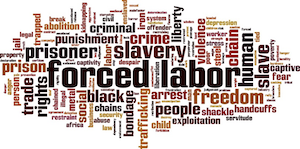
In recent years, the global spotlight has illuminated the grave concerns surrounding human rights violations within China’s Xinjiang region, particularly those impacting the Uyghur population. The Uyghur Forced Labor Prevention Act (UFLPA) stands as a pivotal piece of legislation designed to address these concerns and to ensure that products imported into the United States are devoid of forced labor originating from the Xinjiang region.

Read More »