
News Articles

Stablecoin

Activating HTTP 402: The x402 Protocol and Legal Framework for Internet-Native Stablecoin Payments

The convergence of payment stablecoins, blockchain settlement infrastructure, and the regulatory clarity provided by the GENIUS Act of 2025 has created conditions for HTTP 402’s activation. The x402 protocol, developed by Coinbase in collaboration with Cloudflare and others through the x402 Foundation, operationalizes this long-reserved status code to enable instant, automated payments: particularly for autonomous AI agents conducting machine-to-machine commerce.

Read More »
critical Minerals

Critical Minerals Focus of White House Trade Agreements in 2025

The Trump Administration is pursuing a new style of trade management based on use of tariffs to rectify trade deficits and to set new “reciprocal” tariff rates to level the playing field for all of its trading partners. Critical minerals are a key component of the strategy, because the U.S. is heavily dependent of foreign sources for most of the critical minerals used in modern manufacturing. In response to Trump-imposed tariffs and threats of other trade actions, China has repeatedly used export controls on rare earths and other critical minerals as leverage. This article looks at the current state of critical minerals trade actions, starting with new US agreements with multiple trading partners, then reviewing international norms and proceeding through other trade actions involving critical minerals.

Read More »
BIS

BIS “Affiliates Rule” Suspended One Year, But No Time to Rest

On November 10, 2025, the U.S. Bureau of Industry and Security (“BIS”) delayed the effective date of its new Affiliates Rule for a one-year period, until November 9, 2026, after U.S. and China trade talks. The Affiliates Rule, announced on September 29, 2025, expands export controls under the Export Administration Regulations (“EAR”) to extend to non-listed “affiliates” owned or controlled by listed entities (on the Entity List, the Military End User List “MEU”, or certain sanctioned parties) 50% or more in the aggregate.

Read More »
section 232

Section 232 Steel & Aluminum Derivative Products Inclusion Process Expands Scope of the National Security Purpose of Section 232 Investigations

On February 10, 2025, the President issued Presidential Proclamations Under Section 232 of the U.S. Code adjusting imports of steel and aluminum into the United States. These Proclamations provided an expanded listing of steel and aluminum derivative articles but also instructed the Secretary of Commerce (Secretary) to establish a process for including additional derivative aluminum and steel articles within the scope of the ad valorem duties.

Read More »
auto industry and china

The Automotive Industry, China’s Semi Grip on Supply Chains, and General Motors 2027 Exit Strategy for Suppliers (Is a clean break even possible?)

General Motors (GM) has instructed thousands of its suppliers to phase out sourcing parts and materials from China by 2027. The exit strategy began in early 2024, with the directive gaining momentum in spring of this year, 2025. This directive is part of GM’s broader strategy to enhance supply chain resiliency and reduce exposure to geopolitical risks, particularly amid escalating, or let’s just say, continuously fluctuating, U.S.–China trade tensions.

Read More »
brics

Can BRICS Break the Dollar’s Grip?

For decades, the U.S. dollar has ruled the world. Whether a Brazilian farmer sells soybeans to China or an Indian company buys oil from the Middle East, chances are the transaction runs through greenbacks. Nearly 80 percent of global trade is still denominated in dollars—even when neither the buyer nor the seller is American.

Read More »
Mexican steel

Importing Steel into Mexico A Pillar of Compliance for Suppliers Trading with Mexico

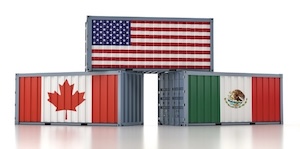
The steel trade with Mexico is particularly strategic at this moment. Companies are shifting supply chains to North America, and Mexico which has been an attractive manufacturing hub for various industries, such as automotive, aerospace, construction, electronics, household appliances, and more. This trend is driving strong demand for imported steel while simultaneously creating new export opportunities for Mexican producers. Much of this advantage stems from the USMCA, because steel originating within the USCMA region can qualify for preferential tariff treatment when traded within the United States and Canada, provided that the applicable rules of origin are fully met.

Read More »
Rare Earth

Rare Earth Minerals-Part 2 – Enter Greenland’s Global Significance

It’s been more than a little concerning to the Trump Administration as these deposits have everything to do with international security as they are needed in the production of the very high-end microchips. So, now that it has been discovered that Greenland apparently has one of the largest deposits on the planet, Trump has stated that we will have Greenland, one way or another. While he hasn’t explicitly committed to military action, he’s made it clear that he won’t rule it out.

Read More »
Stablecoin

Wyoming Laws More Crypto-Friendly with Issuance of State Stablecoin

On August 29, 2025, Wyoming made history becoming the first state in the United States to issue its own stablecoin, the Frontier (FRNT) token, marking a groundbreaking moment in state-level cryptocurrency adoption. Wyoming’s pioneering move represents more than just technological innovation. It signals a fundamental shift in how states can leverage blockchain technology with robust legal frameworks to modernize their financial infrastructure and maintain competitive advantages in the evolving digital economy.

Read More »
De Minimis

De Minimis An Ever-Growing Problem of De Maximus ProportionDe Minimis

De minimis is a term that refers to a threshold below which certain goods are exempt from import duties or taxes. However, in the landscape of international trade, it has become a contentious issue for the United States. Those “bad actors”, and even some, not so bad, but willing to take advantage of a loophole have found a way around the tariffs. This so-called loophole of allowing goods with a fair retail value of $800 or less to enter the U.S. without paying an import tariff has become a monster that Customs needs to find a way to deal with conclusively.

Read More »
IMMEX Customs

The Importance of Pedimento Codes for the IMMEX Customs Regime

In Mexico, a customs regime is the destination or treatment for goods subject to customs control in accordance with the nature and purposes of a customs operation. Companies with an IMMEX program may perform operations under the so-called customs regime of “temporary importation for elaboration, transformation or repair under a maquila program”. This name by itself implies several facts to consider.

Read More »
aluminum extrusions investigation

Aluminum Extrusions II – Scope Modifications Proposed, Dept. of Commerce Questioning Manageability

Since the last update on the AD / CVD aluminum extrusions investigation (dubbed Extrusions II) in what appears to be a response to strong opposition from trade industry groups, legislators, governments, and other interested parties, as well as dubious signals from the Department of Commerce, (Commerce) the Petitioners in the ongoing Aluminum Extrusions investigation have proposed modifications to the scope of the investigation.

Read More »
Legal Norms Artificial Intelligence

Evolving Legal Norms for Artificial Intelligence  in the European Union and the United States

Artificial Intelligence (AI) has been a hot topic for the last 2-3 years for politicians, technologists, and many people in civil societies globally. The use of the technology has obvious benefits for increasing productivity and value produced by businesses and organizations, along with dangers from misuse, such as deep fake propaganda and serious security risks. Two recent efforts to develop legislation addressing AI technology offer an opportunity to compare and contrast the differing approaches in the European Union (EU) and the United States (US).

Read More »
IMMEX Customs

La importancia de los Claves de Pedimentos en el Régimen Aduanero de las IMMEX

En México, un régimen aduanero es el destino o tratamiento que se da a los bienes objeto de control aduanero de conformidad con la naturaleza y propósitos de una operación aduanera. Las empresas con un programa IMMEX pueden realizar operaciones al amparo del régimen aduanero llamado “importación temporal para elaboración, transformación o reparación en programas de maquila”.

Read More »
Trade and Food Security

The Nexus of Trade and Food Security Amid Global Conflicts

The intricate interplay between trade and food security has emerged as a vital global issue, one that is closely interwoven with the tapestry of international conflicts and political instability. Remember the 2019 pandemic when toilet paper supply chains were interrupted?  Now imagine that on a much larger scale with basic food staples like rice, wheat or corn.

Read More »
CTPAT Supply Chain Hero of Trade

The Unsung Hero of Trade: Why CTPAT Matters

In the ever-changing world of trade, where predicting the future is a constant challenge, looking back at the past decade offers valuable insights into the evolution of the supply chain and the tools that have developed to contribute to efficiency and security.

Read More »
Voluntary Self-Disclosures

BIS Unveils Enhanced Voluntary Self Disclosure Protocols

On January 16, 2024, the Bureau of Industry and Security (BIS) under Assistant Secretary for Export Enforcement, Matthew Axelrod, disclosed significant enhancements to the process for Voluntary Self-Disclosures (VSDs) related to the Export Administration Regulations (EAR). These adjustments are strategically designed to streamline export control compliance for U.S. governmental bodies, the commercial sector, and academic entities.

Read More »
Importer Registration

Suspensión del Padron de Importadores

Uno de los requisitos más importantes para importar mercancías a México es estar registrado como importador en el registro de importadores mexicanos. Hay 2 tipos de registros para importadores, uno es para importadores generales (Padrón de Importadores) y el otro es para importadores de sectores industriales específicos (Padrón de Importadores de Sectores Específicos) que pueden importar mercancías identificadas por el código arancelario MX (es decir, productos químicos, armas de fuego, puros, calzado, textiles, alcohol, hidrocarburos, siderurgia, automoción, etc.). Generalmente, estos 2 registros son listados con información de personas y entidades autorizadas para importar mercancías a México.

Read More »