Compliance Issues in Government “Buy America” Solicitations
Whether you are creating a new in-house trade compliance function or evaluating an established one, there is no getting around the perpetual question: Where should Trade Compliance report?

Whether you are creating a new in-house trade compliance function or evaluating an established one, there is no getting around the perpetual question: Where should Trade Compliance report?

By Brenda Cordova, Braumiller Law Group Mexico Legal Counsel Mexico has recently published several legal instruments aimed to prevent and investigate forced and compulsory labor, including

The Trade Act of 1974 grants the President broad powers to manage trade relationships with foreign countries. Section 301 of the act allows the President, acting through the United States Trade Representative (“USTR”), to impose retaliatory tariffs on imports from a country if the USTR determines that country’s economic conduct “is unreasonable or discriminatory and burdens or restricts United States commerce.”

By Adrienne Braumiller, Founding Partner Harold Jackson, Associate Attorney Gavin Andersen, Braumiller Consulting Trade Advisor Section 301 Tariffs on Chinese goods continues to be at the

It’s a little awkward, but in fact, a reality in this day and age that bilateral trade between two countries who view each other as somewhat adversarial, can co-exist economically. As the world turns, so does global trade, take Australia and China for the shining example.

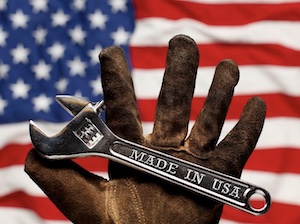
This article provides an overview of federal procurement laws and how the Federal Acquisition Regulations (FAR) implement some of those commitments in government contracts. The FAR, found under 48 C.F.R. Part 25, comprises the list of rules governing procurement of products and materials by federal agencies for public use.

The U.S. continues to spearhead enforcement against imported goods that were made using forced labor, and public enforcement statistics can help your company assess risks of forced labor.

When one company buys another there are typically two ways the purchased company will be treated: (1) It will be incorporated into the parent company and will no longer exist as a separate entity. (2) It will become a separately incorporated subsidiary of the parent company and retain its IRS number.

A large number of companies considering relocating their business abroad have turned their eyes to Mexico, which has become an attractive place for investors to relocate their business, mainly because it is close to the United States and Canada (nearshoring), the labor costs are relatively low, the availability of IMMEX (maquiladora) program, and because there is a preferential treatment to originating goods and foreign investments from the United States and Canada that are protected under the USMCA, among other factors.

2023 is more than a brand-new year – it is an opportunity for your company to prioritize supply chain and customs compliance. For some companies, this means filing a prior disclosure with U.S. Customs and Border Protection (CBP). Companies that are frequent importers are seriously considering disclosing entry violations under the condition that Customs will not issue civil penalties against them.

President elect Lai Ching-te’s victory in Taipei ignited tensions across the Taiwan strait and now the geopolitical field waits to see if China will kick off World War Three. I’m only slightly joking, but Beijing has exerted diplomatic pressure on nations maintaining close ties with the island in the past and Taiwan’s decision to remain a democracy will no doubt ramp up China’s reunification process in the coming months. But how will that affect trade relations?

In the complex world of international trade compliance, few people possess the expertise, dedication and problem-solving skills that Brad Menard, President of Braumiller Consulting Group, brings to his clients.

In recent years, the global spotlight has illuminated the grave concerns surrounding human rights violations within China’s Xinjiang region, particularly those impacting the Uyghur population. The Uyghur Forced Labor Prevention Act (UFLPA) stands as a pivotal piece of legislation designed to address these concerns and to ensure that products imported into the United States are devoid of forced labor originating from the Xinjiang region.

The implementation of trade policies in what many consider acts of protectionism and manipulation are the norm, and of course China and the U.S. are a prime example. Solutions include nearshoring, reshoring, and protectionism. It’s complicated, so for the purpose of this article, let’s stick with nearshoring.

On November 1, 2023, FDA issued a proposed rule that would make changes to its prior notice regulations, if the rule is finalized. These changes include requiring the name of the mail service and a mail tracking number to be provided in prior notice for food articles arriving by international mail. In addition, the FDA proposes that food facility registration information and prior notice be submitted within a specific timeframe after receiving certain notices of refusal or hold (“post-refusal” and “post-hold” submissions).

On October 4, 2023, A coalition of 14 U.S. aluminum extrusion producers and labor unions filed petitions before the Department of Commerce, International Trade Administration (Commerce) and the International Trade Commission (ITC) seeking to impose antidumping (AD) and countervailing duties (CVD) on aluminum extrusions produced in 15 countries and exported to the U.S.

As we have previously explained in other articles, an IMMEX is a duty deferral program from the Mexican federal government created in 2006, which stands for Industria Manufacturera, Maquiladora y de Servicios de Exportación (Manufacturing, Maquiladora and Export Services Industry).

On October 25, 2023, the Bureau of Industry and Security (“BIS”) published interim final rules amending the Export Administration Regulations (“EAR”) to add/clarify new controls on semiconductor manufacturing equipment (“SME”), advanced computing integrated circuits (“IC”), and computer commodities containing them.

In April of this year U.S. Customs & Border Protection (CBP) issued Headquarters Ruling H330077. The ruling was in response to a protest filed by an importer that had a shipment of wearing apparel excluded from entry under a Withhold Release Order (WRO) at the port of Newark, NJ. The wearing apparel was processed from cotton produced in India, made into yarn and fabric in China, and converted to wearing apparel in Cambodia. None of the parties to the transaction were located in the Xinjiang Region of China.

The Office of Management and Budget (“OMB”), Made in America Office issued a Final Rule to clarify the Build America, Buy America Act (“BABA”) provisions of the Infrastructure Investment and Jobs Act4 (“IIJA”) and to clarify existing provisions related to domestic preferences. The Final Rule amends Title 2 of the Code of Federal Regulations (“CFR”), subtitle A, chapter I by adding a new Part 184 to support implementation of BABA. OMB also amended 2 CFR 200.322 to clarify existing provisions within part 200. According to OMB, the Final Rule “is intended to improve consistency in the implementation of BABA requirements across the Federal Government.”5 The Final Rule will take effect October 23, 2023.