
News Articles

IEEPA

After the “Mess”: IEEPA Refunds and the Contractual Lessons for Businesses

As IEEPA refunds make their way back to importers, businesses are confronting a question that many commercial agreements never anticipated. Contracts frequently address who bears the cost when a new tariff is imposed, whether through a tariff surcharge, price-adjustment provision, or other pass-through mechanism. Far fewer address the opposite scenario: what happens when the tariff is later invalidated and the Importer of Record (“IOR”) receives the money back?

Read More »
iran war

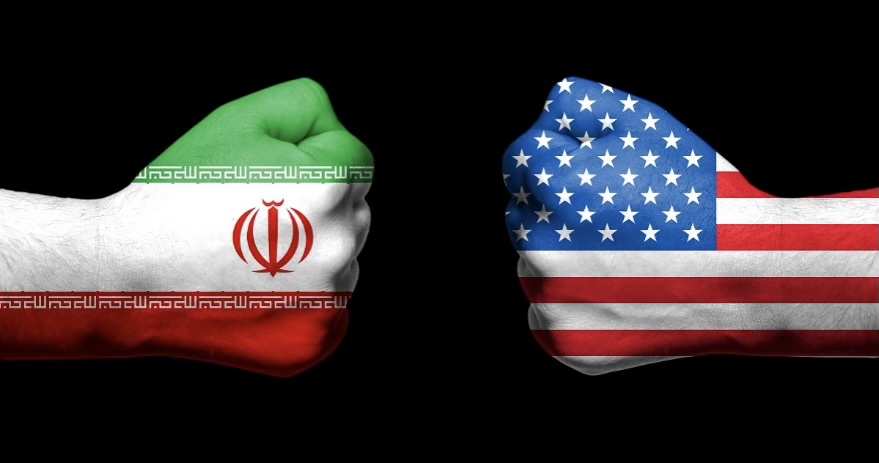
The Iran War: A New Shock to Global Trade

The war with Iran is being fought with missiles, aircraft and naval forces, but some of its most consequential effects are disruptions impacting energy markets, international shipping, insurance, supply chains, and prices, while adding another layer of sanctions and tariff risk to international trade. The result is particularly significant because the Strait of Hormuz, at the center of the conflict, is one of the most important arteries in world commerce.

Read More »
Economy Legislation

The Local in the Global: Legislation for an Exceptional Economy

A municipal government’s use of emergency powers might seem inconsequential, but it contributes to many communities’ accumulation of debt, housing and commercial space that is affordable to hypothetical residents but not actual ones, surveillance cameras, empty offices and strip malls, and contractual commitments to data centers and private prisons – all without any meaningful public involvement.

Read More »
global waterways

Waterways, Canals, and Straits, and What Clear Passage Means to Global Trade Survival

There are about 200 straits worldwide, but only 18–20 of them actually matter for global trade, and 9 are considered truly critical choke points. So, these are the straits/canals where closure would cause (and is currently causing) massive global economic shock: Strait of Malacca, Strait of Hormuz, Suez Canal, Panama Canal, Bab elMandeb, Strait of Gibraltar, Bosphorus Strait, Danish Straits, and of course, the ever-impending blockage of the Taiwan Strait.

Read More »
usmca

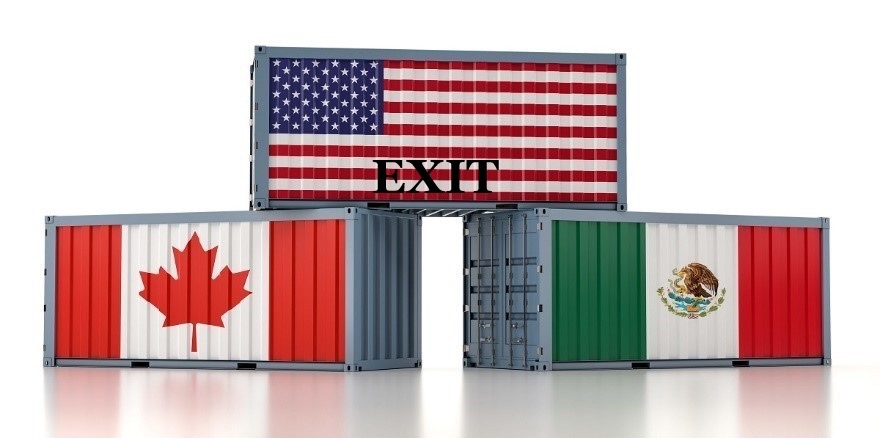
A US Departure From the USMCA. Is That Even Worthy of Discussion?

Yes, regarding this particular topic I am immediately surrounded by all of those external voices, even internal, telling me of how ridiculous it would be for the US to follow through and pull out of the USMCA. My response of course is noting that I probably wouldn’t have given the topic a second thought had the President of the United States not mentioned that this was a consideration regarding the upcoming July 2026 USMCA review.

Read More »
tolkenizing

Assessing the Benefits and Challenges of Tokenizing Real World Assets

The world of cryptocurrencies on blockchains and the world of traditional assets in markets have often stood in stark contrast to one another since Bitcoin’s creation in 2008. The lack of a reliable bridge between these two worlds has limited the impact of cryptocurrencies on assets in the real-world outside of on-chain speculation and prevented adoption of the benefits that blockchain technologies can bring to real world processes.

Read More »
Taiwan

Taiwan, Invasion & Trade, Part 2

President elect Lai Ching-te’s victory in Taipei ignited tensions across the Taiwan strait and now the geopolitical field waits to see if China will kick off World War Three. I’m only slightly joking, but Beijing has exerted diplomatic pressure on nations maintaining close ties with the island in the past and Taiwan’s decision to remain a democracy will no doubt ramp up China’s reunification process in the coming months. But how will that affect trade relations?

Read More »
Forced Labor Prevention Act

Latest Developments with The Uyghur Forced Labor Prevention Act and New Leadership at the Department of Homeland Security Signal Heavier Enforcement is Likely

In recent years, the global spotlight has illuminated the grave concerns surrounding human rights violations within China’s Xinjiang region, particularly those impacting the Uyghur population. The Uyghur Forced Labor Prevention Act (UFLPA) stands as a pivotal piece of legislation designed to address these concerns and to ensure that products imported into the United States are devoid of forced labor originating from the Xinjiang region.

Read More »
prior notice regulations

Any Comments on FDA’s New Proposed Rule on Prior Notice Regulations?

On November 1, 2023, FDA issued a proposed rule that would make changes to its prior notice regulations, if the rule is finalized. These changes include requiring the name of the mail service and a mail tracking number to be provided in prior notice for food articles arriving by international mail. In addition, the FDA proposes that food facility registration information and prior notice be submitted within a specific timeframe after receiving certain notices of refusal or hold (“post-refusal” and “post-hold” submissions).

Read More »
antidumping

New Antidumping and Countervailing Duty Investigation Initiated Covering Aluminum Extrusions from 15 Countries

On October 4, 2023, A coalition of 14 U.S. aluminum extrusion producers and labor unions filed petitions before the Department of Commerce, International Trade Administration (Commerce) and the International Trade Commission (ITC) seeking to impose antidumping (AD) and countervailing duties (CVD) on aluminum extrusions produced in 15 countries and exported to the U.S.

Read More »
Legal Framework

Legal Framework Governing IMMEX Operations

As we have previously explained in other articles, an IMMEX is a duty deferral program from the Mexican federal government created in 2006, which stands for Industria Manufacturera, Maquiladora y de Servicios de Exportación (Manufacturing, Maquiladora and Export Services Industry).

Read More »
BIS

Overview of BIS’s Interim Final Rules, Export Controls for Advanced Computing, Supercomputing, and Artificial Intelligence

On October 25, 2023, the Bureau of Industry and Security (“BIS”) published interim final rules amending the Export Administration Regulations (“EAR”) to add/clarify new controls on semiconductor manufacturing equipment (“SME”), advanced computing integrated circuits (“IC”), and computer commodities containing them.

Read More »
Xinjiang Exclusions

Challenges Ahead! – Requesting to be Excluded From the Xinjiang Exclusions

In April of this year U.S. Customs & Border Protection (CBP) issued Headquarters Ruling H330077. The ruling was in response to a protest filed by an importer that had a shipment of wearing apparel excluded from entry under a Withhold Release Order (WRO) at the port of Newark, NJ. The wearing apparel was processed from cotton produced in India, made into yarn and fabric in China, and converted to wearing apparel in Cambodia. None of the parties to the transaction were located in the Xinjiang Region of China.

Read More »