
Who is the Importer of Record: Security Interests and the Right to Act As IOR
By: Gavin Andersen, Law Clerk, LCB and Adrienne Braumiller, Founding Partner, Braumiller Law Group Last June (2023), in response to a ruling request from Your Special

By: Gavin Andersen, Law Clerk, LCB and Adrienne Braumiller, Founding Partner, Braumiller Law Group Last June (2023), in response to a ruling request from Your Special

At the core of the definition, a Parallel import is a non-counterfeit product imported from another country without the permission of the intellectual property owner. They are also goods that are not authorized for importation into the U.S. It’s a global phenomenon, a very grey area, and their presence varies across different parts of the globe.

One of the most important requirements for importing goods into Mexico is to be registered as an importer under the Mexican importer’s registry. There are 2 types of registries for importers, one is for general importers (Padron de Importadores), and the other is for importers of specific industry sectors (Padron the Importadores de Sectores Especificos) which may import goods identified by the MX tariff code (i.e. chemical products, firearms, cigars, footwear, textiles, alcohol, hydrocarbons, steel, automotive, etc.). Generally, these 2 registries are lists with information of individuals and entities authorized to bring goods into Mexico.

Consider this scenario: a client faced the challenge of deferring duty payments while managing a significant volume of imports destined for re-exportation from the U.S. Initially considering duty drawbacks, which proved unsuitable for their specific needs, we turned our attention to bonded warehouses and free trade zones. This scenario is not uncommon in the trade world and highlights a critical decision point for many businesses: choosing between a bonded warehouse and a Foreign Trade Zone (FTZ).

The First Sale Rule applies in circumstances such as the example above. A US company places an order with a middleman in the US. The middleman in turn subcontracts to a foreign supplier. The supplier then ships the product either to the middleman or to the original US company that placed the order, meaning either could be the importer of record. The entered value could be the amount on the original purchase order or the price paid by the middleman to the foreign supplier.

The world of cryptocurrencies on blockchains and the world of traditional assets in markets have often stood in stark contrast to one another since Bitcoin’s creation in 2008. The lack of a reliable bridge between these two worlds has limited the impact of cryptocurrencies on assets in the real-world outside of on-chain speculation and prevented adoption of the benefits that blockchain technologies can bring to real world processes.

President elect Lai Ching-te’s victory in Taipei ignited tensions across the Taiwan strait and now the geopolitical field waits to see if China will kick off World War Three. I’m only slightly joking, but Beijing has exerted diplomatic pressure on nations maintaining close ties with the island in the past and Taiwan’s decision to remain a democracy will no doubt ramp up China’s reunification process in the coming months. But how will that affect trade relations?

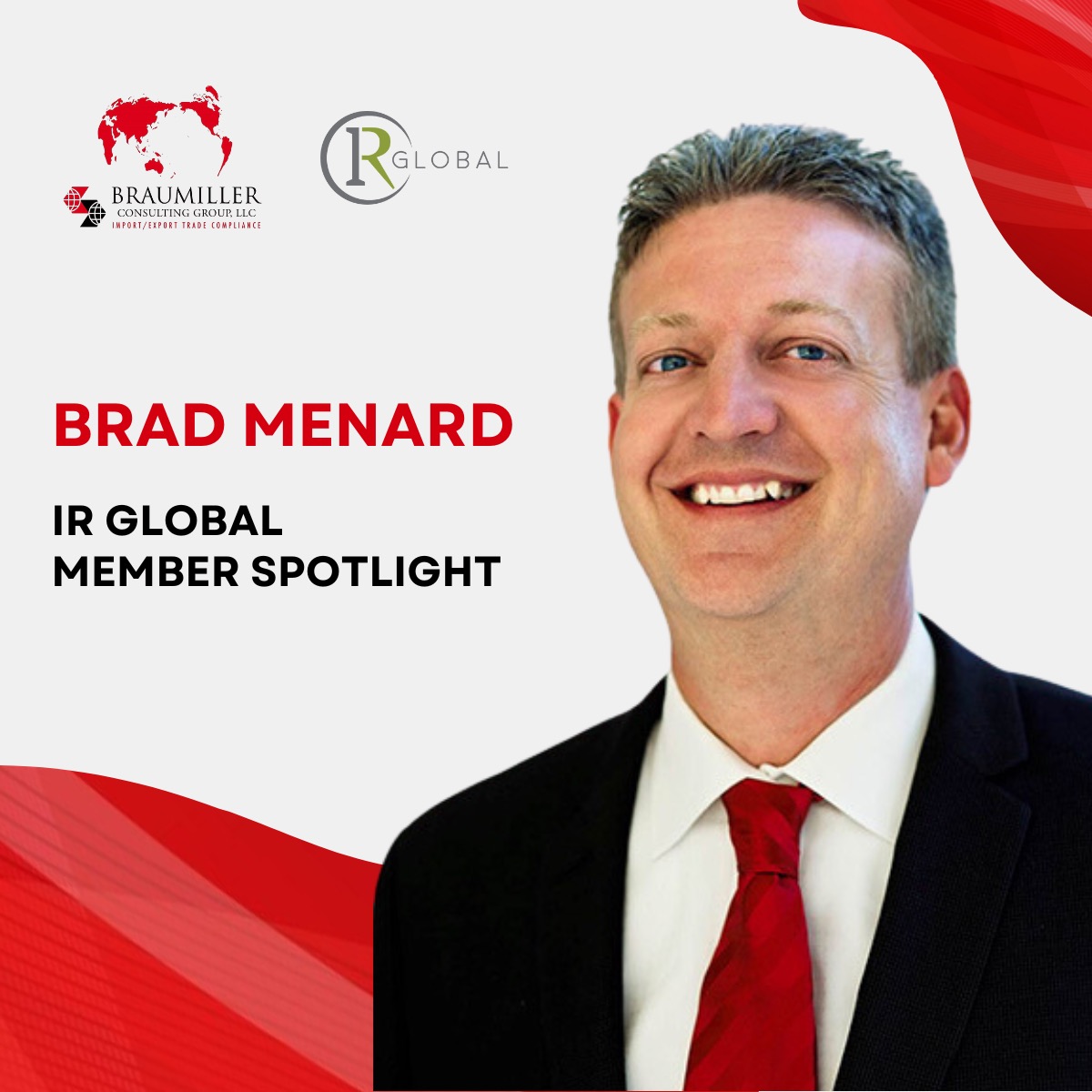
In the complex world of international trade compliance, few people possess the expertise, dedication and problem-solving skills that Brad Menard, President of Braumiller Consulting Group, brings to his clients.

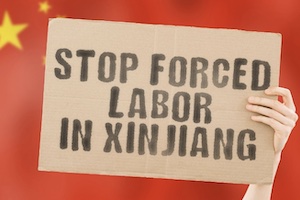
In recent years, the global spotlight has illuminated the grave concerns surrounding human rights violations within China’s Xinjiang region, particularly those impacting the Uyghur population. The Uyghur Forced Labor Prevention Act (UFLPA) stands as a pivotal piece of legislation designed to address these concerns and to ensure that products imported into the United States are devoid of forced labor originating from the Xinjiang region.

The implementation of trade policies in what many consider acts of protectionism and manipulation are the norm, and of course China and the U.S. are a prime example. Solutions include nearshoring, reshoring, and protectionism. It’s complicated, so for the purpose of this article, let’s stick with nearshoring.

A little over a year ago on June 1, 2022, the United States and Taiwan launched the United States-Taiwan Initiative on 21st-Century Trade to deepen their economic ties and trade relationship, and advance mutual trade priorities based on shared values, promoting innovation, and economic growth for workers and businesses.

This article examines Target Corporation v. United States, Slip Op. 23-106 (Ct Int’l Trade July 20, 2023), a recent ruling by the Court of International Trade (CIT) and its implications on liquidation matters.

The United States Mexico Agreement (USMCA – the free trade agreement signed between Mexico, the United States and Canada) promotes and protects the trading of tequila between these 3 countries as it acknowledges it is a distinctive product of Mexico.

U.S. Customs & Border Protection (CBP) published the Final Rule on continuing education for individual customs broker license holders in the Federal Register on June 23, 2023. This Final Rule made several changes to Part 111 of the Customs Regulations and imposed a continuing education requirement on individual license holders.

The realm of international trade and commerce operates under a complicated system of export control regimes that are designed to protect national security, curb the proliferation of sensitive technologies, and ensure strict adherence to economic and trade sanctions.

This article discusses compliance “Buy America” provisions in federal procurement laws and how the Federal Acquisition Regulations (FAR) implement some of those commitments in government contracts.

Whether you are creating a new in-house trade compliance function or evaluating an established one, there is no getting around the perpetual question: Where should Trade Compliance report?

By Brenda Cordova, Braumiller Law Group Mexico Legal Counsel Mexico has recently published several legal instruments aimed to prevent and investigate forced and compulsory labor, including

The Trade Act of 1974 grants the President broad powers to manage trade relationships with foreign countries. Section 301 of the act allows the President, acting through the United States Trade Representative (“USTR”), to impose retaliatory tariffs on imports from a country if the USTR determines that country’s economic conduct “is unreasonable or discriminatory and burdens or restricts United States commerce.”

By Adrienne Braumiller, Founding Partner Harold Jackson, Associate Attorney Gavin Andersen, Braumiller Consulting Trade Advisor Section 301 Tariffs on Chinese goods continues to be at the