
News Articles

De Minimis

De Minimis An Ever-Growing Problem of De Maximus ProportionDe Minimis

De minimis is a term that refers to a threshold below which certain goods are exempt from import duties or taxes. However, in the landscape of international trade, it has become a contentious issue for the United States. Those “bad actors”, and even some, not so bad, but willing to take advantage of a loophole have found a way around the tariffs. This so-called loophole of allowing goods with a fair retail value of $800 or less to enter the U.S. without paying an import tariff has become a monster that Customs needs to find a way to deal with conclusively.

Read More »
IMMEX Customs

The Importance of Pedimento Codes for the IMMEX Customs Regime

In Mexico, a customs regime is the destination or treatment for goods subject to customs control in accordance with the nature and purposes of a customs operation. Companies with an IMMEX program may perform operations under the so-called customs regime of “temporary importation for elaboration, transformation or repair under a maquila program”. This name by itself implies several facts to consider.

Read More »
aluminum extrusions investigation

Aluminum Extrusions II – Scope Modifications Proposed, Dept. of Commerce Questioning Manageability

Since the last update on the AD / CVD aluminum extrusions investigation (dubbed Extrusions II) in what appears to be a response to strong opposition from trade industry groups, legislators, governments, and other interested parties, as well as dubious signals from the Department of Commerce, (Commerce) the Petitioners in the ongoing Aluminum Extrusions investigation have proposed modifications to the scope of the investigation.

Read More »
Legal Norms Artificial Intelligence

Evolving Legal Norms for Artificial Intelligence  in the European Union and the United States

Artificial Intelligence (AI) has been a hot topic for the last 2-3 years for politicians, technologists, and many people in civil societies globally. The use of the technology has obvious benefits for increasing productivity and value produced by businesses and organizations, along with dangers from misuse, such as deep fake propaganda and serious security risks. Two recent efforts to develop legislation addressing AI technology offer an opportunity to compare and contrast the differing approaches in the European Union (EU) and the United States (US).

Read More »
IMMEX Customs

La importancia de los Claves de Pedimentos en el Régimen Aduanero de las IMMEX

En México, un régimen aduanero es el destino o tratamiento que se da a los bienes objeto de control aduanero de conformidad con la naturaleza y propósitos de una operación aduanera. Las empresas con un programa IMMEX pueden realizar operaciones al amparo del régimen aduanero llamado “importación temporal para elaboración, transformación o reparación en programas de maquila”.

Read More »
Trade and Food Security

The Nexus of Trade and Food Security Amid Global Conflicts

The intricate interplay between trade and food security has emerged as a vital global issue, one that is closely interwoven with the tapestry of international conflicts and political instability. Remember the 2019 pandemic when toilet paper supply chains were interrupted?  Now imagine that on a much larger scale with basic food staples like rice, wheat or corn.

Read More »
CTPAT Supply Chain Hero of Trade

The Unsung Hero of Trade: Why CTPAT Matters

In the ever-changing world of trade, where predicting the future is a constant challenge, looking back at the past decade offers valuable insights into the evolution of the supply chain and the tools that have developed to contribute to efficiency and security.

Read More »
Voluntary Self-Disclosures

BIS Unveils Enhanced Voluntary Self Disclosure Protocols

On January 16, 2024, the Bureau of Industry and Security (BIS) under Assistant Secretary for Export Enforcement, Matthew Axelrod, disclosed significant enhancements to the process for Voluntary Self-Disclosures (VSDs) related to the Export Administration Regulations (EAR). These adjustments are strategically designed to streamline export control compliance for U.S. governmental bodies, the commercial sector, and academic entities.

Read More »
Importer Registration

Suspensión del Padron de Importadores

Uno de los requisitos más importantes para importar mercancías a México es estar registrado como importador en el registro de importadores mexicanos. Hay 2 tipos de registros para importadores, uno es para importadores generales (Padrón de Importadores) y el otro es para importadores de sectores industriales específicos (Padrón de Importadores de Sectores Específicos) que pueden importar mercancías identificadas por el código arancelario MX (es decir, productos químicos, armas de fuego, puros, calzado, textiles, alcohol, hidrocarburos, siderurgia, automoción, etc.). Generalmente, estos 2 registros son listados con información de personas y entidades autorizadas para importar mercancías a México.

Read More »
US and Canada Investment in Mexico

Legal Framework Governing Foreign Direct Investment from the United States and Canada in Mexico

A large number of companies considering relocating their business abroad have turned their eyes to Mexico, which has become an attractive place for investors to relocate their business, mainly because it is close to the United States and Canada (nearshoring), the labor costs are relatively low, the availability of IMMEX (maquiladora) program, and because there is a preferential treatment to originating goods and foreign investments from the United States and Canada that are protected under the USMCA, among other factors.

Read More »
Prior-disclosure

Should You File a Prior Disclosure in 2023?

2023 is more than a brand-new year – it is an opportunity for your company to prioritize supply chain and customs compliance. For some companies, this means filing a prior disclosure with U.S. Customs and Border Protection (CBP). Companies that are frequent importers are seriously considering disclosing entry violations under the condition that Customs will not issue civil penalties against them.

Read More »
The U.S. and China are in a trade war

Doing Business with China Continues to Get More Difficult for U.S. Companies

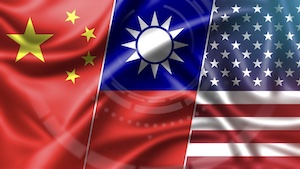
The year 2022 saw a substantial increase in export restrictions applicable to China. The U.S. and China are not only in a trade war but there is also an effort by the U.S. to (1) prevent development of supercomputers, semiconductors and related products and technologies, and (2) prevent use of forced labor – especially involving the Uyghur minority in the Xinjiang region.

Read More »
China and India trade with Russia at record levels

China and India, A Year Later, Post Invasion, Still Walking the Tightrope With the U.S. as They Continue to Set Records in Trade with Russia

China’s trade with Russia hit a record $190 billion U.S. in 2022, key operative word “record.” China is setting a course to become Russia’s top trade partner and prove to the world just what the “no limits” partnership can produce. An additional “maybe some limits” friend to Russia among the world’s larger economies is India.

Read More »
Exporting to Mexico legal requirements

Exporting to Mexico

If you are relocating to Mexico, or you are a producer, distributor, seller, etc., and the recipient of your goods is in Mexico because your client, final consumer, manufacturer, distributor, service provider, etc. is there, then, it is more than likely that you will be the exporter or the party responsible for reviewing and preparing some or all of the records needed to ship the goods to Mexico.

Read More »
Revisions and updates to the International Traffic in Arms Regulations (ITAR)

Hot (or at least warm) Off the Press: Updates & Revisions to the ITAR

The Directorate of Defense Trade Controls (DDTC) is continuing its project to revise and update the International Traffic in Arms Regulations (ITAR). Some of the changes are editorial and some are substantive. If you are affected by the ITAR or think you might be, you will need to stay on top of the changes because some (or all) may affect you.

Read More »